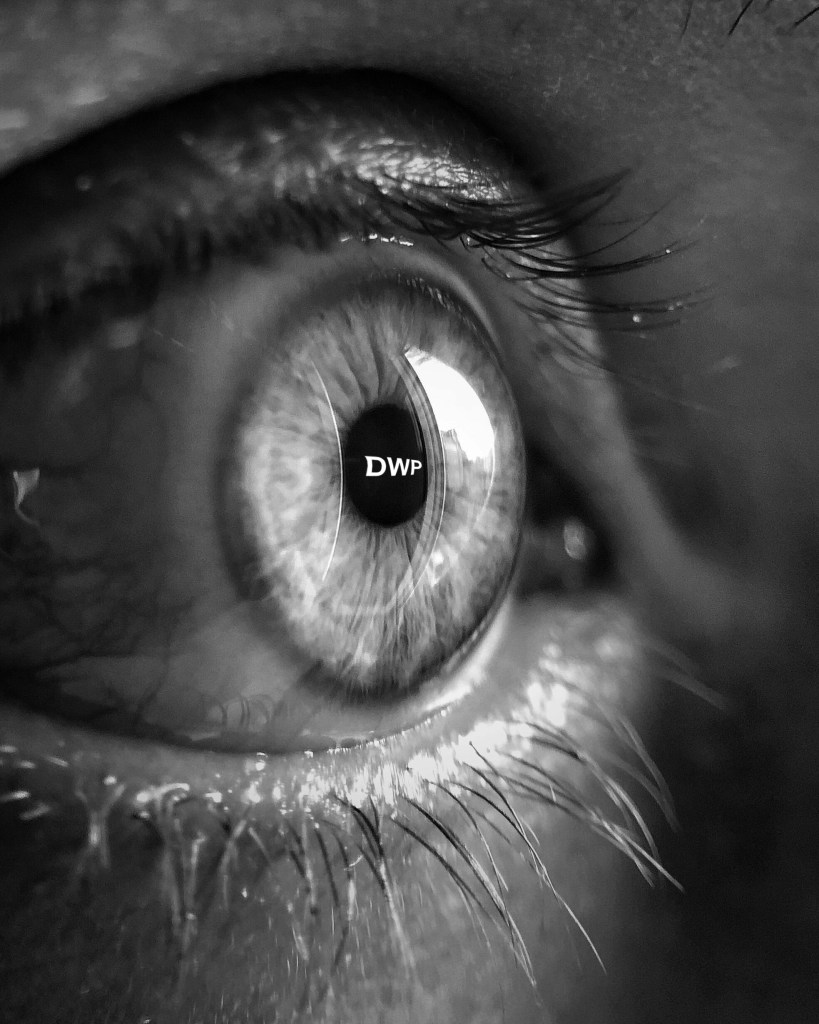
DWP Pathways to Work Green Paper Harm: My Paranoia Has Increased Dramatically

The Labour Government’s DWP Pathways to Work Green Paper is brutally damaging people’s mental health. Below is one such testimony. If you want to share yours, in confidence, please email

recoveryinthebin@gmail.com

My paranoia has increased dramatically. (Though is it really paranoia if you know they are genuinely trying to remove support from people?) I am afraid to leave the house on days when I am well enough to go out in case a DWP person photographs me or a neighbour reports me for what they wrongly perceive to be ‘fraud’. I am trying to keep my health from worsening and going outside when I’m able, especially to walk, is literally keeping me alive, but since the green paper announcement every day I am frightened to do it.

I live with intrusive images and thoughts which have increased in frequency and severity. My brain compulsively rehearses the scenarios, forcing me to live them out. 

One of the most common scenarios now involves being in the DWP office and being interrogated about intimate and embarrassing aspects of my ill health by a complete stranger then being disbelieved when I try to explain, and having all income removed, leaving me destitute. Another common scenario my brain forces me through is me being anxious, distressed or panicked at a benefits review and being mocked for it and dismissed as a liar. (I have good reason to fear the latter, an assessor once laughed at me when I tried to explain how distressed and exhausted I was feeling, and I struggled, and I found it difficult to speak.)

My brain tells me that I am being investigated for fraud, that every time I spend money I am being tracked by the DWP, trying to find reasons to remove my support and force me to try and work. My brain shows me what will happen if I try to work, that the environments and the work itself will make me more and more unwell, that I will spend all my time and energy failing to get to work or trying to get an employer to believe me about how impossible I am finding things, until eventually I collapse or die. I speak out loud more and more to myself, forced to act out these scenarios alone in my home, which is exhausting.

These images and scenarios replay and replay and replay. I have developed some strategies to try and reduce their duration, and to help myself recover afterwards, but since the green paper announcement they are getting harder and harder to manage. I have no support managing any of this because I find it so difficult to make and keep medical appointments, and whenever I’ve tried in the past nothing has really helped, and I am made to feel like a failure. This all adds to the guilt and fear I already feel about not having enough money to live and having to rely on benefits. And it worsens all my other health conditions, mental and physical: fatigue, pain, depression, anxiety.

I wish more people who have never had prolonged contact with the DWP would understand how traumatising the green paper announcement has been for so many of us. I hold no hope that politicians will do the same but perhaps if more ordinary people listen to us they will be forced to hear our voices.

DWP Pathways to Work Green Paper Harm: Substantial Risk

The Labour Government’s DWP Pathways to Work Green Paper is brutally damaging people’s mental health. Below is one such testimony. If you want to share yours, in confidence, please email

recoveryinthebin@gmail.com

Been on disability for 25 years. Was originally in the “Substantial Risk” group. I’m Limited Capability for Work Related Activity (LCWRA) and have been for a long time I also get High rate mobility Personal Independence Payment (PIP) and Standard rate care PIP, moving onto Adult Disability Payment (ADP) this month which will remain the same until I’m re assessed by Social Security Scotland (SSS) in August.

Scotland will lose almost £500 million in social security funding if the proposals go ahead and will have to make similar cuts. But there’s no clarity on that yet. I’ve been diagnosed with several Personality Disorders (PD’s), have been blacklisted by psychiatry, cannot access NHS therapy (but have had plenty in the past). The NHS knows I’ve self harmed since I was a small child. They know I think of suicide, the NHS has no interest in either of those realities. I receive support from a local charity. I have lots of physical health issues; fibromyalgia, chronic fatigue syndrome (CFS), Functional Neurological Disorder (FND), arthritis, migraine etc plenty of the “Dustbin diagnoses”. I receive no support for those either. In some ways the DWP have been more validating than the NHS.

I’m dreading my re assessment in August although it should be easier than the DWP , I’m just so tired. I don’t know if I can face it. I’m thinking about these cuts all the time, it’s always on my mind. Have invested in a large amount of first aid gear as I anticipate an increase in my self harm, which is often life threatening. It hasn’t been a big issue for a while as being finanically secure helps my mental health immensely.
If the cuts go ahead I will lose everything, I will be on £49 a week, will be expected to look for work and will be sanctioned if I don’t.

I cannot work. The DWP has said that for 25 years. I will be made destitute, homeless and there will be no way back from it as there will be no safety net.

I will be obliged to die. I’ve already bought the rope, the pills and know what to do. I’ve been researching and practising. I will have no other option. So now I’m a life clock, a suicide deadline, out of neccesity and obligation. Death will be the only option. I’ll wait till I have to, but maybe I should do it sooner and save myself a lot of stress since it’s inevitable anyway. Either way I have no choice. You can see how my head is in a loop. There is no future. I have new serious health issues I need long term treatment for but why bother? They want me dead, seems pointless to give a shit now. Why bother improving my health. I’m not going to the GP or engaging with the NHS anymore, there’s no point, I’m already dead.

DWP Pathways to Work Green Paper Harm: Living Nightmare of DWP

The Labour Government’s DWP Pathways to Work Green Paper is brutally damaging people’s mental health. Below is one such testimony. If you want to share yours, in confidence, please email

recoveryinthebin@gmail.com

I get DWP specific nightmares and insomnia waking up at 3am.

Typically my nightmares involve the police and DWP using a battering ram to break into my home at 6am, dragging me off in handcuffs because of a malicious complaint.

Or long range cameras photographing me in my kitchen, or undercover operatives in Sainsbury’s.

My most recent nightmare involved an old GP ringing me up (his voice was spot on), with DWP, insisting I had to start a mandatory work programme, being interrogated on what I do during the day and demanding to know if I could get on a bus, and if I could it would mean I would lose all entitlement.

When I woke up it took me a couple of hours to work out that this hadn’t happened. I had to look at my phone record, check to see if I had messaged anyone. Initially I still wasn’t sure, maybe I just hadn’t rung anyone yet?

It took time to sink in, it was another nightmare.

My nightmares now match my reaction to DWP envelopes – nausea, actual vomiting, lasting panic and anxiety.

An Epistle of Cruelty: Life in the parallel shadow penal state of the DWP

RITB admins put out a call for testimony of what life is like living whilst receiving DWP benefits. It was painfully clear that many survivors are now afraid to speak even under pseudonym. People are silenced, and they are terrified of being noticed by the State apparatus. Therefore a Content Notice on these testimonies as they include distressing detail of bureaucratic violence, harm, and distress.

The Daily Telegraph and The Jeremy Vine Show recently put out messaging that is distressingly reminiscent of Nazi propaganda. Recalling the co-ordinated media activity of the Osborne era where scrounger rhetoric was used to make harsher and lethal policies acceptable under austerity. [Please read this letter collected by Jay Watts].

The treatment and stigmatisation of claimants is similar to the vilification of refugees. We should always act intersectionally and support each others struggles, and never fall for divide and rule messaging or pitting one groups rights against another’s. Whilst citizens do not face being drowned or rendered to Rwanda, some have had their citizenship removed and been deported, fulfilling the fascist National Front of the 1970’s policy demands. Political parties win votes competing to be crueller to both. No political party represents either group in a humane way. New Labour’s Immigration Act 1999 removed recourse to public funds for people ‘subject to immigration controls‘, the slow removal of benefits from disabled people suggests a similar policy aim, but being hampered by human rights law, disability organisations, and public opinion; the famous problem of democracy Thatcher lamented to Pinochet.

We now also have a political and media campaign against Trans people, with the country’s Human Rights organisation, the Equality and Human Rights Commission, being manipulated to now support the removal of human rights, to the alarm of the United Nations. The hostile environment while acknowledged openly by government in respect of refugees is less explicit for other demographics, but nevertheless we can feel the enmity.

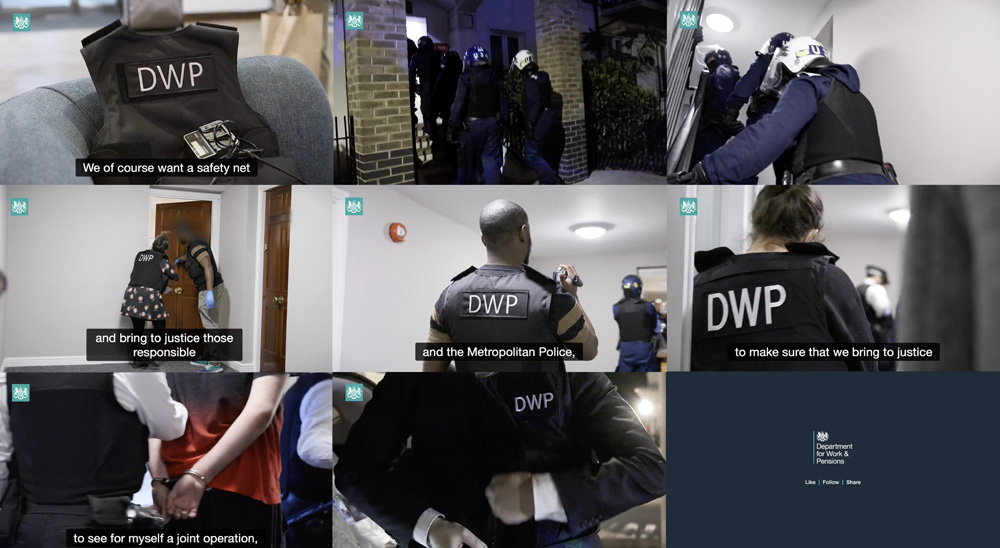
The recent footage of a 6am DWP & police raid and increased whipped up hatred towards claimants has deeply distressed many people:

The following testimony is collated from a wide range of individuals who responded to our callout, they offer a snapshot of the impact on health of being a claimant. Of what it is like living under the parallel shadow penal state of the DWP-

  • “I cannot talk about it here. I even have the thought they might see through my alias and work out who I am and punish me”.
  • “I know that I only deserve to live if I’m employed, that’s the message”.
  • “The two most vilified groups of people in the UK for political purposes are refugees and claimants. Those groups are despised. We are subhuman”.
  • “If the Bill is passed, job centre staff will be deciding who’s fit for work with the threat of sanctions. I’m stockpiling medication, I won’t survive”.
  • “As a too ill for employment disabled person I have survived solely on ever decreasing and hard to get so called social security for most of my adult life, spanning decades of so called welfare reforms, cuts, austerity, and recessions. Family tax credit, Job seekers allowance, Incapacity benefit, income support, disability living allowance, ESA, PIP and soon to be UC. I have a life threatening an ever growing fear of the DWP”.
  • “Disability fraud in social security is 0.2%, the media portrays it as 98%”.
  • “An assessment centre is referred to as The Kremlin”.
  • “The impact of DWP processes and their media has had a direct impact on my mental health to the degree that I would rate it worse than my illness, worse than being sectioned and forcibly medicated, worse than being stiched with no local anaesthetic, worse than surviving a suicide attempt. It has become enmeshed into my depression, paranoia, voices I hear, the feeling of being a target for anyone’s malicious reporting, feeling constantly surveilled, under house arrest.
  • “I sometimes hear my thoughts in the voice of Ian Duncan Smith and my voices blame me for being in this position. They say outside “they’re proper people,not scum like you”.
  • “If I were offered fast painless euthanasia, I would take it, to be free of living in fear”.
  • “I hate post, all envelopes, I feel sick at the sight of them and have vomited at the sight of envelopes I suspect are from the benefit offices. Sunday is the only I can breath – no post – but it means I’m afraid to leave my home to stay with family or friends because I fear receiving a letter or form which needs immediate attention. So I feel a prisoner in my home and afraid of leaving it for longer than 24 hours”.
  • “I know that the DWP have an algorithm that targets people for benefit fraud. That they can covertly use, physically surveillance, data from airlines, supermarkets, online purchases, CCTV, audio recordings and phone conversations, monitor bank accounts and social media searching photos and locations and encouraging neighbours to don claimants in…. all to try and prove people are lying. This all has a profound detrimental effect on my mental health and I’ve done nothing wrong”.
  • “I looked up how much you get for selling a kidney or a lobe of liver thinking of if after the general election and proposed Bill removing the WCA letting job centre staff decide who’s fit for work or not, i know I wont survive it. I was disappointed to learn that organs don’t sell for that much”.
  • “I tried to end my life during a DWP assessment process a few years ago which resulted in me being detained under the MHA.  One of the reasons I haven’t walked away from the iatrogenic harm that MH services cause me is because it would be even more difficult to prove I am ill and get enough benefits to survive on if did”.
  • “I used to be an activist, I did unpaid work which was valued by universities, NHS Trusts, nursing & medical schools. I also did work with fellow SUs and groups. I ceased all voluntary work in fear of that being interpreted as being fit for full-time work which unfortunately I am not.”
  • “I was never able to sustain full-time employment, and even consistent part-time work wouldn’t be viable for because every year for my entire adult life I have typically lost about 3-4 months of the year with my mental health. There are few employers who would tolerate 4 months sick leave every year. With voluntary work, it carries a different weight and stress because I know I can step down if I need to, I can space myself and plan to do it during my best months of the year. The irony is I’m more productive doing voluntary work than I am doing paid work”.
  • “Work as a health outcome and a cure has become the neorecovery norm. It’s scary! I don’t take part in any in person direct protest activism after knowing that some disabled activists were shopped to the DWP. I stay anonymous and private on social media and anon at online and in person Mad events because of the fear of DWP spying on me”.
  • “The neoliberal Government and media strategy is to portray benefit claimants as fraudsters, cheats and scroungers this makes me feel stigmatised, stereotyped and underserving. The welfare system is deliberately hostile and cruel. The Government is trying to kill off vulnerable disabled people. They cover up the deaths caused by the system”.
  • “Just filling the form out raises the depression levels. All negative questions. Some impossible to estimate how many hours in a day do u?? Then the interview process, being asked why you haven’t managed to kill yourself yet! Which made me feel even lower, a total failure!!”
  • “I was once accused of fraud when I failed to ask DWP for permission for permitted work of a few hours and for 6 weeks. Years later I got a letter telling me to attend the job centre and I had no clue why. A scary place with security guards at the door. I freaked out so bad when there that I ended up in a crisis house. I’ve never done paid involvement work since. They can even track gift vouchers which are seen by them as earnings. Volunteering can also be seen as being fit for paid work”.
  • “They ignore medical notes and evidence. They ignore the doctors, your specialist. They are only interested in failing you”.
  • “DWP was responsible for the death of my brother”.
  • “Best thing about lockdown 1 was knowing the letters had stopped. Felt as if I could live for the 1st time in years as I wasn’t exhausted by 24/7 in fear. That dread resumed as soon as we heard the letters were starting up again”.
  • ” I’m using the PIP to find private therapy because NHS was bad. You see a lot of benefit stigma as well and that’s pretty rubbish. I feel like a failure and a burden all the time and I don’t tell people usually that I’m on any sort of benefit”.
  • “I dread being asked “what do you do?”, the judgement extends to healthcare even. I avoid speaking to anyone in the supermarket, I stay indoors and take the rubbish out at night”.
  • “I know DWP want me dead, deaths are a cost saving”.
  • “I’m autistic and was in receipt of PIP. Because of how my autism presents I feel I have to be reassessed every time the tiniest thing changes, even if it’s just a fluctuation  rather than a change.  This means I’ve subjected myself to multiple reassessments  as there’s no way of just telling them about the small fluctuation without a full reassessment. The whole process has made me sick with anxiety, not knowing how long it will take, worrying about whether I’ll have to see someone face to face that doesn’t understand my condition.  In my last reassessment they took information over the phone from an unqualified member of staff that wasn’t listed as a contact on my form that didn’t give the correct full amount of information.  Calling the DWP causes me lots of stress and anxiety as I often need the toilet whilst on the phone and get stuck waiting for over an hour.  When there is no position in the queue information it can lead to a lot of uncertainty.  Even though I’ve been 100% honest in my claim i feel worried when I see cars outside that people are watching me.”
  • “The recent DWP advert stressed me out so much I ended up cancelling my claim as I couldn’t go through another reassessment. If the DWP had an online system where you could report  minor changes without the need for a full reassessment it would help to reduce the stress the whole process causes”
  • “I’ve attempted suicide, been paranoid and psychotic and detained under the MHA. I think that there is more threat to my life from the benefits system than anything else. Yet, I’ve read all my clinical notes and I don’t see the fact that the DWP has caused many mental health crises recorded anywhere”
  • “I’m due a PIP review for severe mental health issues. Last time I had a review, I didn’t sleep. I was anxious. Just filling out the form is distressing. This time, I have no supporting evidence for anything because my CMHT have barely seen me and not listened and not helped me. I’ve misplaced my crisis team summary from last time I was under them and I’m too scared to call anyone to ask for any further evidence because I’m fobbed off all the time. The PIP review has me even more anxious this time because I’m lacking the evidence.”
  • “A recent video by DWP was shared on Twitter which featured the DWP minister in a stab vest saying “ We will track you down. We will find you. We have a very particular set of skills” and showed suspects in handcuffs, doors being smashed down and wailing sirens. Watching this video sent me into what the mental health crisis team called a “psychotic episode” and led to a police welfare check and other scary things”.
  • ” I’m using the PIP to find private therapy because NHS was bad. You see a lot of benefit stigma as well and that’s pretty rubbish. I feel like a failure and a burden all the time and I don’t tell people usually that I’m on any sort of benefit”
  • “I’m constantly paranoid my benefits will be stopped. I get very specfic delusions when real bad it becomes part of my paranoia that I’m being watched”.
  • “I think it’s the division that has been sowed by the media, the manipulation of data to present a point of view that stigmatises people”
  • “They don’t like it if you’re on alternative medication and penalise you if you’re not what they consider a high enough dose. It’s like they want you numbed and overdosed. They don’t allow for fluctuations of the conditions”.
  • “Last summer had interview for 4 hrs work which would have been a big challenge but a +ve step for me & I was likely to get the job but I pulled out due to fear of impact on benefits & being reassessed as fit for work just because of doing 4 hrs/week”.
  • “I live in constant fear of assessment & struggle to do new things worrying how they will twist it so they don’t have to give me the benefits I need to live”.
  • “I just exist, waiting for the gestapo to push me to suicide, no hope nothing”.
  • “The process is humiliating and 3.5 hr phone assessment was horrendous, nearly killed me and got to go through it all again in a few months, not even been two years yet”.
  • “If you have a pain condition you’re caught in a particularly Kafkaesque trap because doctors don’t want to prescribe opioids any more but if you’re not on them the DWP don’t believe you have chronic pain”.
  • “The benefits system, especially disability benefits system, is a special kind of hell on earth designed to make us feel subhuman, which is what most people think we are”.
  • “I literally can’t have a romantic partner because I’ll never be allowed to move in with them without losing all my benefits. My condition (ME/CFS with hEDS) is incurable so I will be alone for the rest of my life because of DWP policy”.
  • “Friends & family talk all time about ppl they know who are “fiddling” their disability benefits because “ you can see they aren’t really ill”, they always follow up with “not you, we don’t mean you” & I have to decide again whether to have another rant about invisible illnesses”.
  • “Am not on benefits anymore but I can still feel that fear. The recent video from the DWP brought it all back. The feeling of being watched, never knowing who or when. Being told by a support worker that I was worrying over nothing. Feeling like a fraud and doubting myself all the time. It was exhausting”.

Journal of Social Policy: In-work Universal Credit: Claimant Experiences of Conditionality Mismatches and Counterproductive Benefit Sanctions Published online by Cambridge University Press: 01 December 2020

I’ve been made to feel like a pariah for so long now it has entered my DNA

Despite being on benefits all my life, I still feel hounded by the department. There have been times in my life and I’ve been frightened to leave the house in case somebody anybody reports me for being able to breathe and walk brackets (not that the walking part is a problem anymore )

In 2014, I was I was chosen to carry the Commonwealth torch as part of the games  in Glasgow.  I was nominated for my services to the community in a voluntary capacity. After much paranoia and anxious I decided not to  participate as I was terrified that somebody might to decide to interview me, film  me and upload my details and then I will be reported to the DWP for those very same services to the community.

 I’ve done various bits of voluntary work since I moved to Scotland in 2010. I’ve never told to the DWP. Due to the fear of them thinking this means I’m fit for a 37hr week. Instead I’ve taken the risk of flying under the radar and constantly worrying something I was going to get found out prosecuted for fraud and jailed .  

My peer support worker expenses used to get paid every three months by cheque. It wasn’t a huge amount of money but I had to put it through my bank account and  worried constantly  the DWP would access my account and find me out. I could probably have told them that I was volunteering still remained in receipt of benefits but I wasn’t prepared to take that risk. I also used to lecture in a paid capacity from time to time but couldn’t risk this  and most universities don’t have an alternate way of paying somebody on benefits…

Paranoia of  the dreaded brown envelopes is always there  but especially heightened when you are waiting for a decision on  a new claim or review  . Recently I have a pip review which took 10 months from start to final decision. Every day I dreaded the post only Sunday was a respite They also started to play stupid bastardised and sometimes use white envelopes so nothing was safe! . . You can never rest  because they keep moving the goal posts so any sense of stability is lost..

I was offered , a paid role as a support worker but it was part time and I was terrified about dealing with the DWP. How pomfret would it take for them to sort out a new claim with the daily envelope waiting again.. What if I became unwell again and had to stop working? Would I be believed? What if they dithered over my clam and didn’t pay my rent? Would I become homeless again? I couldn’t cope with that.Best not to rock the already precarious boat!

I often feel wrong in accessing leisure activities as  There is always that feeling I can’t really be that sick if I can go the cinema. Sick people have to be sick all of the time or not at all. that’s how the bastards make you feel. Maybe I’d be spotted having a good time.

The mental health system is set up to make you feel less than, a burden, at it! And if you have a PD  label forget being taken seriously. I have a history of chronic addictions which are often seen as self inflicted and the DWP compounds these internalised briefs. Oh and forget being a single mother: I once had all my disability benefits stopped when I returned home after a 5 month hospital stay with my baby daughter. Apparently motherhood means cured. 

When people ask me what I do that seems like an admission of failure to say I’m “just” on benefits. My worth is apparently based  on my capacity as an earner, a financial contributor. Now I’m  wheelchair bound it’s easier because it’s obvious something is wrong but I spent decades worrying that I wasn’t that ill and that everyone knew it! Or that my obvious problems with alcohol and drugs were seen as self inflicted and a drain on the state. I still limit who gets to know that part of me.,

I’ve asked for increases in medication purely for evidence of not being recovered. I have continued to take high doses medication. I’ve  totally lost track of whether I need it or not but it looks good for the DWP. 

Dealing the with the DWP exhausting and brings up all the feelings of basically not being good enough. Less than, a burden, a non entity. I’m finding doing this for RITB extremely triggering and I know there’s no threat. But what if a binner thinks I’m a fake and have just conned everyone for the past 40years? What if I’ve conned myself? I’ve been made to feel like a pariah for so long now it has entered my DNA.

Further Reading: Deaths by Welfare Project

It was clapping for the NHS that made me realise I had trauma

dark image with light making a silhouette of a face in profile. Photo by Engin Akyurt: https://www.pexels.com/photo/silhouette-photo-of-woman-1446948/

I think it was clapping for the NHS that made me realise I had trauma.

In hindsight of course I knew that what I’d been through was traumatic but I also minimised it, the memories were blurry, and the real stonker – it saved my life therefore I wasn’t allowed to wish it hadn’t happened, that would be wishing I was dead.

That’s the thing about mental health services and sections, they operate crudely, bluntly, they come in too late and too harshly but, by the skin of their teeth, they sometimes just about manage to do the job to the bare minimum standard and because of that remain just out of reach for the full force of a survivor’s anger. 

Or that’s how it is for me.

I care deeply about the provision of free-at-point-of-use healthcare, I would never want my critiques out of context to detract from that and I most certainly don’t see the rise in private day patient programmes as the solution.

Two of the leading of these private services are lead by the two psychiatrists I’m talking about.

I was in and out of hospital for a few years age 16-21 but it’s the final, adult admission that was so much worse than any other. The hospital had a reputation, I knew before I went in that it would be better to be literally anywhere else, but illness and geography meant I didn’t have a choice. 

As soon as I was admitted I begged to be transferred but patient choice was long ago thrown out the window for a sectioned psychiatric patient. It wasn’t until I read my notes years later that I really understood CCG’s and the funding backdrop.

Anosognosia is a key symptom of anorexia. You can see your weight going down, your intake going down, your behaviours damaging your relationships, life falling apart before your eyes and your mood plummeting, any rationality blurring and fragmenting and yet somehow believe that it’s not that big a deal, other people are making it a big deal, you will change, you can sort it out, if only you can find the right brand of yoghurt, if only it can be fixed by having an additional chocolate bar and slice of toast.

“I don’t need to be inpatient, just give me another change, I increased my meal plan by 100 kcal, I am better off at home” she says, weighing something ridiculous (I’m not going to say my weight, but if someone reading this is going to trigger themselves I’m sure they already know what a sectionable weight means). 

So yes I was a risk to myself, had no insight or understanding of the risks of starvation and wasn’t going to consent to medical monitoring or take the action required to stabilise my risk. In the face of that, psychiatry, as well as my mother, contend that “for your own good” you need to be in hospital.

To this day I have no idea how to feel about this? Would I have died? Would I have found my own way through? Who would I be today if what happened next hadn’t had to happen? What would it mean to me if what happened didn’t have to happen, I guess I tell myself it had to be this way because of how painful it is to imagine a world that’s not so cruel. 

Where hospitals places of care and restoration, nurturance and healing and not lunatic asylums by any other name, an extension of a carceral system, a place to lock away the undesirables, to delineate madness from sanity, to punish those who don’t conform and who scare the rest of them.

Anyway, I remember how scared I was when I realised the ward was locked. That I, specifically, was locked on the ward. That legally I was not allowed to leave. Legally I had no agency anymore. I was clinically determined unable to make decisions about my care, I was a risk to myself and couldn’t be trusted.

Other patients, voluntary admissions, could in theory leave, but in practice we were now all locked into this corridor of 20 beds, a meeting room, two dining rooms, two bathrooms, a kitchen and a central sofa and tv, seemingly sitting in the middle of the corridor but theoretically a communal space where we had to eat evening snack infront of a cooking show in the vortex of what happens when all the anorexias form a force field around which we orbited, getting closer and closer to that food-obsessed centrifuge.

The days were bleak. Usually waiting on tenderhooks to argue with a psychiatrist or dietician about how terrifying treatment was, how uninvolved in care planning we were, having to make desperate pleas and pitches to ward round to have leave requests or meal plans discussed and, when they did show up which they seemed to schedule with casual contempt for “I’ll see you tomorrow” agreements, hours or days later to be told you had less leave than you’d asked for, no meal plan change allowed, sorry we know best, sorry you can’t cope I guess you’ll just have to keep not coping whilst also not being allowed any freedom or social contact that might give you the means and strength to carry on, oh you’re jogging in your room now? Why would you do that? You must be causing trouble, not complying, do you want to be here forever? If you keep doing that you won’t get any leave at all.

You see, despite being sectioned on the basis of having no capacity to understand your own risk and behaviour, you are now going to be scolded, castigated, bullied, punished and have it held over you that you engage in behaviours that aren’t “helpful” or conducive to the goals we’ve set for you (“recovery”) or the goals you’ve set yourself (getting the fuck out of here asap).

Most of the trauma was in that contempt: 

Being held down to be nasogastrically fed and whilst a nurse sneered “what did you think would happen”. 

The transgression: I didn’t butter my toast and believed the feed would just constitute the calories of the butter, not the whole meal.

Being laughed at when I insisted not eating animals was a moral tenet and not a restrictive one – the implication, barely concealed, that an “anorexic” having ethics was risible. 

I was broken by the stripping away of any identity, any interests, anything I had found my self worth in being dismissed as “illness”, any assertiveness about who I was and what mattered was obviously “the illness talking” and “now is not really the time to care about that, you don’t have those choices”.

The euphemisms in my notes state “had to be constantly reminded to sit down, which she refused to do until further staff intervention” – my memory tells me this involves being pushed into a chair, held down, sat on.

The most visceral memory: kicking and screaming and being held down by 4 nurses whilst a 5th passed an NG tube. Pleading to be allowed to just drink the fucking supplement, that it should be offered to me for drinking and being restrained instead.

In a sickening, disorientating disappointment, when I got the stack of notes from the 9 months I spent in this hospital, this incident wasn’t mentioned. 

I was sure restraints would be documented by my guess is that a bit of  “manhandling” – pushing young emaciated women around – wasn’t classed as restraint.

Then there was the vicarious trauma of hearing everyone else’s cries, the woman who fought back and got taken to the general psychiatric ward “until you’ve calmed down”, the women who were in and out of that ward every few months, the woman who had been there for a few years, the woman who died on leave and being told that it wasn’t really our business to be furious with the psychiatrists for not protecting her, or maybe contributing to making her life unliveable.

I was given therapy whilst on the ward, 14 sessions documented in great detail in my notes by a therapist whose stance confounds me. She found me, “defiant… confrontational…challenging…hostile…resentful…attacking… aggressive…. defensive…aloof…contemptuous”. 

It didn’t seem to occur to her that the walls I put up protected me from the contempt of the staff, the disempowerment of the ward, the endless torture of having to face your greatest fear 6 times a day, deal with your mental illness and intrustive thoughts in every gap, be scolded for being ill in the place that is supposed to be knowledgeable about your illness, that you might, I don’t know, maybe be a bit cross about it all? 

When I expressed distress about being on the ward, anger towards staff or other patients she encouraged me to get to know them or to take part in groups. She couldn’t hold space for me to process what was happening to or around me. And when I picked this up and didn’t bring it up again, she noted our relationship was improving. 

The final therapy session before I discharged myself I cried “like a very small child” about being granted less leave than I had requested, I felt “insulted and humiliated”. I cried the tears of a trapped, lost, desperate, dehumanised, humiliated, lonely young adult, and she asked me if I was not crying as I cried as a child when my mother left me to go to work.

It made me laugh that that was the last interaction we had. As if she hadn’t heard of Ockhams razor. Or the cigar that was in fact a cigar. I was crying because the hospital was a hellhole and I knew I was not getting or going to get better. Because I knew I was leaving more “’damaged” than I entered.

My belief is that in a state of malnutrition, a physiological famine trauma, whatever the cause, our nervous systems and limbic brain is picking up information in a primitive way. We absorb relational trauma in a similar way to childhood trauma because we are regressed to our basic survival functions as we were then. When we are met with harshness we don’t need to have had a neglectful caregiver to begin to demonstrate signs of neglect and abuse. 

I have had to spend so long arguing that I don’t have causative trauma preceding my anorexia. I have trauma caused BY the anorexia, and more so its treatment that happened to save my life and caused the refeeding syndrome it was meant to protect me from, that managed to end the revolving door and be my final admission.

By making the experience so awful that I discharged myself from inpatients and then outpatients and then when I relapsed never sought help and put my family through so much having to cope with me on their own as we muddled through it until I galvanised myself to address this independently. 

Sometimes when I see eating disorder campaigns calling for better access to services it makes me so sad and angry, I don’t want more people to go through what I did. We need life saving interventions and anyone who needs their life saved, at whatever weight or stage these illnesses have made their lives unbearable.

But until services are not premised on a punitive ethos, to negatively condition anorexia sufferers out of the illness, I want to urge people to be careful what you wish for. Despite the layers of denial and the cognitive impairments to insight, we do know the illness no longer protects us from pain and instead causes it, we don’t need a hospitalisation driven by the desire to tell us “look where your silly little thin-fixation leads you, let this be a lesson not to lose too much weight”.

No amount of awareness raising seems to have changed the underlying assumption that madness = badness.

I feel like I should be caveating what I write with an endless stream of self-awareness. I know that I was distressed, anosognosic, rude, loud, difficult, non-compliant, disruptive, violent, symptomatic and in danger. I know that these interventions were in response to that and yet I still found them traumatising. I am not writing to present a solution – I don’t know what could or should have been done instead within the constraints on the system and the situation – my visioning for a future ideal would be a completely different system from the ground up.

The prevailing paradigm in mental health is punishment – giving the excuse as “institutionalisation”, the aim of eating disorder wards is to be so awful you keep yourself well enough to stay out. Despite many people requiring repeated admissions, the paradigm remains the same and staff admonish you get “get out and stay out”. 

This is somewhat effective, I had three admissions, my third being the most horrific and that experience did motivate me to “stay out” although it meant I was left unwell and without support, too afraid and hurt to engage with services but unable to take care of myself.

It’s not overwork or bad apples that make staff cruel – of course most staff are exhausted and underpaid and some get into the job because they like power over vulnerable people, but that focus distracts from the fact that institutions are set up to dehumanise mad people, a strange mix of infantilisation (you don’t know what’s good for you, I have the power) and chastisement (why are you doing that?). You are non-compliant, resistant, you need to be trained to not get attention for your bad behaviour.

Something has to overcome the cognitive dissonance of a person sectioned, and therefore deemed not to have decision making capacity due to illness, who is then castigated for behaviours (symptoms) and treated as attention seeking, troublesome, wilfully sick, who thinks she’s special, who should take responsibility

It seems that some of this comes from not understanding mental illness, even well meaning staff ask “why are you doing this to yourself”, “why don’t you want to comply and get out” as if they don’t understand the reason people are on the ward.

Alongside punishment, or a sub-category of it, is coercion and threat, most admissions are forced or coerced, wards are locked (I don’t know why I was surprised but realising the ward was locked was a horrible shock to me) and compliance is gained with threat of worse treatment. On an eating disorders ward the ultimate threat for distress was transfer to the general psychiatric ward which occasionally patients would disappear to for 24 hours to be sedated.

Units are protected by invisibility, although OTs, dieticians, social workers and psychotherapy came onto the ward, the team was permanent and complicit. No external professionals were coming in or asking questions. Psychotherapy was particularly complicit – criticisms of the ward were psychoanalysed away from their material reality – I was told I should “get to know” other patients, “find things in common” and “get involved in activities” when I told of bullying, abuse, screams of distress, competition and loneliness. An episode of extreme distress at not being granted leave or given reasons was related to “not getting what you want” and she asked “is this like when your mum left you to go to work”.

Dehumanising patients also involved mocking us – for me my veganism was mocked (although veganism presents a conundrum in eating disorder services, and should be examined and possibly challenged, laughing at someone telling you they care about animals as if it’s not possible to have both ethics and anorexia, as if every belief is a symptom is mocking and cruel) as well as compulsive exercise (yes watching someone jog on the spot and then try to avoid detection is humourously pathetic, I know it’s a bleakly funny sight, but laughing outright at a persons distressed compulsions is also cruel).

Diet culture is endemic in ED services and a lot of comments showing anti-fat bias get made – whether about gaining “too much too fast”, determining a maintenance plan at a conservative BMI, telling patients they “won’t get fat” and so on. 

I’m going round in circles here but to reiterate – dehumanising patients looked like, being mocked, being threatened (with transfer, section, tube feeding, restraint, losing leave), being endlessly reminded I was on a section and my consent was not required for tube feeding, being excluded from care planning and having unreliable, irregular meetings with the psychiatrist, being manhandled (although I remember being restrained, this remains completely undocumented in my notes. I can only conclude that it didn’t need to be written down as it wasn’t a formal restraint, just the pushing around and holding down an underweight young women who didn’t require much force to be overpowered), being shown a lack of compassion or any acknowledgement that my behaviours were a symptom and not a conscious choice or measure of my character.

A word to finish on nursing observations, 1:1 observations, on the toilet, in the shower – where your showers are timed for being too long, your bowel habits are commented on and, with new policy, nurses will wear body cams – is humiliating. It is predicated on humiliation because if you do exercise or purge whilst being observed you will either just be told “don’t do that” or restrained but mainly the threat is that if you do behaviours you won’t come off observations so the primary threat is the continuation of the humiliation and the admission and lack of leave, independence or autonomy. At no point is recovery or wellbeing mentioned.

It’s incredibly painful to speak about what happens on these locked wards. I was ill and vulnerable and left the hospital more ill and more vulnerable, at a higher weight but traumatised.

Because of this “access to services” is not what I want Beat to be asking for; services need to be transformed. I also don’t want “Accommodations for autistic patients” or any other small accommodations that make treatment less worse, not least because these won’t be applied because no one wants to make the experience less traumatising in case patients “like it” and “feel safe and cared for” and become “institutionalised”. I think this is more or less a straw man, most people want their liberty, most people who prefer hospital to independence is because of how bad life is outside not how great hospital is inside. Of course both repeated/long term admissions and proper supported living would make you a “drain on the state”, hence the system we have now. Until the idea that treatment must be horrible to prevent relapse, rather than effective is shaken then I cannot bring myself to ask for crumbs.

I believe many suicides attributed to the illness are a response to the “treatment”. Facing your worst fear 6 times a day every day under threat and coercion with little support or compassion, possibly brutally with restraint and tubes – not wanting to live whilst experiencing that every day? Yeah, I felt like that too.

It’s not much use saving someone’s life if they leave with so much trauma they don’t want to live it 

I can’t remember where I found this quote but it was written: “The treatment of AN, the violence, the behaviour modification, EDUs, who services decide to let die or forced to live”.

A section and enforced inpatient stay including force-feeding with a naso-gastric tube did in fact save my life. I am ambivalent about that. I am not uncomplicatedly grateful. I will criticise the clinicians, the institution and the system. I am still here.

I am actually now a therapist and that just makes me more critical, I can understand why decisions are made and things are said because I know the prevailing beliefs both psychoanalytically and psychiatrically and institutionally in the NHS. None of this makes it OK.

I don’t actually want to see a world where no one has anorexia, it’s an illness that is like 80% genetic in cause and has been around and documented for many hundreds of years and possibly has always been within human genetic diversity. Arguing for eliminating it would be eugenicist. I want us to be held, supported, fed and allowed to explore a meaningful life without being subjected to violence and correction.

I don’t want to see my experiences “formulated” – the diagnosis of anorexia nervosa is very accurate for me, it describes most of the compulsions, fears and delusions I experience accurately, when I experience them very intensely I say “I don’t feel well” because I see them as symptoms of a chronic illness, I do not agree that “madness is a sane response to an insane world” in my life – I have a brain that was predisposed to, and then developed, an incredibly strong fear or food. 

It’s kind of just bad luck, but it’s also who I am so I don’t see it firmly as good/bad although it certainly makes my life quite difficult, now I live with it and manage the trauma I endured in its “treatment”.
#StopSIM Coalition Consenseus Statement

StopSIM Coalition Consensus Statement relating to The High Intensity Network (HIN) and Serenity Integrating Mentoring (SIM), 21/04/21

We are a coalition of mental health service users and allies who have grave concerns about the rapid, widespread rollout of the High Intensity Network’s ‘Serenity Integrated Mentoring’ (SIM) intervention across NHS England. The intervention is designed for people who have not committed a crime, but are in contact with mental health services, are frequently at high risk of suicide and self harm and are deemed “high intensity users” of emergency services.  Key intervention components include a co-ordinated withholding of potentially life saving treatment by multiple agencies (A&E, mental health, ambulance and police services) and, using SIM’s own words, the “coercive” approach of a police officer as an interventionist.  

We call on NHS England to:

  1. Halt the rollout and delivery of SIM with immediate effect, as well as interventions operating under a different name, which are associated with the High Intensity Network (HIN).
  2. Conduct an independent review and evaluation of SIM in regards to its evidence base, safety, legality, ethics, governance and acceptability to service users.
  3. Respond to this statement within 7 days to communicate the actions taken by NHS England. Communications should be directed to contact@stopsim.co.uk

Our concerns about SIM relate to its evidence, legality (including GDPR, Human Rights and Safeguarding), aims, governance and ethics. Interventions or service models operating using SIM principles may be known by alternative names, however, for brevity, this statement equally applies to those services, interventions and models.

This is a preliminary consensus statement. We have been researching SIM and the HIN for a number of weeks in preparation for the release of a detailed and referenced statement.  However, we are releasing this brief statement since becoming aware that, due to the hard and concerted effort of service users, survivors and allies over many weeks – and in some instances, years – that high level conversations have been prompted.  We felt it was critical to make our position public as soon as possible. A longer version of this statement, with citations, is shortly forthcoming.

We expect to be involved in any high level conversations concerning the High Intensity Network and SIM as a coalition of service users and allies.  We can be contacted by email at contact@stopsim.co.uk or via Twitter DM: @StopSIMMH. We will be publishing further updates on our Twitter account.  

In solidarity with survivors, service users and allies who have worked tirelessly to shine a light on injustice,

The #StopSim Coalition

Copied to:
Sir Simon Stevens, CEO – NHS England Lord David Prior, Chair – NHS EnglandClaire Murdoch, National Mental Health Director  NHS EnglandMartin Hewitt, Chair – National Police Chiefs’ CouncilSir Tom WinsorHer Majesty’s Inspectorate of Constabulary and Fire and Rescue Service.

I am now unable to talk freely about my mental health as I fear arrest

This account of my experience is purposely anonymised because I am not ready for those in my life to know the pain that mental health services and police have put me through. This began during a difficult period of my life in which I was the victim of physical, sexual, emotional and financial abuse in a relationship that I truly believed was impossible to leave safely. I had been under mental health services for most of my life not by choice and had made a lot of progress. Without being too graphic, the abuse started almost instantaneously and I was kept in line with the threat of harm to himself and me. He controlled me and he ran my life for nearly six months during which I attempted suicide a number of times. The police had a lot of involvement in my life at this point, every time I survived, I became more determined that I was the plague on this earth and that ending my existence would solve all the problems we see throughout society. I had graphic nightmares in which I survived and had to watch those around me be tortured and murdered and struggled immensely with trauma symptoms. 

My suicide attempts have been labelled as ‘a cry for help’ when in reality, every time I was saved, I thought I could feel someone else die as a result of my ‘failure’. At the time I wasn’t told about this but my local team and police force made a ‘crisis plan’ detailing how to ‘deal’ with me in a crisis and avoid ‘reinforcing’ what they believe to be attention seeking behaviours. This plan was in place for four months before I was made aware it existed and I was not shown a copy of this plan I had supposedly agreed to until two months after this. Six months in total.

The plan states that if I am found in public in a crisis situation, I am to be taken to hospital for a capacity assessment. If I am deemed to have capacity the officers involved must arrest me for any offence that they feel appropriate. 

When I was told about this plan the explicit instructions I was given were “to not commit suicide in a public environment”. I was also told that I could “do what I wanted in my personal space” AKA I can take my own life as long as it does not inconvenience any other people.

This plan has destroyed my faith in mental health and police services and has meant I am now unable to talk freely about my mental health as I fear arrest if I am honest with how I feel. I also know that I can’t risk surviving future crises and I am sure that if I was to get into such a desperate situation again, I would not walk it off. 

Mental health services are designed to treat a very specific range of presentations. As soon as you fall either side of their ‘worthy of treatment’ parameters you become a disposable commodity like I and so many others have. Knowing that those who should care have no desire to work with you is the total opposite of help. I was in a vulnerable situation and those meant to help me turned their backs leaving me in dangerous and damaging situations because of how they perceive my suffering. 

I am not a criminal. 

I am a survivor and I will not stay quiet any longer.

The Crime of wanting to die, my story from Scotland

For the past two years I had hid my shame and embarrassment. I felt like I was to blame, even though I was the victim. I was told I was to criticize, and it was my choice; my choice to be arrested and my choice to die.

My crime? I tried to kill myself, believe it or not, dying is hard, so I was slow, and I was able to be saved for better or for worst.

In 2018-19 I found myself miserable and just wanted to die, I was expiring the consequences of another person actions against me, I was expensing the symptoms of PTSD or C-PTSD. I did not see a way forward, life felt so painful, and I felt that my death was the only way forward.

I had just been discharged from my first hospital stays in a psychiatric unit. I was just kicked to the curb I had not been told what would be happening, I was told to go home in to the community with no preparation or help. Just after an admission is a time that the NHS have admitted increases rise of death though suicide. I felt so loss and hopeless, I stupidly publicity tried to kill myself, I regret it now, the police took me to the ED, and I was told “I had capacity” after the nurse talked to the police who voiced their concerns and the mental health team told them I was not feeling real depression and the trauma in my life was fictitious. How does one have capacity when I had actively tried so hard to be dead.

The police were left without much of a choice and arrested me. What choice did the police have when I was dead set on killing myself.

Believe it or not, being arrested when you did nothing wrong was traumatizing. Every day I carry the burden of my arrests and I feel my skin crawl with every mild flash back. I went through the normal booking routine, and I was informed that they did it to try and force the hand of mental health services into helping me and that I would most likely be out the next day. I complied with the whole booking proceed, and I was dumped in a concrete cold cell in a paper dress. My mug shot was taken and fingerprints. The police admitted I was mentally unwell and added several comments about how poor the local mental health hospital is, lack of bed and constantly having missing patients (over 200 patients reported missing in just 2 years). I was let go after 14 hours with not even a mark against my name.

This arrest just catapulted my problem and I spun out of control. I felt like I was marked with another label, the label of a criminal. I keep repeating in my head that I should have competed the suicide. That marked my second attempt to end my life and acted as catalyst for my year of hell.

Imagen being abandoned by the NHS at the start of your mental health journey, forced to live though the forced unparalleled consequences of actions that everyone saw as mental illness. A custody cell and under trained police officers is not equal to mental health support. Custody cells should not be used as an extension of the mental heathy system, they are not a resort to be use in times of mental health crisis. Police can not deal with people like me, I, by their own admission had committed no crime. The crime that they did arrest me with was a ‘breach of the peace’, an arrestable offence in Scotland

I find myself here today. Nothing has really changed; police are still being used as an extension of the mental health services without any of the training that come with it. Why should a health emergency be treated the same why as a criminal matter? Why is this acceptable?

How is locking someone up in a custody cell a punishment for trying to end one’s life? Why does someone need to be ‘punished’ for a mental health emergency.

If the NHS trust continues to view the police as a first responder for a mental health crisis, they should be open and honest about their use with the NHS mental health system.

Why did the NHS allow an 18-year girl to be locked up because of a lack of mental health services?

Mentally unwell or criminal? My experience of being criminalised for my mental health.

In June 2017 my life fell apart. I was raped and endured a year long police investigation into the matter. I had always had a good life up to this point but suddenly it was flipped upside down; I was out of work and struggling with thoughts of suicide and self-harm. My way of coping was to overdose and I was constantly in and out of general and psychiatric hospitals.

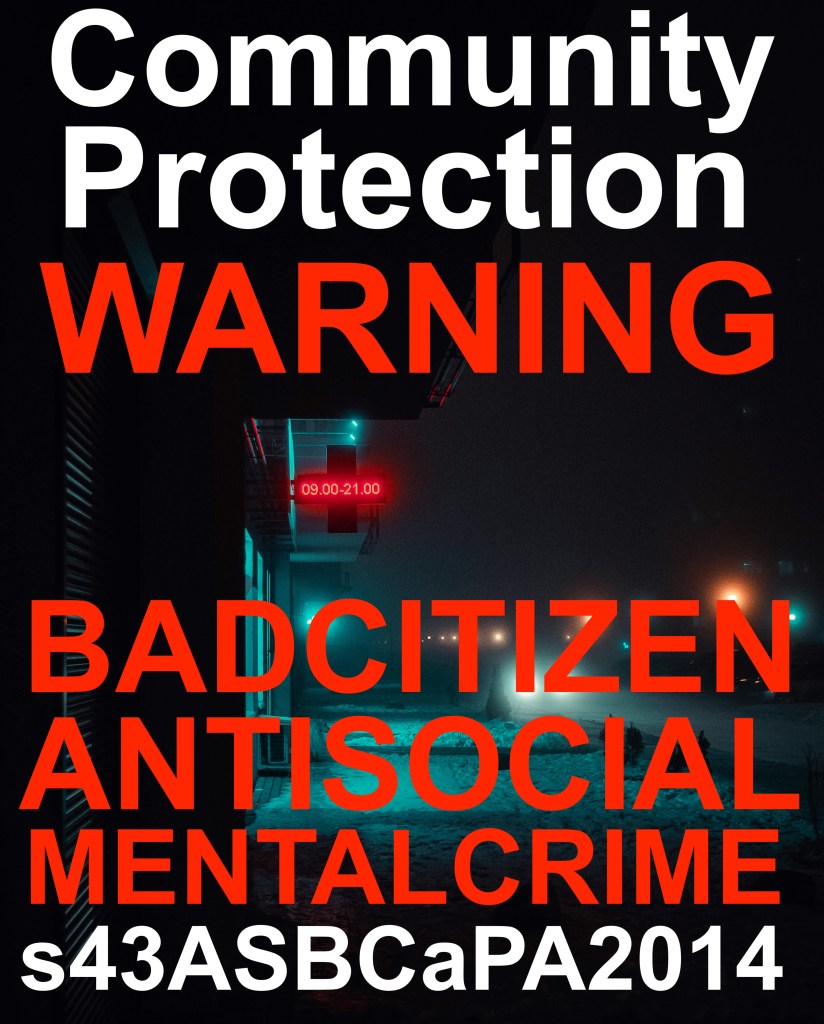
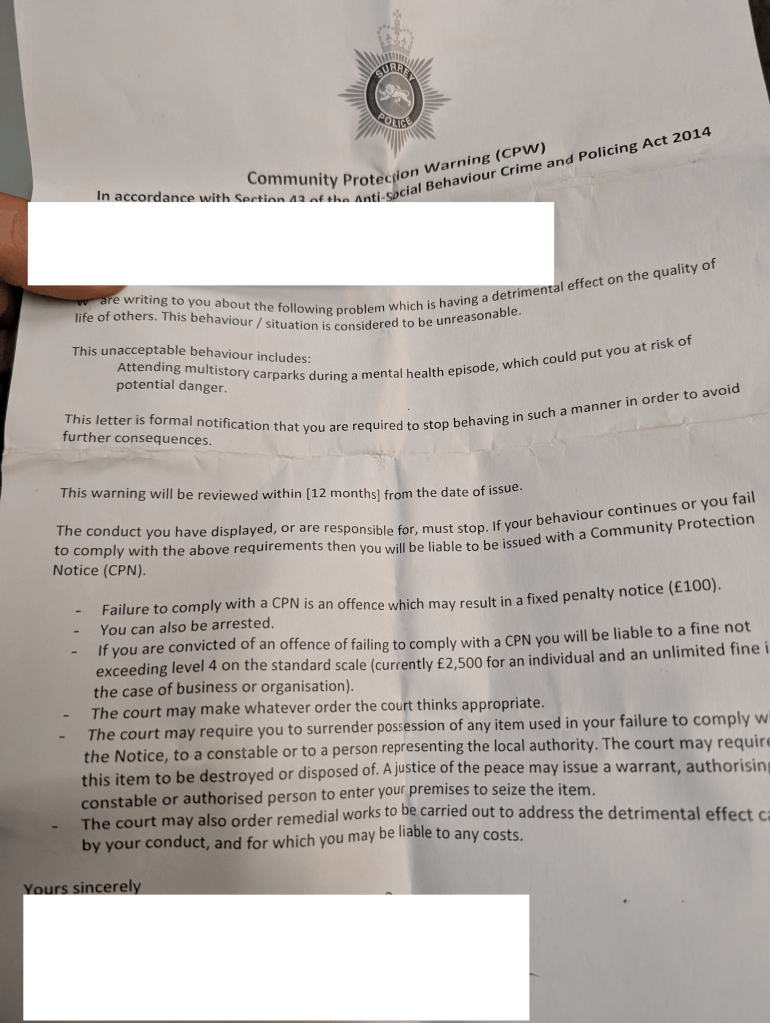
As some of the overdoses were away from home and, on occasion, I would abscond from hospital when in severe distress, the police decided to issue me with a Community Protection Notice Warning (CPNW). It read:

 “This letter should be considered as formal notification of your need to put these problems right to avoid further consequence. Please ensure you take the following action/s within the timescales detailed.”

The actions were as follows:

  • not to have any unprescribed medications on me
  • not to act or ‘behave’ in a way as to cause another person to believe I’m in danger of harming myself.
  • not to contact anyone by any means to make threats or allude to any thoughts of self harm or suicide. This includes my close friends and family.

In a time where “just talk” and “reach out for help if suicidal” narratives are everywhere, being under a police-ordered notice NOT to talk is incredibly isolating. It goes against all the research that talking about suicidal thoughts is crucial in managing them. It gives the police powers over my health, where they have no place. It is a violation of human rights.

Unsurprisingly, the letter didn’t help my feelings of hopelessness and my struggles to engage with mental health services. Instead of being instantly cured from my mental health problems and suddenly stopping the self-destructive ‘behaviours’ like the police had hoped, I continued to be admitted.  My admissions became a lot more severe each time, and I usually ended up in intensive care units. Health professionals would mention the CPNW whenever I asked about signing forms to leave, and they would constantly threaten to contact the police and tell them I’d breached the notice. Health professionals became an extension of the police force and I found it impossible to trust them.

Eventually in May of 2019 the police decided to issue me with the full Community Protection Notice (CPN). This is valid for 2 years and includes all the same actions contained in the  warning letter that I must abide by. Once when I was struggling I text a friend to say I was thinking of harming myself. She ended up calling for help and the police showed up, who told me I had broken my notice.

I have never felt more isolated than I am now knowing that if I do need help I can’t so much as tell a friend or even a family member. I’m not even allowed to tell my mum I’m struggling. What sort of life is that? If my family call for help, it’s me who will get arrested. The only people I’m allowed to talk to about suicidal distress are specified mental health professionals, yet they are the ones who’ve put me in this situation. My trust in them is at an all time low. Talking about my distress and asking for help is now a criminal offence.

Increasingly more people, often those given a BPD diagnosis label, are being arrested and sent to prison because of suicide attempts or their communication of extreme distress, despite the fact suicide has been decriminalised since 1961. More and more of us are ending up in the criminal justice system because of our mental illness. It seems we are seeing a resurgence of the criminalisation of the mentally ill by the back door, in the name of ‘public protection’.

If you genuinely want to help people like me, please start by just listening. Provide me with appropriate support, talk to me, offer me therapy – just don’t call the police.

Black Lives Matter – What White People In The UK Can Do

Text on black background saying Black Lives Matter UK @UKBLM

Nila K and C&P

Some things UK white people can do:
1. Get educated.
2. Learn about bystander intervention, practice and use it. If that’s not accessible/safe for you, then tell people about it who can do this work.
3. Donate to UK black led grassroots/radical groups. Or groups that do street medic/arrestee support. They might be about to get VERY busy.
****

1. Get educated

For starters – read or listen to Reni Eddo-Lodge’s fantastic book Why I’m No longer Talking To White People About Race. Google Books

Reni Eddo-Lodge has asked that people borrow/share her book if possible, and send the money you’d have spent black grassroots groups
“This book financially transformed my life and I really don’t like the idea of personally profiting every time a video of a black person’s death goes viral.”

https://twitter.com/renireni/status/1266674554283401216

****

2. Learn about bystander intervention
If they’re happening/its accessible, consider doing stewarding/action medic/arrestee support training. Even if you can’t get to demos, i promise you it’ll make you feel more confident about daily street intervention work – which is bloody important too.

Fantastaic ‘riot medic’ manual here: https://riotmedicine.net/
De-arrests are Holy. They save lives.
Persuade other ppl to donate/boost too.

****

3. Donate to black-led grassroots/radical groups.
Examples include BLM UK, Green and Black Cross, UK Mutual Aid, or INQUEST, an incredible organisation who work on Deaths in Custody and holding UK state to account. They work on ALL deaths in custody whether police, psychiatric, prison, immigration detention. And they do all this on no fucking money. Like, they’d have to save up for a shoestring. If you have spare cash, send them some. I guarantee you they’re already busier than usual and gonna get more so.