DWP Pathways to Work Green Paper Harm: We Live In Fear

I just migrated from ESA to UC with LCWRA, I am unable to work due to severe mental health issues, including complex PTSD, complex personality disorder (ie. more than one personality disorder) and an eating disorder. It’s been so much fun reading about what Labour are planning to do to longterm sick and disabled people like me, because it has triggered and/or exacerbated every single one of my existing mental illnesses!

As I often say to my therapist, it is excruciatingly challenging trying to recover from an illness that makes you believe that everyone is out to get you and nobody cares about your wellbeing when the government has proposed cutting your means of survival and the resistance is almost exclusively limited to other longterm sick and disabled people. What makes it worse is that it’s a Labour government this time, ie. the supposed “good guys;” it is starkly different coming to terms with the fact that the people who are meant to be on your side are now targeting you as brutally as the “bad guys” always have, and frankly it has undone much of the progress I had made in dealing with my cPTSD. When you have been through trauma, it is vital to learn to trust people again rather than seeing everyone as “bad,” and yet Labour are supposed to be on our side, so is this not a perfect example of my trauma-injured brain being correct? In which case, how on earth am I supposed to recover when my supposedly skewed mentally ill view of the world is so perfectly aligned to reality?

The allegedly helpful “pathways to work” part of the Green Paper made me laugh; the DWP have literally never been the “good guys,” anyone who’s ever actually had to claim out-of-work benefits and deal with the system knows that already, so it is hysterically naive and out of touch for MPs to believe that the DWP will support sick and disabled people in any way. We live in fear of them, now more than ever.

Moreover, my eating disorder has been much worse since the benefit cuts announcement; as with most EDs mine is about needing to feel like I have control over something when everything else feels out of my hands. Needless to say, hearing that I am one review away from losing half my income has sent me spiralling, and my ED currently is worse than it has been in years. The sheer anxiety of waiting for that dreaded brown envelope to arrive summoning you to explain yourself and your health conditions (often invisible ones) to an unqualified DWP employee has increased tenfold now that the stakes have been raised so high, and you never know when or if it’s going to come, so you can’t live a single day in peace.

I don’t need to tell you how useless the NHS mental healthcare services are, so after they had made my mental health dramatically worse I gave up and went private; that is what I spend my UC on, and of course if the health element is removed from my benefits then there is no way I will be able to afford this healthcare anymore. One could argue that doing this to all the longterm mentally ill people who are currently paying for therapy would put pressure on the NHS once they are unable to afford private support anymore and go back to the NHS, but I disagree; I believe many of us will simply take our own lives at that point.

Only ignorant people would assume we’ll all flock back to the NHS, as if we’re paying out of our meagre benefits money for therapy for fun and not out of sheer desperation because NHS services are worse than useless, more damaging to our mental health than no therapy at all. Without the UC health element, we cannot access healthcare, and consequently one way or another we will probably die. We’ve heard Labour loud and clear with their constant demonising of those too unwell to work, the use of “working people” to explicitly exclude us, and their plans to cut off our means of survival; this government wants us dead, there is no other explanation. Words cannot express what a terrifying and painful experience living with that knowledge is. It would be horrific under a Tory government but to face this under a Labour one is unspeakably cruel. 

DWP Pathways to Work Green Paper Harm: Substantial Risk

The Labour Government’s DWP Pathways to Work Green Paper is brutally damaging people’s mental health. Below is one such testimony. If you want to share yours, in confidence, please email

recoveryinthebin@gmail.com

Been on disability for 25 years. Was originally in the “Substantial Risk” group. I’m Limited Capability for Work Related Activity (LCWRA) and have been for a long time I also get High rate mobility Personal Independence Payment (PIP) and Standard rate care PIP, moving onto Adult Disability Payment (ADP) this month which will remain the same until I’m re assessed by Social Security Scotland (SSS) in August.

Scotland will lose almost £500 million in social security funding if the proposals go ahead and will have to make similar cuts. But there’s no clarity on that yet. I’ve been diagnosed with several Personality Disorders (PD’s), have been blacklisted by psychiatry, cannot access NHS therapy (but have had plenty in the past). The NHS knows I’ve self harmed since I was a small child. They know I think of suicide, the NHS has no interest in either of those realities. I receive support from a local charity. I have lots of physical health issues; fibromyalgia, chronic fatigue syndrome (CFS), Functional Neurological Disorder (FND), arthritis, migraine etc plenty of the “Dustbin diagnoses”. I receive no support for those either. In some ways the DWP have been more validating than the NHS.

I’m dreading my re assessment in August although it should be easier than the DWP , I’m just so tired. I don’t know if I can face it. I’m thinking about these cuts all the time, it’s always on my mind. Have invested in a large amount of first aid gear as I anticipate an increase in my self harm, which is often life threatening. It hasn’t been a big issue for a while as being finanically secure helps my mental health immensely.
If the cuts go ahead I will lose everything, I will be on £49 a week, will be expected to look for work and will be sanctioned if I don’t.

I cannot work. The DWP has said that for 25 years. I will be made destitute, homeless and there will be no way back from it as there will be no safety net.

I will be obliged to die. I’ve already bought the rope, the pills and know what to do. I’ve been researching and practising. I will have no other option. So now I’m a life clock, a suicide deadline, out of neccesity and obligation. Death will be the only option. I’ll wait till I have to, but maybe I should do it sooner and save myself a lot of stress since it’s inevitable anyway. Either way I have no choice. You can see how my head is in a loop. There is no future. I have new serious health issues I need long term treatment for but why bother? They want me dead, seems pointless to give a shit now. Why bother improving my health. I’m not going to the GP or engaging with the NHS anymore, there’s no point, I’m already dead.

DWP Pathways to Work Green Paper Harm: Living Nightmare of DWP

The Labour Government’s DWP Pathways to Work Green Paper is brutally damaging people’s mental health. Below is one such testimony. If you want to share yours, in confidence, please email

recoveryinthebin@gmail.com

I get DWP specific nightmares and insomnia waking up at 3am.

Typically my nightmares involve the police and DWP using a battering ram to break into my home at 6am, dragging me off in handcuffs because of a malicious complaint.

Or long range cameras photographing me in my kitchen, or undercover operatives in Sainsbury’s.

My most recent nightmare involved an old GP ringing me up (his voice was spot on), with DWP, insisting I had to start a mandatory work programme, being interrogated on what I do during the day and demanding to know if I could get on a bus, and if I could it would mean I would lose all entitlement.

When I woke up it took me a couple of hours to work out that this hadn’t happened. I had to look at my phone record, check to see if I had messaged anyone. Initially I still wasn’t sure, maybe I just hadn’t rung anyone yet?

It took time to sink in, it was another nightmare.

My nightmares now match my reaction to DWP envelopes – nausea, actual vomiting, lasting panic and anxiety.

An Epistle of Cruelty: Life in the parallel shadow penal state of the DWP

RITB admins put out a call for testimony of what life is like living whilst receiving DWP benefits. It was painfully clear that many survivors are now afraid to speak even under pseudonym. People are silenced, and they are terrified of being noticed by the State apparatus. Therefore a Content Notice on these testimonies as they include distressing detail of bureaucratic violence, harm, and distress.

The Daily Telegraph and The Jeremy Vine Show recently put out messaging that is distressingly reminiscent of Nazi propaganda. Recalling the co-ordinated media activity of the Osborne era where scrounger rhetoric was used to make harsher and lethal policies acceptable under austerity. [Please read this letter collected by Jay Watts].

The treatment and stigmatisation of claimants is similar to the vilification of refugees. We should always act intersectionally and support each others struggles, and never fall for divide and rule messaging or pitting one groups rights against another’s. Whilst citizens do not face being drowned or rendered to Rwanda, some have had their citizenship removed and been deported, fulfilling the fascist National Front of the 1970’s policy demands. Political parties win votes competing to be crueller to both. No political party represents either group in a humane way. New Labour’s Immigration Act 1999 removed recourse to public funds for people ‘subject to immigration controls‘, the slow removal of benefits from disabled people suggests a similar policy aim, but being hampered by human rights law, disability organisations, and public opinion; the famous problem of democracy Thatcher lamented to Pinochet.

We now also have a political and media campaign against Trans people, with the country’s Human Rights organisation, the Equality and Human Rights Commission, being manipulated to now support the removal of human rights, to the alarm of the United Nations. The hostile environment while acknowledged openly by government in respect of refugees is less explicit for other demographics, but nevertheless we can feel the enmity.

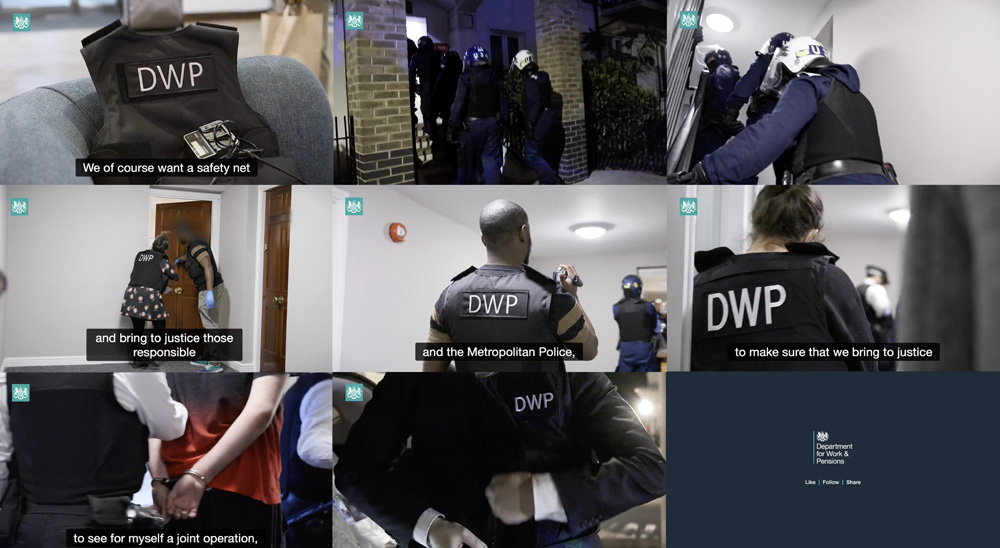
The recent footage of a 6am DWP & police raid and increased whipped up hatred towards claimants has deeply distressed many people:

The following testimony is collated from a wide range of individuals who responded to our callout, they offer a snapshot of the impact on health of being a claimant. Of what it is like living under the parallel shadow penal state of the DWP-

  • “I cannot talk about it here. I even have the thought they might see through my alias and work out who I am and punish me”.
  • “I know that I only deserve to live if I’m employed, that’s the message”.
  • “The two most vilified groups of people in the UK for political purposes are refugees and claimants. Those groups are despised. We are subhuman”.
  • “If the Bill is passed, job centre staff will be deciding who’s fit for work with the threat of sanctions. I’m stockpiling medication, I won’t survive”.
  • “As a too ill for employment disabled person I have survived solely on ever decreasing and hard to get so called social security for most of my adult life, spanning decades of so called welfare reforms, cuts, austerity, and recessions. Family tax credit, Job seekers allowance, Incapacity benefit, income support, disability living allowance, ESA, PIP and soon to be UC. I have a life threatening an ever growing fear of the DWP”.
  • “Disability fraud in social security is 0.2%, the media portrays it as 98%”.
  • “An assessment centre is referred to as The Kremlin”.
  • “The impact of DWP processes and their media has had a direct impact on my mental health to the degree that I would rate it worse than my illness, worse than being sectioned and forcibly medicated, worse than being stiched with no local anaesthetic, worse than surviving a suicide attempt. It has become enmeshed into my depression, paranoia, voices I hear, the feeling of being a target for anyone’s malicious reporting, feeling constantly surveilled, under house arrest.
  • “I sometimes hear my thoughts in the voice of Ian Duncan Smith and my voices blame me for being in this position. They say outside “they’re proper people,not scum like you”.
  • “If I were offered fast painless euthanasia, I would take it, to be free of living in fear”.
  • “I hate post, all envelopes, I feel sick at the sight of them and have vomited at the sight of envelopes I suspect are from the benefit offices. Sunday is the only I can breath – no post – but it means I’m afraid to leave my home to stay with family or friends because I fear receiving a letter or form which needs immediate attention. So I feel a prisoner in my home and afraid of leaving it for longer than 24 hours”.
  • “I know that the DWP have an algorithm that targets people for benefit fraud. That they can covertly use, physically surveillance, data from airlines, supermarkets, online purchases, CCTV, audio recordings and phone conversations, monitor bank accounts and social media searching photos and locations and encouraging neighbours to don claimants in…. all to try and prove people are lying. This all has a profound detrimental effect on my mental health and I’ve done nothing wrong”.
  • “I looked up how much you get for selling a kidney or a lobe of liver thinking of if after the general election and proposed Bill removing the WCA letting job centre staff decide who’s fit for work or not, i know I wont survive it. I was disappointed to learn that organs don’t sell for that much”.
  • “I tried to end my life during a DWP assessment process a few years ago which resulted in me being detained under the MHA.  One of the reasons I haven’t walked away from the iatrogenic harm that MH services cause me is because it would be even more difficult to prove I am ill and get enough benefits to survive on if did”.
  • “I used to be an activist, I did unpaid work which was valued by universities, NHS Trusts, nursing & medical schools. I also did work with fellow SUs and groups. I ceased all voluntary work in fear of that being interpreted as being fit for full-time work which unfortunately I am not.”
  • “I was never able to sustain full-time employment, and even consistent part-time work wouldn’t be viable for because every year for my entire adult life I have typically lost about 3-4 months of the year with my mental health. There are few employers who would tolerate 4 months sick leave every year. With voluntary work, it carries a different weight and stress because I know I can step down if I need to, I can space myself and plan to do it during my best months of the year. The irony is I’m more productive doing voluntary work than I am doing paid work”.
  • “Work as a health outcome and a cure has become the neorecovery norm. It’s scary! I don’t take part in any in person direct protest activism after knowing that some disabled activists were shopped to the DWP. I stay anonymous and private on social media and anon at online and in person Mad events because of the fear of DWP spying on me”.
  • “The neoliberal Government and media strategy is to portray benefit claimants as fraudsters, cheats and scroungers this makes me feel stigmatised, stereotyped and underserving. The welfare system is deliberately hostile and cruel. The Government is trying to kill off vulnerable disabled people. They cover up the deaths caused by the system”.
  • “Just filling the form out raises the depression levels. All negative questions. Some impossible to estimate how many hours in a day do u?? Then the interview process, being asked why you haven’t managed to kill yourself yet! Which made me feel even lower, a total failure!!”
  • “I was once accused of fraud when I failed to ask DWP for permission for permitted work of a few hours and for 6 weeks. Years later I got a letter telling me to attend the job centre and I had no clue why. A scary place with security guards at the door. I freaked out so bad when there that I ended up in a crisis house. I’ve never done paid involvement work since. They can even track gift vouchers which are seen by them as earnings. Volunteering can also be seen as being fit for paid work”.
  • “They ignore medical notes and evidence. They ignore the doctors, your specialist. They are only interested in failing you”.
  • “DWP was responsible for the death of my brother”.
  • “Best thing about lockdown 1 was knowing the letters had stopped. Felt as if I could live for the 1st time in years as I wasn’t exhausted by 24/7 in fear. That dread resumed as soon as we heard the letters were starting up again”.
  • ” I’m using the PIP to find private therapy because NHS was bad. You see a lot of benefit stigma as well and that’s pretty rubbish. I feel like a failure and a burden all the time and I don’t tell people usually that I’m on any sort of benefit”.
  • “I dread being asked “what do you do?”, the judgement extends to healthcare even. I avoid speaking to anyone in the supermarket, I stay indoors and take the rubbish out at night”.
  • “I know DWP want me dead, deaths are a cost saving”.
  • “I’m autistic and was in receipt of PIP. Because of how my autism presents I feel I have to be reassessed every time the tiniest thing changes, even if it’s just a fluctuation  rather than a change.  This means I’ve subjected myself to multiple reassessments  as there’s no way of just telling them about the small fluctuation without a full reassessment. The whole process has made me sick with anxiety, not knowing how long it will take, worrying about whether I’ll have to see someone face to face that doesn’t understand my condition.  In my last reassessment they took information over the phone from an unqualified member of staff that wasn’t listed as a contact on my form that didn’t give the correct full amount of information.  Calling the DWP causes me lots of stress and anxiety as I often need the toilet whilst on the phone and get stuck waiting for over an hour.  When there is no position in the queue information it can lead to a lot of uncertainty.  Even though I’ve been 100% honest in my claim i feel worried when I see cars outside that people are watching me.”
  • “The recent DWP advert stressed me out so much I ended up cancelling my claim as I couldn’t go through another reassessment. If the DWP had an online system where you could report  minor changes without the need for a full reassessment it would help to reduce the stress the whole process causes”
  • “I’ve attempted suicide, been paranoid and psychotic and detained under the MHA. I think that there is more threat to my life from the benefits system than anything else. Yet, I’ve read all my clinical notes and I don’t see the fact that the DWP has caused many mental health crises recorded anywhere”
  • “I’m due a PIP review for severe mental health issues. Last time I had a review, I didn’t sleep. I was anxious. Just filling out the form is distressing. This time, I have no supporting evidence for anything because my CMHT have barely seen me and not listened and not helped me. I’ve misplaced my crisis team summary from last time I was under them and I’m too scared to call anyone to ask for any further evidence because I’m fobbed off all the time. The PIP review has me even more anxious this time because I’m lacking the evidence.”
  • “A recent video by DWP was shared on Twitter which featured the DWP minister in a stab vest saying “ We will track you down. We will find you. We have a very particular set of skills” and showed suspects in handcuffs, doors being smashed down and wailing sirens. Watching this video sent me into what the mental health crisis team called a “psychotic episode” and led to a police welfare check and other scary things”.
  • ” I’m using the PIP to find private therapy because NHS was bad. You see a lot of benefit stigma as well and that’s pretty rubbish. I feel like a failure and a burden all the time and I don’t tell people usually that I’m on any sort of benefit”
  • “I’m constantly paranoid my benefits will be stopped. I get very specfic delusions when real bad it becomes part of my paranoia that I’m being watched”.
  • “I think it’s the division that has been sowed by the media, the manipulation of data to present a point of view that stigmatises people”
  • “They don’t like it if you’re on alternative medication and penalise you if you’re not what they consider a high enough dose. It’s like they want you numbed and overdosed. They don’t allow for fluctuations of the conditions”.
  • “Last summer had interview for 4 hrs work which would have been a big challenge but a +ve step for me & I was likely to get the job but I pulled out due to fear of impact on benefits & being reassessed as fit for work just because of doing 4 hrs/week”.
  • “I live in constant fear of assessment & struggle to do new things worrying how they will twist it so they don’t have to give me the benefits I need to live”.
  • “I just exist, waiting for the gestapo to push me to suicide, no hope nothing”.
  • “The process is humiliating and 3.5 hr phone assessment was horrendous, nearly killed me and got to go through it all again in a few months, not even been two years yet”.
  • “If you have a pain condition you’re caught in a particularly Kafkaesque trap because doctors don’t want to prescribe opioids any more but if you’re not on them the DWP don’t believe you have chronic pain”.
  • “The benefits system, especially disability benefits system, is a special kind of hell on earth designed to make us feel subhuman, which is what most people think we are”.
  • “I literally can’t have a romantic partner because I’ll never be allowed to move in with them without losing all my benefits. My condition (ME/CFS with hEDS) is incurable so I will be alone for the rest of my life because of DWP policy”.
  • “Friends & family talk all time about ppl they know who are “fiddling” their disability benefits because “ you can see they aren’t really ill”, they always follow up with “not you, we don’t mean you” & I have to decide again whether to have another rant about invisible illnesses”.
  • “Am not on benefits anymore but I can still feel that fear. The recent video from the DWP brought it all back. The feeling of being watched, never knowing who or when. Being told by a support worker that I was worrying over nothing. Feeling like a fraud and doubting myself all the time. It was exhausting”.

Journal of Social Policy: In-work Universal Credit: Claimant Experiences of Conditionality Mismatches and Counterproductive Benefit Sanctions Published online by Cambridge University Press: 01 December 2020

I’ve been made to feel like a pariah for so long now it has entered my DNA

Despite being on benefits all my life, I still feel hounded by the department. There have been times in my life and I’ve been frightened to leave the house in case somebody anybody reports me for being able to breathe and walk brackets (not that the walking part is a problem anymore )

In 2014, I was I was chosen to carry the Commonwealth torch as part of the games  in Glasgow.  I was nominated for my services to the community in a voluntary capacity. After much paranoia and anxious I decided not to  participate as I was terrified that somebody might to decide to interview me, film  me and upload my details and then I will be reported to the DWP for those very same services to the community.

 I’ve done various bits of voluntary work since I moved to Scotland in 2010. I’ve never told to the DWP. Due to the fear of them thinking this means I’m fit for a 37hr week. Instead I’ve taken the risk of flying under the radar and constantly worrying something I was going to get found out prosecuted for fraud and jailed .  

My peer support worker expenses used to get paid every three months by cheque. It wasn’t a huge amount of money but I had to put it through my bank account and  worried constantly  the DWP would access my account and find me out. I could probably have told them that I was volunteering still remained in receipt of benefits but I wasn’t prepared to take that risk. I also used to lecture in a paid capacity from time to time but couldn’t risk this  and most universities don’t have an alternate way of paying somebody on benefits…

Paranoia of  the dreaded brown envelopes is always there  but especially heightened when you are waiting for a decision on  a new claim or review  . Recently I have a pip review which took 10 months from start to final decision. Every day I dreaded the post only Sunday was a respite They also started to play stupid bastardised and sometimes use white envelopes so nothing was safe! . . You can never rest  because they keep moving the goal posts so any sense of stability is lost..

I was offered , a paid role as a support worker but it was part time and I was terrified about dealing with the DWP. How pomfret would it take for them to sort out a new claim with the daily envelope waiting again.. What if I became unwell again and had to stop working? Would I be believed? What if they dithered over my clam and didn’t pay my rent? Would I become homeless again? I couldn’t cope with that.Best not to rock the already precarious boat!

I often feel wrong in accessing leisure activities as  There is always that feeling I can’t really be that sick if I can go the cinema. Sick people have to be sick all of the time or not at all. that’s how the bastards make you feel. Maybe I’d be spotted having a good time.

The mental health system is set up to make you feel less than, a burden, at it! And if you have a PD  label forget being taken seriously. I have a history of chronic addictions which are often seen as self inflicted and the DWP compounds these internalised briefs. Oh and forget being a single mother: I once had all my disability benefits stopped when I returned home after a 5 month hospital stay with my baby daughter. Apparently motherhood means cured. 

When people ask me what I do that seems like an admission of failure to say I’m “just” on benefits. My worth is apparently based  on my capacity as an earner, a financial contributor. Now I’m  wheelchair bound it’s easier because it’s obvious something is wrong but I spent decades worrying that I wasn’t that ill and that everyone knew it! Or that my obvious problems with alcohol and drugs were seen as self inflicted and a drain on the state. I still limit who gets to know that part of me.,

I’ve asked for increases in medication purely for evidence of not being recovered. I have continued to take high doses medication. I’ve  totally lost track of whether I need it or not but it looks good for the DWP. 

Dealing the with the DWP exhausting and brings up all the feelings of basically not being good enough. Less than, a burden, a non entity. I’m finding doing this for RITB extremely triggering and I know there’s no threat. But what if a binner thinks I’m a fake and have just conned everyone for the past 40years? What if I’ve conned myself? I’ve been made to feel like a pariah for so long now it has entered my DNA.

Further Reading: Deaths by Welfare Project

I Won by Sam Ambreen

{CN for suicide, self harm, mental health}

13 months after my personal independence payments were cut, I won my 2nd tribunal. 13 months of crowdfunding my rent. 13 months of reducing my food intake, buying the cheaper brand, going without, and feeling humiliated but on Friday, a panel ruled in my favour. There was no objection from the DWP representative who, I could have sworn, was even crying at one point. I felt bad for scowling at her after that!

I self harmed 4 times during that period, when I absolutely could not comply with the measures I’ve worked at to protect myself. I dissociated more frequently. I got as far as buying the instruments I would need to end it. Drew up a plan. Resisted writing the suicide note because that would make it final, and only because the people around me pulled through when I shared my invasive thoughts (a thing I was only able to do because I’d been taught, by my first therapist). They reminded me I’d managed to survive this long because people wanted to help me. They made me think about the people who look to me for strength and how my demise would impact on them. I didn’t really care in that split second but when the feverish urges passed I felt a bit sheepish I’ll admit. People do take strength from my courage.

When the DWP cut me off and sent me their decision, they said they were not disputing the fact that I had these disabilities just whether or not I qualified for personal independence payments. 13 months on and I’ve just been told I do. So was it really necessary to put me through this? What is its purpose otherwise? Survival of the fittest? It’s not strictly true anymore though is it? I’m nowhere near the fittest but I have recourse; to advocates, to friends who work in the public sector and health professionals who actually listen. Perhaps this mum didn’t?

Even with all the support I have, I came the closest I ever have to ending it. I didn’t enjoy asking for help, again and again, I was isolated and lonely as a result. I might be an anarcho-communist but I still have the hardwiring of a society that celebrates charity as a virtue but not if you’re on the receiving end. The shame still lingers. I didn’t want to die, I felt I had no other choice.

Recently I read about a young woman called Holly Cowlam who took her own life when she was diagnosed with depression. Holly had been studying psychology and so had some understanding of mental health. I get the sense, because she knew her chances in life would be greatly affected, as they are in a society that demonises mental health, she felt she had no other option. I know what that’s like; the shame and hopelessness. I refused to acknowledge my own mental health for 20 years, telling myself I was stronger than those others who had succumbed. In the end, you can’t really prevent it. I am the sum total of all the violence and treachery inflicted on me but with the right support, and freedom, and protection, I know I can get better.

holly-cowlam

What I do not need, and could have really done without, was being treated like I’m making it up. As a repeat victim of sexual and domestic violence, gaslighting is a straight up trigger for my PTSD. Being treated like I am insignificant and somehow asking for more than what is my right, having paid into a system for many years and on an emergency tax code more often than not (I did a lot of temp work because I was sick even then only I wouldn’t admit it) eventually wore me down in a way my mental and physical conditions do not, because I believe I can overcome them (to an extent). I needed time and space to heal not to be hindered by a cruel and abusive process.

Advocates for humanity must ramp up the pressure on this government and demand justice for all those who’ve needlessly died in our country. The architects of social cleansing must be tried for their crimes against our humanity.

You can judge a country by the way it treats its animals/poor/prisoners/women/disabled folk.

Republished (23/02/19) by kind permission, Sam Ambreen blogs at Left At The Lights

If you need help dealing with the DWP see our Advice Links page.

Note: PIP application processes generally require disclosure of diagnoses, medication, and supporting evidence, making it significantly discriminatory and arduous for many people. Professionals are often uninformed about how best to help people, this is a good guide.

Recovery In The Bin (RITB) is covered by a Creative Commons Attribution-NonCommercial-NoDerivatives 4.0 International (CC BY-NC-ND 4.0) License 88x31.png

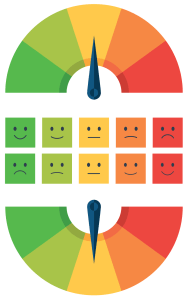
Neoliberal Mental Health Rating Scale

dial nlb

0-29: Totally inadequate life, which does not address the requirements of capitalism. Shows extensive understanding of how to be a productive worker but wilfully resists. Pervasive political engagement on the Left, including direct action. Rejects A-B marches (the only state-sanctioned form of quasi-protest). Has a bustcard tattooed on arm.

30-39: Mostly inadequate life which involves some mildly productive labour, but does not show much evidence of embracing capitalism or working towards improving economic productivity.

40-49: Poor life, which shows some evidence of economic productivity and understanding of what needs to be done, but lacks conscientiousness. Frequent A-B march attendee.

50-59: Satisfactory contribution to capitalism, showing an awareness of the need to make bosses rich and belief in the constructs of “meritocracy” and “social mobility”. However, shows some evidence of political engagement on the Left and dissent.

60-69: Good work, which treats capitalism with the respect it is due. However, still some mild political engagement, including attendance at A-B marches.

70-79: Excellent work, which displays exceptional contribution to bosses’ salaries including developing novel approaches to economic growth. No political engagement beyond laughing at socialist ideas expressed on BBC Question Time.

80-100: Outstanding economically productive work in virtually all areas of life. Married. Straight. Two children. Owns north London house. Donates to established neoliberal parties and corporate charities – in line for OBE for doing so. Has enabled multiple chief execs to buy yachts. Has a tech startup which will revolutionise mental health in corporate environments, seed capital for which came from remortgaging house. Vocal advocate of mindfulness in schools initiatives. Did a TED talk on helping others achieve their potential.

Recovery In The Bin (RITB) is covered by a Creative Commons Attribution-NonCommercial-NoDerivatives 4.0 International (CC BY-NC-ND 4.0) License 88x31.png

Open Letter To The Organisers, Partners And Delegates Of The Global Ministerial Mental Health Summit #GlobalMHSummit #theworldneeds

UK govt naughty MH

Open Letter to the Organisers, Partners and Delegates of the Global Ministerial Mental Health Summit, London
9th and 10th October, 2018

The UK government is hosting a Global Ministerial Mental Health Summit in London on the 9th and 10th of October, 2018. The Summit aims to “build momentum on global mental health issues such as early intervention, public health, research, tackling stigma, and promoting access to evidence-based services.” The event is set to culminate with a “global declaration committing to political leadership on mental health.” The Summit will also see the launch of the Lancet Commission into the links between mental health and sustainable development.

We the undersigned are concerned about the way in which this event has been organised and about the UK positioning itself as a ‘global leader’ in mental health for the following reasons:

  1. The organisation and planning for this event has been a closely guarded secret. Even the full list of countries participating was not released beforehand, which made any possibility of advocacy by civil society organisations in those countries impossible. Significantly, there has been little or no involvement of organisations led by mental health service users, survivors and persons with psychosocial disabilities in the thinking, planning and design of this event. While a few networks were approached to provide ‘experts by experiences’ to attend panels on themes already decided on, there has been no meaningful consultation or involvement of user-led and disabled people’s organisations not already signed up to the ‘Movement for Global Mental Health’ agenda or funding to enable a wide range of representatives to attend. This is in open violation of Article 4 of the UN-Convention for the Rights of Persons with Disabilities (CRPD) which obligates signatories to closely consult with and actively involve persons with disabilities through their representative organisations in decision-making around issues that directly concern persons with disabilities.
  2. The UK’s positioning as the leader in the global effort to tackle mental health needs is highly problematic for a variety of reasons. In 2016, an inquiry by the UN Committee on the Rights of Persons with Disabilities found that austerity policies introduced by the UK government had met “the threshold of grave or systematic violations of the rights of persons with disabilities.” The Committee found high levels of poverty as a direct result of welfare and benefit cuts, social isolation, reduced standards of living, segregation in schools of children, lack of support for independent living and a host of other violations. The situation has had a direct impact on people’s mental health with rates of suicide attempts doubling and widespread destitution.
  3. In the concluding observations on the initial report of the United Kingdom of Great Britain and Northern Ireland, the Committee raised particular concerns about the insufficient incorporation and uneven implementation of the CRPD across all policy areas and levels within all regions, devolved governments and territories under its jurisdiction and/or control, and about existing laws, regulations and practices that discriminate against persons with disabilities.
  4. In the UK, there is a particular situation of discrimination within mental health services that affect its black and minority ethnic communities and migrants from ex-colonial countries and the global south diaspora. Decades of evidence show that they face consistent discriminatory treatment within UK’s mental health services, including high levels of misdiagnosis, compulsory treatment, over-medication, community treatment orders and culturally inappropriate treatment. The inquiry into the death of David Bennett, an African Caribbean man in the care of the state, found the NHS to be institutionally racist. Yet, the UK government has set out to lead the globe in creating inclusive and just societies while continuing to perpetuate a ‘hostile environment’ not only in its health and social care services but in other areas that impact on people’s mental health such as immigration, policing, employment, welfare and so on.
  5. The Summit is set to announce the global launch of the anti-stigma programme, Time to Change, with programmes planned in India, Ghana, Nigeria, Uganda and Kenya. Millions of pounds have already been spent on this campaign which claims to have made a positive impact on mental health stigma, while evidence also shows that there has been no improvement in knowledge or behaviour among the general public, nor in user reports of discrimination by mental health professionals. The UN Committee on the Rights of Persons with Disabilities, in its concluding remarks, raised particular concerns about perceptions in society in the UK that stigmatize persons with disabilities as living a life of less value than that of others. It also pointed out that existing anti-discrimination legislation in the UK does not provide comprehensive or appropriate protection, particularly against multiple and intersectional discrimination. Given this scenario, it is objectionable that the UK government continues to fund a programme that aims to address stigma while carrying on with the most stigmatising and discriminatory policies that affect persons with psycho-social disabilities.
  6. UK has already taken the lead in exporting the failed paradigm of biomedical psychiatry globally through the ‘Movement for Global Mental Health’. The failure of social contact based anti-stigma programmes to attain any change in structural discrimination and inequalities has not deterred the UK government from supporting the export of another high-cost, low impact programme, with funding from the Foreign and Commonwealth Affairs Office, to the global south. This model of ‘North leading the South’ recreates colonial ‘missions of education,’ significantly impacting on the development of locally relevant, rights-based discourses rooted in the wisdom of CRPD and led by persons with psychosocial disabilities in the global south.
  7. Many professionals in the field of mental health both in the global south and in the global north have cautioned against the application and scale up of western models of mental health care worldwide. User/survivor groups in the global south have already objected to importing failed western models of mental health care into their countries and called for full CRPD compliance that will enable full and effective participation of service users, survivors and persons with psychosocial disabilities in all aspects of life. This is significant at a time when the Mental Health Act is under review in England and there has been consistent resistance to moving towards CRPD compliant legislation.

Given this scenario, it is hypocritical that the UK government is taking the lead in creating a global declaration on political leadership in mental health. As with the Global Disability Summit this government recently staged, we are seeing an intolerant government posing as the upholder of the rights of persons with psychosocial disabilities. The organisation of the Summit is in opposition to the spirit and terms of the CRPD.

We ask the participants and delegates of this Summit to:

  1. Reflect upon the issues brought forward in this letter, including existing structural and multiple discrimination against persons with psychosocial disabilities in the UK by its government
  2. Demand a clarification from the UK government on its position on the CRPD and the measures it is taking to uphold the CRPD within its own laws and policies
  3. Ask the UK government to desist from operating in imperial ways that export failed models and methods to the rest of the world which negatively impact on local innovations and ways of working
  4. Campaign to ensure that any declaration created at the Summit is put forward for wide consultation and ratification by the diverse range of user-led and disabled people’s organisations worldwide
  5. Insist that if the UK government wishes to promote mental health in the global south, it must:
    1. Lead by example by changing its domestic laws, policies and practice that currently threaten the lives of mental health service users and survivors in the UK, including its economic and welfare policies that have widened inequalities, made life intolerable for thousands of disabled people and contributed to their deaths.
    2. Acknowledge the knowledge existing within user-led and disabled people’s groups about what works best as well as provide support for user-led services, advocacy and research
    3. Examine its own foreign policies in order to lessen north-south disparities in health standards and its own ethical standards in exporting western mental health systems
    4. Support local, inclusive innovations in the south to address social and structural determinants of health rather than take over leadership
    5. Enable local people to develop services that are for the benefit of the people concerned as subjects rather than objects of development and sustainable without dependence on or interference from rich countries in the West.
  6. Engage with independent civil society groups and not conform to the wishes of the UK government.

Signatories

  1. National Survivor User Network, England
  2. Recovery in the Bin
  3. Mental Health Resistance Network, UK
  4. Linda Burnip on behalf of Disabled People Against Cuts, UK
  5. North East Mad Studies Collective, England
  6. Transforming Communities for Inclusion – Asia Pacific (TCI-Asia Pacific)
  7. Bapu Trust for Research on Mind and Discourse, India
  8. SODIS (Sociedad y Discapacidad), Peru
  9. North East Together (NEt), England
  10. North East Together (NEt), service user and carer network, UK
  11. NTW Service User and Carer Network, England
  12. Steve Nash, Co-Chair ReCoCo: Recovery College Collective, England
  13. Center for the Human Rights of Users and Survivors of Psychiatry (CHRUSP), USA
  14. Akiko Hart, Hearing Voices Network, England
  15. Akriti Mehta, User-researcher, King’s College London, UK
  16. Alan Robinson, Artist, Buenos Aires, Argentina
  17. Alexandra Reisig, Student (Global Mental Health), UK
  18. Alfred Gillham, ISPS UK
  19. Alisdair Cameron, Launchpad: by and for mental health service users, UK
  20. Alison Faulkner, Survivor researcher, UK
  21. Alvaro Jimenez, University of Chile, Santiago, Chile
  22. Andrea Liliana Cortés, Independent activist in human rights and psychosocial disabilities, Colombia
  23. Asmae Doukani, London School of Hygiene and Tropical Medicine, UK
  24. Brenda A. LeFrançois, Professor, Memorial University of Newfoundland, Canada
  25. Caitlin Walker, Cambridge University, UK
  26. Carolyn  Asher, Service  user of mental health services, UK
  27. Catherine Campbell, Professor of social psychology, London School of Economics, UK
  28. Che Rosebert, Director – interim external communications, Association of Clinical Psychologists UK
  29. Cheryl Prax, Psychiatric survivor, Speak Out Against Psychiatry (SOAP)
  30. China Mills, Lecturer, University of Sheffield, UK
  31. Chris Hansen, International Peer Support, USA
  32. Claudio Maino, Université Paris Descartes, France 
  33. Corinne Squire, Professor of social sciences, University of East London, UK
  34. Cristian Montenegro, PhD candidate, London School of Economics, UK
  35. David Harper, Reader and programme director for the professional doctorate in clinical psychology, University of East London, UK
  36. David Orr, Senior lecturer in social work, University of Sussex, UK
  37. Derek Summerfield, Honorary senior clinical lecturer, IoPPN, King’s College London, UK
  38. Diana Rose, Professor, King’s College London, UK
  39. Dominic Makuvachuma, Co-ordinator, Reigniting the Space Project, England
  40. Doreen Joseph, Service user, advocate/researcher/lecturer/writer, UK
  41. Dorothy Gould, Researcher, trainer and consultant with lived experience of mental distress, UK
  42. Duncan Double, Consultant psychiatrist, Norfolk & Suffolk NHS Foundation Trust, England
  43. Eamonn Flynn, ISPS UK
  44. Elaine Flores, London School of Hygiene and Tropical Medicine, UK
  45. Eleni Chambers, Survivor Researcher, UK
  46. Emma Ormerod, Survivor Researcher, UK
  47. Erica Burman, Professor of education, University of Manchester, UK
  48. Erick Fabris, Psychiatric survivor; Researcher for the Mad Canada Shadow Report, Canada
  49. Ewen Speed, Senior lecturer in medical sociology, Director of research, School of Health & Human Sciences, University of Essex
  50. Farhad Dalal, Psychotherapist, group analyst, and organizational consultant
  51. Fiona Little, MH sufferer, violated for years, UK
  52. Francisco Ortega, Professor of collective health, State University of Rio de Janeiro, Brazil
  53. Frank Keating, Professor of social work & mental health, Royal Holloway University of London, UK
  54. Giles Tinsley, Hearing Voices Network England
  55. Glenn Townsend, Service user of mental health services, UK
  56. Hari Sewell, Independent consultant and author, UK
  57. Helen Spandler, Professor of mental health, University of Central Lancashire; Editor, Asylum magazine, UK
  58. Ian Parker, Emeritus Professor of Management, University of Leicester, UK
  59. Iain Brown, Tortured sufferer at the hands of MH team, UK
  60. Ilma Molnar, London, UK
  61. Janaka Jayawickrama, PhD, Associate professor in community wellbeing, Department of Health Sciences, University of York, UK
  62. Jane Gilbert, Consultant clinical psychologist, UK
  63. Janice Cambri, Founder, Psychosocial Disability-Inclusive Philippines (PDIP), Philippines
  64. Jacqui Narvaez-Jimenez, Carer bullied by the MH team, UK
  65. Jasna Russo, Survivor researcher, Germany
  66. Jayasree Kalathil, Survivor Research, UK
  67. Jen Kilyon, ISPS UK
  68. Jenifer Dylan, Service user involvement facilitator, Camden and Islington Foundation Trust
  69. Jhilmil Breckenridge, Editor, Mad in Asia; Founder, Bhor Foundation, India
  70. Karen Machin, Researcher, UK
  71. Kate Swaffer, Chair, CEO and Co-ordinator of Dementia Alliance International
  72. Katherine Runswick-Cole, Professor of education, University of Sheffield, UK
  73. Lavanya Seshasayee, Psychiatric survivor; Founder, Global Women’s Recovery Movement, Bangalore, India
  74. Leah Ashe, Victim of psychiatry
  75. Leo McIntyre, Chairperson, Balance Aotearoa, New Zealand
  76. Liam Kirk, Member of the service user group of Brent, Wandsworth and Westminster Mind, UK
  77. Lisa Cosgrove, Professor of counselling and school psychology, College of Education and Human Development, University of Massachusetts, Boston, USA
  78. Liz Brosnan, Survivor researcher
  79. Luciana Caliman, Professor of psychology, Universidade Federal do Espírito Santo, Vitória, Brazil
  80. Lucy Costa, Deputy executive director, Empowerment Council: A Voice for the Clients of CAMH, Toronto, Canada
  81. Margaret Turner, Secretary, Soteria Network UK
  82. Margerita Reygan, Mother/Carer of mental health service survivor, UK
  83. Mari Yamamoto, User of psychiatry, Japan
  84. María Isabel Canton Rodriguez, Rompiendo la Etiqueta, Nicaragua
  85. Mark Allan, HVN England and North East Mad Studies Collective, England
  86. Melissa Raven, Postdoctoral fellow, Critical and Ethical Mental Health research group (CEMH), University of Adelaide, Australia
  87. Michael Ashman, Survivor of psychiatry, UK
  88. Michael Njenga, Executive Director, Users and Survivors of Psychiatry in Kenya, Kenya
  89. Mick McKeown, University of Central Lancashire, UK
  90. Mohan Rao, Professor (retired), Centre of Social Medicine and Community Health, Jawaharlal Nehru University, India
  91. Neil Caton, ISPS UK
  92. Nev Jones PhD, University of South Florida, USA
  93. Nikolas Rose, Professor of sociology, King’s College London, UK
  94. Norha Vera, King’s College London, UK
  95. Paola Debellis Alvarez, Universidad de la Republica, Uruguay; CCC PhD-Forum, Geneva, Switzerland
  96. Patrick Bracken, Consultant psychiatrist, Co Cork, Ireland
  97. Paula Peters, Bromley DPAC (Disabled People Against Cuts), England
  98. Peter Beresford, Mental health service user/survivor, Shaping Our Lives, UK
  99. Peter Coleman, A family carer for son currently subject to restriction, UK
  100. Phil Ruthen, Survivors Poetry, UK
  101. Philip Thomas, Writer; Formerly consultant psychiatrist and academic, UK
  102. Raúl Silva, Doctoral student, UCL Belgium/Ecuador
  103. Reima Ana Maglajlic, Senior lecturer in social work, University of Sussex
  104. Reshma Valliappan, The Red Door, India
  105. Roy Moodley, Associate professor and director of Centre for Counselling & Psychotherapy, University of Toronto, Canada
  106. Ruth Silverleaf, User-researcher, Kings College London, UK
  107. Sami Timimi, Consultant child and adolescent psychiatrist, Lincolnshire Partnership NHS Foundation Trust, England
  108. Sarah Carr, Acting Chair, National Survivor User Network, England
  109. Sarah Yiannoullou, National Survivor User Network, Managing Director
  110. Sebastian Lawson-Thorp, UK
  111. Shireen Gaur, Clinical psychologist and psychotherapist, UK
  112. Sofía Bowen, PhD candidate, King’s College London, UK 
  113. Stan Papoulias, Assistant director, Service User Research Enterprise, Kings College London, UK
  114. Stephen Jeffreys, Someone with lived experience, UK
  115. Sue Bott, Deputy chief executive, Disability Rights UK
  116. Suman Fernando, Retired psychiatrist, writer and campaigner, UK
  117. Sumeet Jain, Senior lecturer in social work, The University of Edinburgh, UK
  118. Susan Wolfe, Social historian, UK
  119. Sushrut Jadhav, Consultant psychiatrist and clinical senior lecturer in cross-cultural psychiatry, University College London, UK
  120. Teisi Tamming, Estonia
  121. Tish Marrable, Senior lecturer in social work, University of Sussex, UK
  122. Tracey Lazard: CEO: on behalf of Inclusion London
  123. Will Hall, Host, Madness Radio; PhD candidate, Maastricht University School of Mental Health and Neuroscience, Netherlands
  124. Zsófia Szlamka, Youth activist, Hungary

If you would like to add your support to the letter please email info@nsun.org.uk

Ruth Davidson, Mental Health And Tory Policy

Screen Shot 2018-09-26 at 18.44.41

Thank you to Irene Sutcliffe @hotsexmadrigal and James Loxley @oldnorthroad for permission to repost their article here:

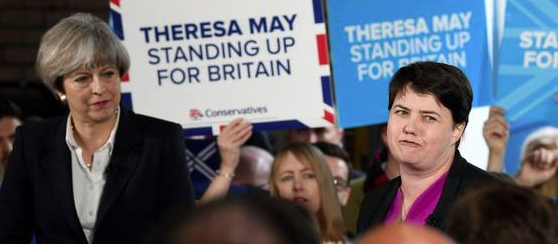
On 16 September, the Sunday Times published an interview with the leader of the Scottish Conservatives, Ruth Davidson. The piece was both about Davidson’s private and public lives (the two can’t really be separated, not in her line of work): her pregnancy and the importance to her and her partner of starting a family, her political career to date, and her desire not to be Prime Minister (despite strong rumours to the contrary). The interview was trying to be a refreshing take on a Conservative politician – as the interviewer points out, on the surface, Davidson is hardly your archetypal Tory, ‘…a working-class, winningly informal, cheerfully profane 39-year-old lesbian former kick boxer…’. The piece even begins with Ruth dancing for the photographer, apparently unembarrassed. She is portrayed as frank, amusing and charming. She has an autobiography coming out, called ‘Yes She Can’, and a lengthy extract from this book, which deals with her breakdown aged 17, is printed at the end of the interview.

It should only be a good thing when well-known figures, especially those in positions of political power, are candid about their mental health issues, for several reasons. Firstly, and perhaps most obviously, it shows that the black dog strikes indiscriminately – sure, Davidson is a lesbian from a working-class background, but she is also an educated cisgendered white woman who can’t fairly be called working-class these days. Secondly, it demonstrates that mental health difficulties needn’t be a barrier to doing such a demanding job. And thirdly, such people are actually in a position to change the way the state provides for those with mental illness – which it does woefully badly at the moment. Woefully badly. We cannot emphasise this point enough. English NHS services are laughably understaffed (for example, when one of us was under section in a psychiatric unit in a hospital with 6+ wards, there was ONE doctor covering the whole hospital outside of 9-5 Monday to Friday hours). Waiting lists for NHS therapy are horrifically long, and even private therapists are stretched. The postcode lottery is a huge factor in terms of what is available to those suffering with mental health problems. While the NHS in Scotland is devolved (in fact, it has always been separate) and hasn’t had to cope with a drive towards marketisation, years of real terms cuts to the Scottish government’s budget and increasing demand mean that there is still huge pressure on resources, and services are certainly not where they should be. The recent allocation of additional resource to mental health care in the Scottish budget is a very welcome step, but will not go far towards solving the problems. Stories of people not getting the care they need will continue to proliferate.

The interview proved points 1 and 2 pretty well, and there’s not much need to go into those here. But let’s take point 3. As an MSP, the leader of the second largest party at Holyrood and an aspirant to the position of First Minister (if not, as she claimed in her interview, that of Prime Minister), Davidson has a prominent platform from which to advocate for significant improvements in this system and – just as importantly – to will the means required to make such improvements happen. One of the most crucial things that mental health services require for improvement is, essentially, a huge injection of cash. But we also need meaningful changes in the way the state – and society – view mental illness in all its various forms: not as the fault of the individual, but as a difficult and unfair thing that could befall anyone. It’s also not the responsibility of the individual alone to recover from their unwellness: it’s society’s duty to help everyone, and to make necessary adaptations for those with mental health problems so that they can operate within society and not on its fringes.

So, what does Davidson have to say about all this? Here is the extract in full, with our commentary:

I went to university at 17 years old. If I’d known then that knowledge was not the same as intelligence and confidence no substitute for ability, I might not have struggled so much. But another event crashed into my world. A boy from my home village committed suicide. I’m not a psychologist and I don’t know why his death affected me as much as it did, but I went into a total tailspin.

I started hurting myself: punching walls, cutting my stomach and arms with blades or broken glass, drinking far, far too much and becoming belligerent and angry, pushing people away. I was punishing myself and hating myself for it at the same time.

So Ruth really was unwell, for whatever reasons – biological, psychological, social, whatever. She showed her interviewer the scars on her arms: One of us, too, has these scars. We know the urge to self-harm, to drink to make the noise in your head shut up, and an awful lot about existing as a ball of sheer anger. Despite the political and personal gulf between ourselves and Ruth, we share that in common. And it resonates.

At 18, I was diagnosed with clinical depression and put on antidepressants. I was frightened, confused and worried that I might be going mad — that this was what a mental breakdown was. After starting medication, I had desperate, dark, terrible dreams that were so vivid, I couldn’t tell what was real. I became anxious and paranoid. I started having suicidal thoughts. Every time I went back to the university health centre with a fresh set of injuries, the doctor on duty just doubled my dose and things got worse.

In the end, I was on the maximum dosage allowed and became so scared of sleep that, in my second year, I spent a whole term living nocturnally. I stayed up through the night and only went to bed once my flatmates had left for lectures. As an arts student with very little structured time — we were in charge of our own required reading and making sure essays were handed in — nobody much noticed or cared if classes were missed.

Here’s the thing. Antidepressants can cause mad, adverse side-effects that do often diminish with time. They can be really horrible. We ourselves, and plenty of people we know, have suffered side-effects that range from the unpleasant to the truly horrible, and we have all had the experience of waiting and wondering if things will improve. We feel really bad for Ruth in this situation. Because it’s horrible, obviously. No-one wants to suffer this way. The problem here is that Ruth doesn’t seem to have been tried on any other types of antidepressant when whatever she was put on was having adverse effects, and doesn’t say whether or not she was offered any therapy. Really, those are the issues here, not antidepressants in themselves. It is easy to stay stuck on meds that don’t work for you if you’re depressed and not really in a place to argue with doctors. What might really have helped Ruth here is psychiatric monitoring, and pathways into therapy. Essentially, providing both those things boils down to money.

But then, things get tricky.

Intellectually, I know that drug therapy helps millions and that in a different time, or with a GP who knew me, instead of the revolving door of a university health centre, I could have received treatment that helped me get better, instead of making things worse: the manufacturer of the drug I was on has since paid out millions following class-action lawsuits after evidence of increased suicidal behaviour in adolescents.

Davidson doesn’t say which drug she was taking, but there have indeed been concerns about the risk of increased suicidal behaviour among young people taking SSRIs, and lawsuits have indeed been settled by manufacturers. Some drugs are no longer prescribed for children and young people because of such concerns, and practitioners are much more alert to the dangers. Serious side effects of this sort were and remain rare, however, and it doesn’t help anybody for a senior politician to make statements that could prove unnecessarily alarming.

But the key point here is actually not one Davidson meant to make. The experience she describes is of being prescribed a drug and then not receiving the consistent help and support she needed when it didn’t work for her. That is what happens to far too many people suffering mental ill health in this country. And it happens precisely because overstretched health care providers are not able to give people the time and attention they need, because the resources aren’t there to pay for them. So we come back to money, and the problem for Davidson here is that she has consistently supported the austerity policies of a UK Tory government since 2010 which have led to so much increased pressure on health services and devolved government budgets. And when the Scottish government increased income tax on the well off in order to address some of the budgetary shortfall, who led the charge against it? Why, of course, it was Ruth Davidson. She’s happy to will the end of better mental health care, but totally opposed to willing the means.

There’s only one way that Davidson can escape the implications of her statement, and that again comes down to what she can will – or thinks she can, at least.

I had mocked the leaflets I was given on the diagnosis — NHS instructions to do light activity, like housework or clearing out my cupboards. But eventually I made a decision to will myself better. I resolved to build a structure to my days and weeks, to set short- and medium-term goals, to engage in purposeful activity that had a measurable outcome, to take regular exercise, moderate my drinking, go back to church and be kinder to myself.

This is where the wheels really start to fall off in an alarming way. Firstly, you simply cannot will yourself better from depression. Fact is, Davidson structuring her days was a very good idea and probably took immense strength of character, but she did not will herself better. That is something we’re told to do when we’re unwell, which we can’t do, or fail to do, and end up beating ourselves up when going for a run or doing meditation or being somehow more mindful doesn’t work. This is where dogmatic Conservative ideology rides in to rescue Ruth from the real lesson of her story. Now she can assert that YOU have to get better ON YOUR OWN and it comes FROM YOU. Yes, there’s an element of truth to that, but it’s also, as we’ve said, something we do in collaboration and something for which we are collectively responsible as a society.

Most importantly to me, I threw away my pills and promised myself that, whatever happened, no matter if I slipped back, I would never take them again.

I couldn’t go back to a place where I didn’t know what was real and what wasn’t, where my emotions were hollowed out but my anxieties heightened.

Well, obviously those particular meds weren’t working for her. I think we’ve established that. But this is just the sort of ‘get on with it yourself with no support’ attitude that Tories standardly resort to and take pride in. It’s also worth noting that her diagnosis was depression. Thing is, not all mental health problems are the same. Schizophrenia, bipolar disorder and psychosis – these are things for which drug therapy is usually the norm, and inpatient stays are often necessary. Ruth’s bootstraps approach certainly wouldn’t do the trick here. All this, what’s more, in a society where both work and welfare are being re-engineered in ways that increase the chances of people – especially those without privilege or capital of any kind – getting ill.

And this inevitably colours her somewhat solipsistic account of where things are at now:

More than 20 years later, the ways in which we understand and respond to mental-health issues are unrecognisable from what they once were. The stigma is much reduced, and depression is something that far more people feel able to talk about. There’s a long way to go, but it helps when more people in more fields open up — when sports stars, royalty and business leaders say publicly that they have a condition they manage, and can demonstrate that it doesn’t stop them achieving.

I am still frightened of going back to the psychological place I once inhabited. When I have periods of heightened anxiety, or I can feel the weight of the black blanket start to descend, I go back to what I know works for me: structure, exercise, forward momentum, measurable outcomes.

Well, yes, openness is important, and great to see. But this is much too rosy a picture. Twenty years on, we don’t actually understand all that much more about the workings of the brain than we did. The Diagnostic and Statistical Manual of Mental Disorders (DSM) is still an evolving document, and there is a huge debate underway about the usefulness of any diagnoses in mental health. We’re also not sure stigma is reduced – the fact we talk about it is one thing, but when we’re told to talk to someone about our mental health – who exactly do we talk to? Many Community Mental Health Teams are now not taking patients unless they have attempted to commit suicide already. That’s the criteria for getting help in some places – try and off yourself. And again, this is down to an already-underfunded mental health system in England being gutted by the Tory government to which Davidson offers her unwavering support. So it’s great that she has her techniques to stave off depression and they work for her, but the idea of pulling yourself up by the bootstraps and getting on with it when you are unwell is simply laughable. The vast majority of people involved in mental health care know this. While Davidson and her supporters comfort themselves with their self-affirming story of self-reliance, out in the real world more people will die.

The UK Government Has Been Killing Disabled People, A New Government Must Stop This And Make Things Right

Screenshot 2018-09-25 16.45.40

Ok, I wrote this a couple of weeks ago while thinking about the roundtable meeting with John McDonnell and saved it away, I think it needs putting out there now, because clearly even people supposedly aware of what is going on seem to not understand what it is like to be a target of government hostility. This is what a future new government needs to do to make things right and respect disabled people’s rights and lives and to move forward.

1. People have a form of trauma from their dealing with the DWP and contractors over the last decade, we are survivors of state sponsored abuse, that needs recognising and help given.

2. To that end there needs to be a formal state led process of truth and reconciliation and part of that will entail key senior command people face trial, thousands of lives have been taken here and that trauma cannot be dealt with without redress, forgiveness can only happen after an oppressor accepts what they have done and that it was wrong. There is no place for sanctions in a social security safety net. It should also be noted that professional bodies (General Medical Council, Nursing & Midwifery Council & Health and Care Professions Council) have sought to protect their members from complaints and remedying their institutional bias needs to be part of this process. The Coroner System also needs to be changed so the threshold of determining suicide and causes is no longer to a criminal standard and that coroners warnings to government about lethal effects of policy have statutory force and cannot be hidden or dismissed. As for Corporate Charities or Disability Rights UK, when push came to shove, they mostly failed us. If they want to share in this way forward they have to re-orient how they represent the people they supposedly are constituted to help.

3. Long term the DWP is so institutionally dysfunctional it has no future in a civilised society, we need a new Ministry combining Social Security and Social Care closely allied to Health (if not also Health) DHSS, imagine such a thing! And firmly rooted in human rights and the social model. So not Universal Credit.

4. More directly about the future, there needs to be a transition plan so that the Friday morning when Labour walk into Downing Street, civil servants and government lawyers are tasked with ending the contracts with Atos, Capita & Maximus. On this we are happy to provide testimony to show all three are catastrophically in breach of their contacts and deserve no exit clause payments, in fact they deserve prosecutions. The assessments need to be paused, interim payments continued and an emergency process in place to deal with ongoing claims and new claims while new legislation is debated and passed, ideally seeing NHS professionals and the claimants own support network co-produce an assessed support plan that is the gateway to benefits. The era of the fear of the brown envelope must end immediately.

Unsupported Work To Provide For No Family – The Work Cure?

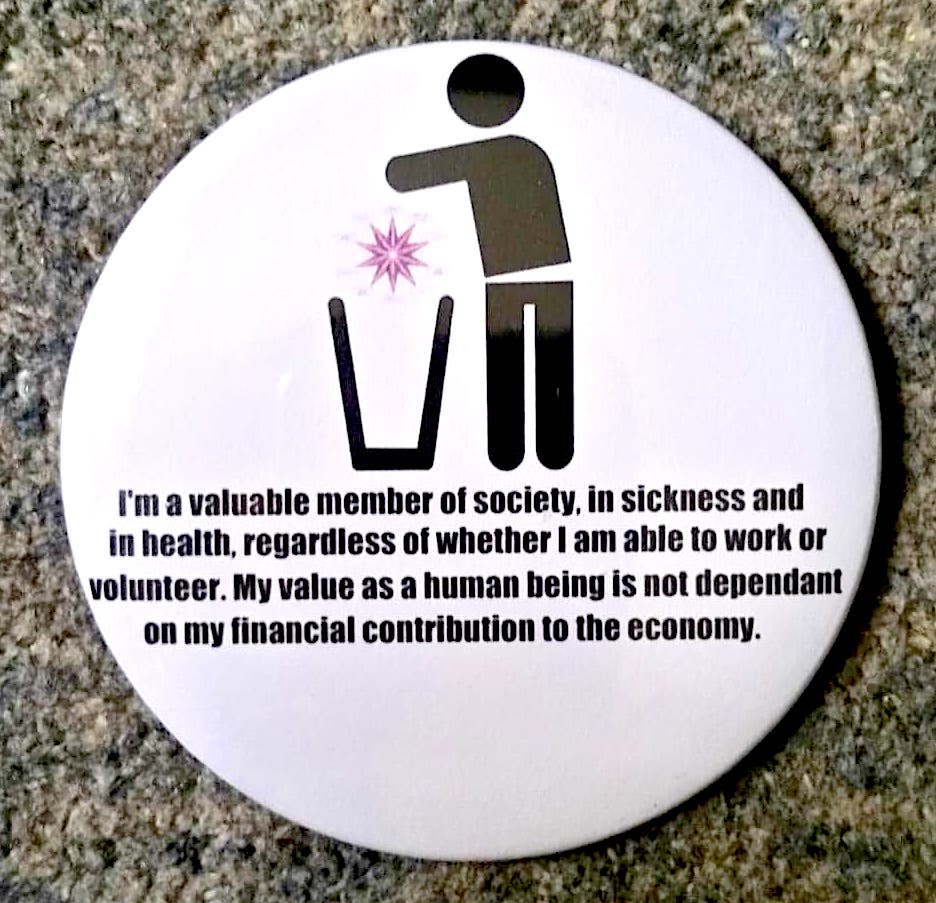
human value

“Work is good for you” is a mantra inflicted on everyone of working age including mental health service users. I don’t think the reality is straightforward and work can feel perilous when it is insecure, (zero hours contracts being the clearest example), low paid, low skilled with employers whose priority isn’t to ‘promote staff mental wellbeing’. I do work full-time though didn’t achieve regular paid work until I was 33 years of age. Please bear with me as I explain this statement since I feel I need to justify it in case anyone assumes I was lazy or went travelling the world.

When I was 18 I reluctantly dropped out of university with a weight below four and a half stone. I spent the next five years being refed and rehabilitated from Anorexia. At the age of 23 I tried to make a new start with a disabled person’s traineeship for a government funding body. My manager terminated this fixed-term contract after I disclosed in confidence that I was distressed and self-harming outside of work. My life then fell apart and the self-harm worsened with paracetamol overdoses. I was fortunate to meet a community psychiatric nurse who saw beyond the self-harm, encouraged my potential and need to stay busy. I volunteered at a local Citizens Advice for nine years during which time I was hospitalised for countless blood tranfusions and even sectioned on the psychiatric ward due to pressure from A&E medics for services to do something. In my early thirties, while still under the community mental health team, I came across an incredibly hard working, sound and enthusiastic vocational adviser, using the Individual Placement and Support model, who motivated me to finally contemplate a meaningful, appropriate and chosen job.

I believe the structure of work helps me now though work is inherently stressful. I never want to imply that I have done it and so should others with mental health issues. I have seen this bullying attitude amongst peer leaders who had chosen working in a supermarket or self-employed consultancy on mental health over claiming benefits which they saw as a mark of disgrace and welfare dependency. Some service users progress to working within mental health services in peer worker roles which are usually underpaid and undervalued by their NHS trusts. However, I decided to do administrative work away from mental health care, since I feel too much of my life has been lost to mental health already.

I have many friends who don’t work due to their mental health and I would always advocate for their need to be left alone by the Department of Work and Pensions (DWP) and the various organisations, which can include NHS trusts and mental health charities, acting as their agents. While the fear of being made to do ‘any’ job, if found fit for work, did propel me to act before I was forced, I don’t support this underlying threat tactic.

Apart from the benefits questions, I have been wondering whether there are unspoken disadvantages to being in work when you have ongoing mental health challenges. These disadvantages include health services seeing an employed person as recovered, the lack of support in the workplace, the inability to disclose less appealing diagnoses, for instance ‘personality disorders’, eating disorders or addictions, and the difficulty of accessing benefits support which enables you to keep working.

This week I attended a CCG organised ‘Coproduction’ workshop on local care and mental health using my annual leave so that I could speak freely. A consultant psychiatrist was the speaker representing the main mental health trust in this area. His presentation and words were: “only the most severely impaired should access secondary services.” I interrupted at this point to ask how he would define ‘severely impaired’ and if it could include people in work. The speaker said that it would not because: “they wouldn’t want to see us as they are out working providing for their families.” I pointed out that someone in work could still have a crisis, indeed could need hospital admission.  I felt a lone voice in a room of professionals where others probably agreed that all patients who can just about function should be discharged back to primary care to release capacity in the system, outing those who are the equivalent of bed blockers in hospital.

There are logistical difficulties of accessing mental health services if they decide you deserve an appointment when you work. Even the mental health services embedding in primary care operate during core work hours and may be in a town away from your place of work. Since I’m fully aware of the huge demand on specialist services, it does kind of make sense how services view someone working, even if signed off sick, as more able to fend for themselves. Perhaps there is also a mistaken belief by professionals that working is a curative therapy which then creates a lack of comprehension why someone, particularly with non-psychotic conditions, should become ill when in work. Services only want to see people short-term to work to Recovery model goals, so if you have achieved paid employment then this can in itself be regarded as marking the end of the treatment journey.

My experience of applying for Personal Independence Payment, once Disability Living Allowance ended, is that working counted against me. The medical report from my face to face assessment with a general nurse employed by Atos repeatedly said “in her social history she states that she works full-time with no specialist input.” While I scored 6 points these were on account of my eating disorder, thankfully being in a job doesn’t denote that I can eat three meals a day or prepare a simple cooked meal. The assumption made by the assessor and the DWP is that if you hold down a job then you can do all of the activity descriptors involved in daily living. I was turned down for PIP and had to challenge the decision. The short-term award I did get on mandatory reconsideration has meant that I have to go through this claiming process 18 months later, explaining all over again how I can be employed yet still find it difficult to engage with other people face to face.

If you do become more unwell while at work, whether caused by work stress or personal issues, then there may be no support to prevent your job loss. Large employers usually have an outsourced Occupational Health service but this tends to amount to advice for the employer about when the employee is likely to return to work. There is no advice directed towards the employee about how they can cope with work. The provider used by my current employer is OH Assist, which used to be a division of Atos, the private company which performs benefits assessments on behalf of the DWP. The assessment of the employee’s health and subsequent advice report is done through a brief telephone consultation. The Occupational Health Adviser may be a nurse or OT who has no mental health knowledge, leading to a short and generic report for the employer, which is more of a tick box exercise than a considered specialist opinion.  I have had to pay my private psychologist to write a report for my line manager in the hope that it may lead to reasonable adjustments and understanding of how to support me at work.

Many large employers do have an Employee Assistance Scheme (EAP) which is telephone based. My experience is that calls are short, possibly to target times of 10 minutes, unless you wish to access eight sessions of phone counselling. Since the EAP is also outsourced to a national company, there is no familiarity with the employer you work for and their policies. I was overpaid salary of thousands of pounds in error by my employer but had no way of sharing my pay slips with a phone adviser who would be someone different if I called again. The extent of the advice given during 10 minutes about my overpayment was that the employer should be ‘reasonable’. I experienced even greater stress when my employer then demanded in two threatening letters that I repay the total overpayment back in two months leaving me with a nil income for those months. In fact, the overpayment recovery deductions set amounted to more each month than I would have been paid. I had to use my annual leave to see a local Citizens Advice to figure out how to respond to the overpayment that wasn’t my fault though still needed full repayment.

Job retention support is non-existent despite the way that work is a policy priority in mental health and the Five Year Forward View.  I approached the Shaw Trust and was told that they weren’t commissioned to provide job retention and the only way they could help me was if I gave up my job to look for another. I have seen the Disability Employment Adviser at the Jobcentre and was given a leaflet for an NHS funded Improving Access to Psychological Therapies service offering six sessions of web chat and was told that Access to Work wouldn’t cover anything for mental health except taxi fares. After much internet searching, I found Remploy, funded by Access to Work, has a Mental Health Support Service. I self-referred to this service and understood that there would be six months of support. I later realised that the support was telephone based whereas I needed someone to come with me to meetings with senior managers at work. Remploy is in partnership with Maximus, which is another private company that provides benefits assessments for the DWP.

Two weeks after I self-referred, a Vocational Rehabilitation Consultant phoned me and offered the only face to face meeting I would have in six months apart from a 13 week review he said could be done in person or over the phone. He made clear that he was fitting me in on his way by train to another client. His office address is over 150 miles away from where I am based. During our meeting lasting half an hour, he asked my diagnosis and when I said it was ‘Borderline Personality Disorder’ he suggested that I was a ‘complex lady.’ He said that he had other clients with BPD but they did not self-harm and he knew how with BPD one day he may be my best friend and the next day my worst enemy. I tried to explain that I didn’t experience this perception and found such a stereotype offensive. He had emailed me a lot of leaflets produced by Mind in advance of this meeting and asked if I had read them yet. I was in crisis, attending A&E for wound repairs, so reading the leaflets was the last thing on my mind.

My personalised action plan from Remploy stated that the “reading resources were provided to help her better understand anxiety, depression and self-harm so that she can try to develop coping strategies to better manage her mental health.” He drafted a letter to my manager which I had to ask him not to send since it stated that she was the cause of my anxiety! When I gave feedback that the leaflets were too basic and his service didn’t meet my needs he replied in several emails saying:“We deal with individuals who have mild to moderate mental health difficulties who are already in employment and do not require intensive support. I feel you are not benefiting from the mental health support service (MHSS) which Remploy deliver as it provides a much lighter touch as I think you require a level of intensive support which is not designed into the MHSS as it is not designed for that purpose.”  He never suggested where this intensive support should come from. I still have to provide him with monthly updates until the end of the six month support period, even though I have withdrawn from the service.

My employer does have Mental Health First Aiders (MHFAs) who can be approached in the same way that an employee could ask for physical first aid if they had an accident. These MHFAs do have two days of training. I believe that staff with the right qualities training as MHFAs can be a helpful resource in the workplace though their role is to listen, signpost but not to give advice. However, it isn’t easy to approach MHFAs you know as colleagues. While the conversations are meant to be confidential I do have a doubt about whether I may regret being open if later interviewed for a promotion by a colleague who is also a MHFA and may see me in a different light. I have not managed to tell any of my colleagues about my diagnosis as I am sure it would damage my career prospects. There are so many negative articles online about BPD that a manager would only have to look at the wrong Walking on Eggshells type web page to form a judgement that the employee was a problem.

In several places of work I have heard colleagues use what they call ‘gallows humour’ about customers, such as saying those who self-harm seek attention, that it was a waste of resources that an ambulance helicopter was called out for a resident who had taken an overdose and that they wished one of their clients would get run over by a car as he served no useful purpose as a drug addict. I still hear where clients are called ‘manipulative’ as though this is definitive. Even though the colleagues are not talking about me, I start wondering what statements they would make if they knew that I was a frequent user of A&E, covered in scars under my long sleeved shirts and trousers. I want to educate them on the distress behind mental health issues but don’t want to reveal too much about my own history that they either feel sorry for me or form a different opinion other than one based on my strong work ethic.

There is the isolation of being single and in work (I have no family to provide for despite what was suggested by the speaker at the workshop). I have no-one to turn to after a long day in the office where I may have experienced conflict, stress or bad news, for instance there is an imminent restructure. It takes me several hours in the morning to psych myself up to go to work and once home I have no energy left. I eat something simple like cereal, having snacked for most of the day due to my anxiety, I then phone my surviving elderly parent and go to bed. The events at work and whether I said the right thing or have forgotten any task go round in my mind inhibiting sleep. I know that the next work day offers more of the same routine, perceived criticism, uncertainty and self -doubt. Working has created distance from a few friends who think that it is alright for me now I have work and don’t have to worry about work capability assessments. Government policy pitches disabled people against each other. We compare ourselves and who needs the rationed resources more since benefits and services were cut as part of austerity measures. I also feel I have no energy to talk to these friends about their encounters with mental health services when I just need total rest after forced company in the office. I don’t feel like using the computer or answering the phone since I fear I will have no resources left to go into work again.

I often feel like a disaster survivor unable to tell my colleagues what has happened to me through iatrogenic and personal traumas. My world is clearly not theirs. I share in their news of families, childcare arrangements, children’s exam results and their own career promotions. I don’t say how unhappy and empty I feel inside or that I won’t see anyone over the weekend as otherwise I wouldn’t recover to see them again on Monday.

If work is good for you, it should be good to you as well. Work needs to be with a supportive employer, have a benefits package with well funded employee wellbeing resources, open minded colleagues and local NHS and voluntary sector services that don’t exclude the ‘high functioning.’ There should be a raft of supports that are concerned about job retention and not just a job placement, job done approach. Voluntary work should be valued as a meaningful and important part of life for those whose mental health condition means they shouldn’t be pressurised into work to targets or to keep the welfare bill down. We need to work together as allies, those in and out of work, to make sure our voices are heard and that work is chosen, decently paid, healthy and fair.