It was clapping for the NHS that made me realise I had trauma

dark image with light making a silhouette of a face in profile. Photo by Engin Akyurt: https://www.pexels.com/photo/silhouette-photo-of-woman-1446948/

I think it was clapping for the NHS that made me realise I had trauma.

In hindsight of course I knew that what I’d been through was traumatic but I also minimised it, the memories were blurry, and the real stonker – it saved my life therefore I wasn’t allowed to wish it hadn’t happened, that would be wishing I was dead.

That’s the thing about mental health services and sections, they operate crudely, bluntly, they come in too late and too harshly but, by the skin of their teeth, they sometimes just about manage to do the job to the bare minimum standard and because of that remain just out of reach for the full force of a survivor’s anger. 

Or that’s how it is for me.

I care deeply about the provision of free-at-point-of-use healthcare, I would never want my critiques out of context to detract from that and I most certainly don’t see the rise in private day patient programmes as the solution.

Two of the leading of these private services are lead by the two psychiatrists I’m talking about.

I was in and out of hospital for a few years age 16-21 but it’s the final, adult admission that was so much worse than any other. The hospital had a reputation, I knew before I went in that it would be better to be literally anywhere else, but illness and geography meant I didn’t have a choice. 

As soon as I was admitted I begged to be transferred but patient choice was long ago thrown out the window for a sectioned psychiatric patient. It wasn’t until I read my notes years later that I really understood CCG’s and the funding backdrop.

Anosognosia is a key symptom of anorexia. You can see your weight going down, your intake going down, your behaviours damaging your relationships, life falling apart before your eyes and your mood plummeting, any rationality blurring and fragmenting and yet somehow believe that it’s not that big a deal, other people are making it a big deal, you will change, you can sort it out, if only you can find the right brand of yoghurt, if only it can be fixed by having an additional chocolate bar and slice of toast.

“I don’t need to be inpatient, just give me another change, I increased my meal plan by 100 kcal, I am better off at home” she says, weighing something ridiculous (I’m not going to say my weight, but if someone reading this is going to trigger themselves I’m sure they already know what a sectionable weight means). 

So yes I was a risk to myself, had no insight or understanding of the risks of starvation and wasn’t going to consent to medical monitoring or take the action required to stabilise my risk. In the face of that, psychiatry, as well as my mother, contend that “for your own good” you need to be in hospital.

To this day I have no idea how to feel about this? Would I have died? Would I have found my own way through? Who would I be today if what happened next hadn’t had to happen? What would it mean to me if what happened didn’t have to happen, I guess I tell myself it had to be this way because of how painful it is to imagine a world that’s not so cruel. 

Where hospitals places of care and restoration, nurturance and healing and not lunatic asylums by any other name, an extension of a carceral system, a place to lock away the undesirables, to delineate madness from sanity, to punish those who don’t conform and who scare the rest of them.

Anyway, I remember how scared I was when I realised the ward was locked. That I, specifically, was locked on the ward. That legally I was not allowed to leave. Legally I had no agency anymore. I was clinically determined unable to make decisions about my care, I was a risk to myself and couldn’t be trusted.

Other patients, voluntary admissions, could in theory leave, but in practice we were now all locked into this corridor of 20 beds, a meeting room, two dining rooms, two bathrooms, a kitchen and a central sofa and tv, seemingly sitting in the middle of the corridor but theoretically a communal space where we had to eat evening snack infront of a cooking show in the vortex of what happens when all the anorexias form a force field around which we orbited, getting closer and closer to that food-obsessed centrifuge.

The days were bleak. Usually waiting on tenderhooks to argue with a psychiatrist or dietician about how terrifying treatment was, how uninvolved in care planning we were, having to make desperate pleas and pitches to ward round to have leave requests or meal plans discussed and, when they did show up which they seemed to schedule with casual contempt for “I’ll see you tomorrow” agreements, hours or days later to be told you had less leave than you’d asked for, no meal plan change allowed, sorry we know best, sorry you can’t cope I guess you’ll just have to keep not coping whilst also not being allowed any freedom or social contact that might give you the means and strength to carry on, oh you’re jogging in your room now? Why would you do that? You must be causing trouble, not complying, do you want to be here forever? If you keep doing that you won’t get any leave at all.

You see, despite being sectioned on the basis of having no capacity to understand your own risk and behaviour, you are now going to be scolded, castigated, bullied, punished and have it held over you that you engage in behaviours that aren’t “helpful” or conducive to the goals we’ve set for you (“recovery”) or the goals you’ve set yourself (getting the fuck out of here asap).

Most of the trauma was in that contempt: 

Being held down to be nasogastrically fed and whilst a nurse sneered “what did you think would happen”. 

The transgression: I didn’t butter my toast and believed the feed would just constitute the calories of the butter, not the whole meal.

Being laughed at when I insisted not eating animals was a moral tenet and not a restrictive one – the implication, barely concealed, that an “anorexic” having ethics was risible. 

I was broken by the stripping away of any identity, any interests, anything I had found my self worth in being dismissed as “illness”, any assertiveness about who I was and what mattered was obviously “the illness talking” and “now is not really the time to care about that, you don’t have those choices”.

The euphemisms in my notes state “had to be constantly reminded to sit down, which she refused to do until further staff intervention” – my memory tells me this involves being pushed into a chair, held down, sat on.

The most visceral memory: kicking and screaming and being held down by 4 nurses whilst a 5th passed an NG tube. Pleading to be allowed to just drink the fucking supplement, that it should be offered to me for drinking and being restrained instead.

In a sickening, disorientating disappointment, when I got the stack of notes from the 9 months I spent in this hospital, this incident wasn’t mentioned. 

I was sure restraints would be documented by my guess is that a bit of  “manhandling” – pushing young emaciated women around – wasn’t classed as restraint.

Then there was the vicarious trauma of hearing everyone else’s cries, the woman who fought back and got taken to the general psychiatric ward “until you’ve calmed down”, the women who were in and out of that ward every few months, the woman who had been there for a few years, the woman who died on leave and being told that it wasn’t really our business to be furious with the psychiatrists for not protecting her, or maybe contributing to making her life unliveable.

I was given therapy whilst on the ward, 14 sessions documented in great detail in my notes by a therapist whose stance confounds me. She found me, “defiant… confrontational…challenging…hostile…resentful…attacking… aggressive…. defensive…aloof…contemptuous”. 

It didn’t seem to occur to her that the walls I put up protected me from the contempt of the staff, the disempowerment of the ward, the endless torture of having to face your greatest fear 6 times a day, deal with your mental illness and intrustive thoughts in every gap, be scolded for being ill in the place that is supposed to be knowledgeable about your illness, that you might, I don’t know, maybe be a bit cross about it all? 

When I expressed distress about being on the ward, anger towards staff or other patients she encouraged me to get to know them or to take part in groups. She couldn’t hold space for me to process what was happening to or around me. And when I picked this up and didn’t bring it up again, she noted our relationship was improving. 

The final therapy session before I discharged myself I cried “like a very small child” about being granted less leave than I had requested, I felt “insulted and humiliated”. I cried the tears of a trapped, lost, desperate, dehumanised, humiliated, lonely young adult, and she asked me if I was not crying as I cried as a child when my mother left me to go to work.

It made me laugh that that was the last interaction we had. As if she hadn’t heard of Ockhams razor. Or the cigar that was in fact a cigar. I was crying because the hospital was a hellhole and I knew I was not getting or going to get better. Because I knew I was leaving more “’damaged” than I entered.

My belief is that in a state of malnutrition, a physiological famine trauma, whatever the cause, our nervous systems and limbic brain is picking up information in a primitive way. We absorb relational trauma in a similar way to childhood trauma because we are regressed to our basic survival functions as we were then. When we are met with harshness we don’t need to have had a neglectful caregiver to begin to demonstrate signs of neglect and abuse. 

I have had to spend so long arguing that I don’t have causative trauma preceding my anorexia. I have trauma caused BY the anorexia, and more so its treatment that happened to save my life and caused the refeeding syndrome it was meant to protect me from, that managed to end the revolving door and be my final admission.

By making the experience so awful that I discharged myself from inpatients and then outpatients and then when I relapsed never sought help and put my family through so much having to cope with me on their own as we muddled through it until I galvanised myself to address this independently. 

Sometimes when I see eating disorder campaigns calling for better access to services it makes me so sad and angry, I don’t want more people to go through what I did. We need life saving interventions and anyone who needs their life saved, at whatever weight or stage these illnesses have made their lives unbearable.

But until services are not premised on a punitive ethos, to negatively condition anorexia sufferers out of the illness, I want to urge people to be careful what you wish for. Despite the layers of denial and the cognitive impairments to insight, we do know the illness no longer protects us from pain and instead causes it, we don’t need a hospitalisation driven by the desire to tell us “look where your silly little thin-fixation leads you, let this be a lesson not to lose too much weight”.

No amount of awareness raising seems to have changed the underlying assumption that madness = badness.

I feel like I should be caveating what I write with an endless stream of self-awareness. I know that I was distressed, anosognosic, rude, loud, difficult, non-compliant, disruptive, violent, symptomatic and in danger. I know that these interventions were in response to that and yet I still found them traumatising. I am not writing to present a solution – I don’t know what could or should have been done instead within the constraints on the system and the situation – my visioning for a future ideal would be a completely different system from the ground up.

The prevailing paradigm in mental health is punishment – giving the excuse as “institutionalisation”, the aim of eating disorder wards is to be so awful you keep yourself well enough to stay out. Despite many people requiring repeated admissions, the paradigm remains the same and staff admonish you get “get out and stay out”. 

This is somewhat effective, I had three admissions, my third being the most horrific and that experience did motivate me to “stay out” although it meant I was left unwell and without support, too afraid and hurt to engage with services but unable to take care of myself.

It’s not overwork or bad apples that make staff cruel – of course most staff are exhausted and underpaid and some get into the job because they like power over vulnerable people, but that focus distracts from the fact that institutions are set up to dehumanise mad people, a strange mix of infantilisation (you don’t know what’s good for you, I have the power) and chastisement (why are you doing that?). You are non-compliant, resistant, you need to be trained to not get attention for your bad behaviour.

Something has to overcome the cognitive dissonance of a person sectioned, and therefore deemed not to have decision making capacity due to illness, who is then castigated for behaviours (symptoms) and treated as attention seeking, troublesome, wilfully sick, who thinks she’s special, who should take responsibility

It seems that some of this comes from not understanding mental illness, even well meaning staff ask “why are you doing this to yourself”, “why don’t you want to comply and get out” as if they don’t understand the reason people are on the ward.

Alongside punishment, or a sub-category of it, is coercion and threat, most admissions are forced or coerced, wards are locked (I don’t know why I was surprised but realising the ward was locked was a horrible shock to me) and compliance is gained with threat of worse treatment. On an eating disorders ward the ultimate threat for distress was transfer to the general psychiatric ward which occasionally patients would disappear to for 24 hours to be sedated.

Units are protected by invisibility, although OTs, dieticians, social workers and psychotherapy came onto the ward, the team was permanent and complicit. No external professionals were coming in or asking questions. Psychotherapy was particularly complicit – criticisms of the ward were psychoanalysed away from their material reality – I was told I should “get to know” other patients, “find things in common” and “get involved in activities” when I told of bullying, abuse, screams of distress, competition and loneliness. An episode of extreme distress at not being granted leave or given reasons was related to “not getting what you want” and she asked “is this like when your mum left you to go to work”.

Dehumanising patients also involved mocking us – for me my veganism was mocked (although veganism presents a conundrum in eating disorder services, and should be examined and possibly challenged, laughing at someone telling you they care about animals as if it’s not possible to have both ethics and anorexia, as if every belief is a symptom is mocking and cruel) as well as compulsive exercise (yes watching someone jog on the spot and then try to avoid detection is humourously pathetic, I know it’s a bleakly funny sight, but laughing outright at a persons distressed compulsions is also cruel).

Diet culture is endemic in ED services and a lot of comments showing anti-fat bias get made – whether about gaining “too much too fast”, determining a maintenance plan at a conservative BMI, telling patients they “won’t get fat” and so on. 

I’m going round in circles here but to reiterate – dehumanising patients looked like, being mocked, being threatened (with transfer, section, tube feeding, restraint, losing leave), being endlessly reminded I was on a section and my consent was not required for tube feeding, being excluded from care planning and having unreliable, irregular meetings with the psychiatrist, being manhandled (although I remember being restrained, this remains completely undocumented in my notes. I can only conclude that it didn’t need to be written down as it wasn’t a formal restraint, just the pushing around and holding down an underweight young women who didn’t require much force to be overpowered), being shown a lack of compassion or any acknowledgement that my behaviours were a symptom and not a conscious choice or measure of my character.

A word to finish on nursing observations, 1:1 observations, on the toilet, in the shower – where your showers are timed for being too long, your bowel habits are commented on and, with new policy, nurses will wear body cams – is humiliating. It is predicated on humiliation because if you do exercise or purge whilst being observed you will either just be told “don’t do that” or restrained but mainly the threat is that if you do behaviours you won’t come off observations so the primary threat is the continuation of the humiliation and the admission and lack of leave, independence or autonomy. At no point is recovery or wellbeing mentioned.

It’s incredibly painful to speak about what happens on these locked wards. I was ill and vulnerable and left the hospital more ill and more vulnerable, at a higher weight but traumatised.

Because of this “access to services” is not what I want Beat to be asking for; services need to be transformed. I also don’t want “Accommodations for autistic patients” or any other small accommodations that make treatment less worse, not least because these won’t be applied because no one wants to make the experience less traumatising in case patients “like it” and “feel safe and cared for” and become “institutionalised”. I think this is more or less a straw man, most people want their liberty, most people who prefer hospital to independence is because of how bad life is outside not how great hospital is inside. Of course both repeated/long term admissions and proper supported living would make you a “drain on the state”, hence the system we have now. Until the idea that treatment must be horrible to prevent relapse, rather than effective is shaken then I cannot bring myself to ask for crumbs.

I believe many suicides attributed to the illness are a response to the “treatment”. Facing your worst fear 6 times a day every day under threat and coercion with little support or compassion, possibly brutally with restraint and tubes – not wanting to live whilst experiencing that every day? Yeah, I felt like that too.

It’s not much use saving someone’s life if they leave with so much trauma they don’t want to live it 

I can’t remember where I found this quote but it was written: “The treatment of AN, the violence, the behaviour modification, EDUs, who services decide to let die or forced to live”.

A section and enforced inpatient stay including force-feeding with a naso-gastric tube did in fact save my life. I am ambivalent about that. I am not uncomplicatedly grateful. I will criticise the clinicians, the institution and the system. I am still here.

I am actually now a therapist and that just makes me more critical, I can understand why decisions are made and things are said because I know the prevailing beliefs both psychoanalytically and psychiatrically and institutionally in the NHS. None of this makes it OK.

I don’t actually want to see a world where no one has anorexia, it’s an illness that is like 80% genetic in cause and has been around and documented for many hundreds of years and possibly has always been within human genetic diversity. Arguing for eliminating it would be eugenicist. I want us to be held, supported, fed and allowed to explore a meaningful life without being subjected to violence and correction.

I don’t want to see my experiences “formulated” – the diagnosis of anorexia nervosa is very accurate for me, it describes most of the compulsions, fears and delusions I experience accurately, when I experience them very intensely I say “I don’t feel well” because I see them as symptoms of a chronic illness, I do not agree that “madness is a sane response to an insane world” in my life – I have a brain that was predisposed to, and then developed, an incredibly strong fear or food. 

It’s kind of just bad luck, but it’s also who I am so I don’t see it firmly as good/bad although it certainly makes my life quite difficult, now I live with it and manage the trauma I endured in its “treatment”.
The Double Life Of The Recovered Professional

In or Out

I find myself in a dilemma.

I have spent the past 15 years engaging in ‘recovery’. I have spent the last six years (or thereabouts) shouting about how utterly grateful I am to the services that ‘saved’ me. I have worked hard to come off benefits and pay my way. From being the most difficult patient, I have become the poster girl for the recovered individual. I have been an (unpaid) service user facilitator in a DBT group, I have a chapter in a book edited by a renowned clinical psychologist and I have delivered motivational talks to groups of professionals. The dilemma I find myself in is that I no longer believe what I have said. My dilemma is further exacerbated by the fact I work in mental health services.

I would not be writing this if my internal self was congruent with my apparent external state. I keep thinking, ‘well, I am in a much better position than I was 10, 7, 4 years ago’, and this is true to a point. I am not attending A&E every weekend; I am not getting myself so drunk, I wake up two days later; my financial situation is much more stable. I have been able to maintain a relationship to the point of marriage, and I am able to interact with others in a socially acceptable way. In all of that, however, I do not state I actually feel better.

I imagine I must feel better because I am not doing the things I used to do…although I am. Recently, my spouse went away for a few weeks and I was left to my own devices. I took a ton of codeine (not to harm myself, just to get off my head, to feel better), I drank a fair bit (a litre of whiskey in one sitting), and I self-harmed (pretty fucking badly in all fairness). Not having work to go to and actually still being as isolated as I was 10 years made brought home the stark reality of my existence. All I have done is supress how I feel, ignore my experiences and distract from reality. With work removed, I am scrabbling around, afraid of myself and wondering what the fuck is it all about?

I thought I wanted to be a clinical psychologist, but it turns many of them are narcissistic, egotistical, elitist sociopaths. Furthermore, the selection process for the clinical psychology training is based on many things, a key one having the ability to interpret statistical data. I’ve met too many clinical psychologists who are excellent with graphs yet not so skilled with people. As long as I adhere to their way of thinking, then I am doing just dandy. Any deviation from their thought processes, then we are being difficult, wilful, and defensive. Their toxicity is disguised, however, as they talk about trauma as opposed to personality disorders (which isn’t a bad thing, as at least experiences are being somewhat acknowledged). What further happens is that the good ones think, ‘fuck this shit’, and they leave. Whilst I’m definitely not a clinical psychologist, I’m at that point of wanting to leave. Everything I thought I wanted has fell around me, and I realise that recovery is but a concept coined by the professionals who have no peripheral vision.

As someone who grew up in the care system, what am I trying to recover? I was sexually, physically, and emotionally abused. I did not see my biological mother for over 20 years. My child was removed from my care. I have struggled, but been made to feel guilt and shame for my responses. I was instructed to hide old self-harm scars during DBT. We were not allowed to talk about self-harm within group, because of the risk of glorifying or romanticising it. I have been indoctrinated just as much as the people from my childhood indoctrinated me.

I work as a mental health care support worker. Some of the people I work with are genuinely nice people, but I see their limitations created by the system. Terms such as, ‘it’s personality’, ‘they’re med seeking’, and ‘they’re a nightmare’ are bandied around without thought or reflection. How offensive is it to term someone’s personality as disordered following a whole heap of childhood trauma? Why are we ok to dispense diazepam when ‘patients’ are not asking for it, but when they request it for the same problem, we no longer see it as a beneficial? What makes someone a nightmare?

What I am left with is a fear of someone finding out about me and my ‘stuff’. I work in an office with a whole bunch of mental health ‘professionals’, yet I am terrified they will find out my secret. This fear comes from the stigma I have witnessed and been subject to throughout both my non-working and working life. I was stigmatised as a service user with a diagnoses of BPD, and I am unwittingly stigmatised within my profession. There are mental health nurses who quite happily state that people with mental health difficulties CAN NOT work in mental health. When asked what recovered, ex-service users can do, they cannot answer, just that we shouldn’t be working in mental health.

Why can’t I find someone to talk to, without them trying to fix me? Why can’t I say, ‘you know, I feel shit, and there’s a good chance I will always feel shit given my start in life, but I accept that. I might self-harm from time to time, as safely as possible, I might engage in some other behaviours, but I am not asking anyone to patch me up. I’ll do that myself. I just want space to talk about it’? Why is this not acceptable? Why am I not accepted as I am, cuts and all? Why do professionals only care if you are ‘engaging’? Engaging in what? I have done everything asked and expected of me, and more. I’m lonelier than ever because I have been trained to put up and shut up.

The mental health sector does not believe in the recovery they try and push, but they do not recognise this. If difficult, PD, nightmare patients cannot recover or work in mental health, what are the mental health service doing with their service users? What are they working towards? There is such a blatant, screaming irony in the system, yet most are blind to it. I see people who have started out with good intentions, but they quickly get swallowed by the toxicity around them. At least two thirds of the employees talk about how they won’t come out of the NHS because of the bloody pension. Right now, I feel trapped by the money, and hate myself for it. I do not want to be that person. I have been that person, in the past, screaming at professionals that they are simply ‘doing it for the money’. That’s me, right now, in this moment in time, doing my job for the money. I care about the people I work with, but that care is overshadowed by the misery of what I am witnessing. I am at the bottom of the pile, sneered at for being a band 3 HCSW (I am asked ‘why don’t you go and do your nursing?’ at least twice a week). The hierarchy is real, and damaging, and people are made to feel shame.

I am in a quandary, a place of unease. I need to live, survive, so I need my wage. For a few years, I believed that people were not doing ‘this’ for the money, but we are. When our motivator is money, what have we become? Our priority is us, not the people accessing the service. It’s not a bad thing to want a wage, to have the right to earn a living. It’s certainly not a good thing, however, when the wellbeing of others is dependent on the wage being offered. Every day in work, I hear judgement and disdain, frustration and contempt for both users of the service and for the system as a whole, yet people continue to work in the same environment for many years. I am not the only one who hates their situation, but I see few, if any, doing something about it. Those in-office attitudes should remind us of how the system is run, and who is running it – a group of unhappy individuals, entrusted with the care and treatment of unwell individuals.

Mental health services need a complete reform, yet I do not see that happening any time soon. The good ones leave, the weak ones follow the crowd, and the leaders bully and intimidate. Stigma remains rife and continues to grow, and treatment is based on the egotistical needs of the practitioner. Where therapists have told me, ‘it’s not your fault’, they have instilled a deep shame within me regarding my reactions. My words are out there, on paper, as the model patient, and I cannot undo that. I was so desperately trying to please, that childlike need in me still searching for a mother, and professionals have either been blind or willing to take advantage of it. I’m trapped, and I am afraid of becoming ‘one of them’.

About the Author: I would like to be able to be transparent with who I am, but it is difficult to do so right now; Because of the institutional nature of current services – once in, you cannot have a voice, or as a service user, you don’t have a voice unless it is tokenistic. I hope to be able to come out of the NHS safely and be more open about my experiences.
– L

Mad At Work

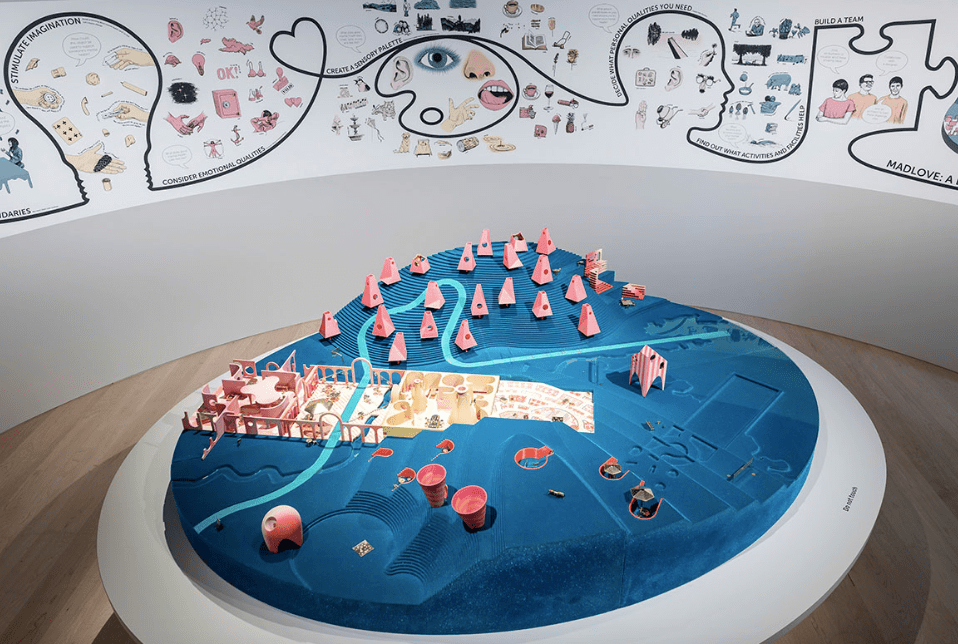
Madlove Designer Asylum project madlove.org.uk

Workplaces blame or punish individuals for madness, exclude mad people from work, and fail to recognise the role of work in making people mad in the first place. This is true even of measures supposedly designed to enable accessibility or promote mental health. Sick of this, I asked some members of radical and peer-led mental health groups, along with some friends and fellow weirdos, what they think would make it better to be ‘mad at work’. I collected all the responses, merging duplicates and re-writing stories into demands, to make the list below. 

Of course one of the best things workplaces could do for mad people would be to improve their economic conditions. Many folk brought up precarious employment as especially harmful, including short-term and zero-hour contracts, as well as people having to re-apply for or apply for funding for their own job. As long as there is capitalism there will be suffering for mad people at work, exclusion of mad people from work, and madness as a result of work. Although this list is not primarily about economic conditions, is not intended to justify wage labour or erase the harm it causes. 

Yet many of the suggestions made below are perfectly compatible with the logics of capitalism. Some mad people just want to get through the day however they can. They want to have a nap sometimes, dress more comfortably, mask less, not get lied to and – perhaps most of all – be subject to less surveillance. These things are cheap, straightforward, and would even enable mad people to ‘more productive’ workers within the grim logics of capitalism. So why are most items on our list still completely unimaginable?  

OUR DEMANDS

  1. No glass walls or doors for maximum privacy and minimum surveillance 
  2. All toilets to be accessible and all-gender
  3. Provision of private nap cubicles
  4. Abolition of gaps around toilet doors to allow for privacy for purging and panic attacks
  5. Provision of luxury harm reduction rooms, including beautiful soft furnishings, safety equipment (wipes, clean needles and razors, sharps bins), and gold boxes for everyone to keep their individual stuff in
  6. No dress codes or norm of dressing gowns, blankets, pyjamas, slippers, bare feet 
  7. No more defining mental health as the ability to work
  8. Abolition of counselling as gatekeeping for jobs
  9. End of the use of health and safety and risk assessments to punish and restrict autonomy of disabled people
  10. Abolition of small talk (replace with standard red/yellow/green communication badges every door) 
  11. Police uniforms for Human Resources & Occupational Health staff to make their roles clear
  12. Paid time in all workload models for collective organising (including but not limited to trade unionism, direct action, feminist consciousness raising and zine-making)
  13. Free workers’ canteens (with no coercive ‘health’ or ‘normal’ eating) 
  14. All contracts mandatorily available as job share 
  15. All workplaces to circulate and commit to Recovery in the Bin principles
  16. Worker feedback forms to be located over the shredder for clarity around purpose
  17. No more macho pretend-its-fine culture
  18. Actually flexible working hours
  19. Recognition of workers as humans for whom work is only one part of life 
  20. Abolition of workplace communication by whatsapp, ‘fun’ group chats that include bosses and all social media (except personal or political social media use at work)
  21. Time in all workload models for private, skilled, on-demand clinical supervision for anyone who works with ‘vulnerable’ groups
  22. Recognition that learning, not-knowing and lack of enjoyment are inevitable elements of work and not signs of unprofessionalism
  23. Resources to support working from home (e.g. printer and scanner)
  24. Option to get paid based on hours or on task, your choice, with no reduction in pay (maximum 25 hour work week either way)
  25. A sensory room with sensory toys AND integration of those things into rest of work place
  26. No forced disclosure ever
  27. Sound proofed screaming cubicles
  28. Screaming normalised everywhere, ear defenders supplied at all entrances
  29. Employers to pay employees’ union membership 
  30. No more suffering as a rite of passage
  31. Education for all employees about madness BY mad people
  32. Abolition of the idea of ‘professionalism’ (otherwise known as ableism, racism, misogyny, etc) 
  33. Abolition of ‘reasonable adjustments’, replacement with actually accessible workplaces including accessibility budget for all workers with no monitoring
  34. Wages for housework, care labour and all social reproduction 
  35. No more rest or breastfeeding areas in stationary cupboards 
  36. Repurposing of ‘common room’s for crafting, animal therapy, prayer, dart boards and punch bags with bosses faces on, meditation, etc. 
  37. No more token wellness activities or ‘pledges’
  38. More sharing of unsantized stories (NOT ‘it all got a bit tricky but I’m totally better and promotable now’)
  39. Abolition of requirement to perform trauma and healing for job 
  40. No more blaming our mental health for impossible working conditions

By Darcy Leigh.

The making of this list was inspired by the Mad Love Designer Asylum project, in which mad people design their own asylum.

This work is licensed under a Creative Commons Attribution-NonCommercial-NoDerivatives 4.0 International License.

I Want People To Be Aware Of How Scared I Am Of Getting Ill Again.

pexels-photo-2225771

It’s World Suicide Awareness Day. Or week, or month – I forget how long this empty virtue signalling exercise goes on. And I thought to myself, as a survivor of more than one serious suicide attempt, what do I really want people to be aware of?

I want people to be aware of how scared I am of getting ill again.

Some background: I was in a severe mental crisis for about 16 months of my life, from January 2016-April 2017. I have severe episodic depression, which makes my obsessive-compulsive disorder get very bad. When it flared up in January 2016 I thought I was a child murderer or molester. It is hell on earth, and I did not see a way out of it. Everything was just a black hole of despair, the joy fell out of everything I was interested in. I didn’t want to do anything. Anyone who knows me knows how up for a laugh I am, smutty, sweary, irreverent, BUSY. When I was ill I was just a humourless void, a bit like a walking corpse. Lads, I was fucked.

Things got very bad at the end of 2016 and I was admitted to the bin three times – on two occasions attempting suicide due to various factors, but being weaned off opiates too quickly was one, and going onto antidepressants that didn’t suit me was another. These medication issues led to very bad akathisia (an inability to stop moving) which often leads to suicide attempts.

After the second attempt I ended up getting sectioned and spent over three months on an acute ward. You can read parts of my story over on my blog.

Anyway so I was really ill, right? And you’d think it’s the worst thing about being in recovery, that fear of getting that sick again?

It is, but not in the way you think.

The symptoms of the illness, as bleak as they were, are not the thing I’m most worried about if things go south.

[DISCLAIMER: I had a lot of help compared to some people I know, but the bar is extremely low. I am also super privileged: I’m white, educated, intelligent, with a stable family and partner who can provide for me. I have lots of good friends around me. I had work I enjoyed and valued to go back to. I’ve never had to deal with the DWP. I’m cisgendered, straight and physically abled. In my case I also won the postcode lottery in terms of getting access to the Centre for Anxiety Disorders and Trauma at the Maudsley Hospital, one of the only specialist centres for treating OCD in the country. AND IT WAS STILL ABSOLUTELY BLOODY AWFUL FOR ME.]

Here is why I’m really worried about getting ill again:

I’m worried about getting ill again because I might have difficulty even persuading my GP to refer me to the CMHT. I might end up with absolutely no help for a severe crisis where my brain is trying to kill me.

I am worried that if I am referred to the CMHT, I might only be able to see a patronising CPN once a week for three months, with very occasional psychiatrist meetings. Things the CPN said to me have included ‘Well, if you’re going to kill yourself it’s your choice’.

I am worried that if I present at A&E because I feel unsafe and I’m fighting an almighty battle in my head to try and not kill myself, I will likely be sat there for hours before a condescending member of staff comes and tells me to go home because I am attention seeking. Damn straight I’m attention seeking. I’m fucking poorly.

I am worried that if I get referred to the Crisis Team, they will probably come to my house once a day for a month for about 10 minutes at a time. They will tell me to do a crossword or have a bath when I tell them I feel unsafe and suicidal.

I am worried that if I go into an acute ward, I will be treated like a child, punished for harming myself, and patronised beyond belief. I will be assumed to have so-called ‘Borderline Personality Disorder’* and ‘punished’ by staff accordingly. I will be completely at the mercy of whichever staff are on the ward on a given shift, and whatever patients are in at the same time as me. Patients I developed real beef with while in there last time might also be there (you end up falling out over stuff like ‘who gets the jacket potato for lunch’ and ‘who gets to choose which channel the telly is on’, because you revert to being a toddler). Staff I complained about after I left might be there. It scares me shitless.

I am worried that if I need to access my specialist treatment centre again, there will be a six month plus waiting list even after I am accepted on assessment. This nearly killed me last time.

I am worried that if I need to go off work again, I will have to deal with Occupational Health. This has been both a positive and terrible experience for me at different times.

I am worried that if something happens to my partner and/or parents, I will have to deal with the DWP in order to be able to eat. This is unlikely, but possible.

All these worries are actually scarier to me than the symptoms of my illness.

Please stop telling us to ask for help, and start thinking about how society and the psychiatric system needs to change in order for people to receive the care and help they need.

I ‘recovered’ despite the system, not because of it.

by Jo Edge @hagenilda

*I’m aware this is a very controversial diagnosis and do not wish to denigrate anyone’s experience.

Please also see RITB Position statement on BPD

Recovery In The Bin (RITB) is covered by a Creative Commons Attribution-NonCommercial-NoDerivatives 4.0 International (CC BY-NC-ND 4.0) License 88x31.png

Positivity, Terrorism, & Neorecovery

clown happy

The imperative to be positive, to have what is lauded in the workplace under neoliberal capitalism as a ‘Positive Mental Attitude (PMA)’, has seeped into every area of human life, and it is terroristic. The obligation to wrap up one’s distress in a gift box with a pretty ribbon, to mask the absolute horror show that can be bestowed upon some of us in the form of mental torment, is nothing less than a violence. As we have learned from those who are subject to racism and intersecting oppressions, it is what these things do to the psyche, the way they get under the skin, into the marrow, and woven into the very fabric of our selves, that does the most damage. It is a colonization of the mind.

The positive police have set up shop in every mental health service. We should write gratitude lists, mindfully eat raisins, HOPE (help other people every day), list our strengths on care plans, and think about where we might want to be in five-year’s-time when the next hour feels unsurvivable. My current care plan asks me to document my long term goals and how I will achieve them; the boxes to fill in read like an appraisal form, or something to put in a personal statement in which I try to convince someone I deserve a particular position. The form used to be about the difficulties we experience, what help we need – not an instruction to account for oneself and how we might materialise the things we want out of thin air, driven by pure (and probably literal) hunger for it.

I run a writing group for people who experience ‘psychosis’. Last week one of the members was trying to write something based on a prompt I gave them and said, apologetically, that she had nothing positive to write. I was a bit startled because I have never asked them to write in a particular way, and certainly not to write with their positive pants on. I said that the group wasn’t a space that demanded positivity, but was a space in which to be real with yourself and others, to the degree with which you are comfortable. Her reply? “That makes me want to cry”. Her response made me want to cry. And shout. What are we doing to people that we feel that unless we can speak positively we shouldn’t speak at all, particularly about the reality we experience? This violence rips words from throats; puts a sterile spin on the diverse range of human experiences; whittles us away to silt; isolates; individualises; and expects us to swallow patronising platitudes in the name of ‘recovery’ so that we may be deemed worthwhile (read: productive) subjects.

I don’t want to go all John Lennon on you, but imagine if we let people be. Imagine if we accepted that it isn’t wallowing and being resistant to treatment to be honest about how we feel? Imagine if we were willing to hold that space for people with care, and to sit alongside them in it. Imagine if we decolonised the narrative, stopped asking people to superficially cover wounds that need suturing and healing from the bottom up. Contrary to neoliberal propaganda, of which the recovery discourse is fast becoming a sacred part, this doesn’t cause people to be stuck in a sick role and too dependent (whatever that means given we are all dependent on others), but allows for the possibility of being seen, being accompanied, and possibly moving through it with help.

Interestingly, the group member I mentioned above, though speaking of her fears and upset of the previous two weeks, wrote a very positive poem. I am not convinced this is because she miraculously felt that way, but because the obligation to be positive has hijacked her from the inside. Violence isn’t always bloody.

– Eleanor Higgins

Recovery In The Bin (RITB) is covered by a Creative Commons Attribution-NonCommercial-NoDerivatives 4.0 International(CC BY-NC-ND 4.0)
License 88x31.png

Unrecovery As KerPlunk!

3mgi-fpr07_2

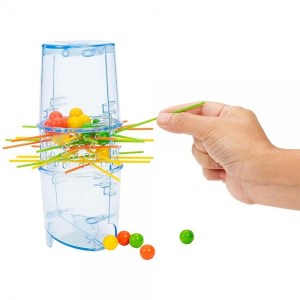
We have all played Kerplunk I hope. But as a recap there is a tube with holes, sticks are crisscrossed holding up some balls, and the trick is to remove the sticks without all the balls falling.

Our mental health is like a game of Kerplunk, and our issues are a combination of the balls and sticks. ‘Recovery’ is the ability to remove the sticks without the balls falling. As a slight adaptation to this analogy some of the balls can be removed by moving sticks, and ‘life’ adds balls all the time. The sticks are ‘safety’ adaptations that stop all the balls falling at once.

This game of Kerplunk is mostly played by us alone (in our own minds), so in this analogy the game is played in a room on your own. But we can always hear people telling us which sticks we ‘should’ remove, whilst we are sitting there looking at the problem, even though these people are not in the room with us. Government policy also demands we remove sticks, and moreover can add balls (as can other aspects of life), as well as remove sticks if we don’t keep an eye on them.

Unrecovery practices are an ad hoc practice, that is a temporary solution to keep control of our own Kerplunk game, knowing that a wrong move can send all the balls falling. ‘Bad’ recovery is one size fits all and insists on this or that stick must be removed, and then blames you when the balls fall. ‘Good’ Recovery, and other therapeutic practices, listens to your knowledge of what you can see of the game, and merely supports you with your autonomy whilst you play the game. This latter ideal however from our observation seems to be at odds with current government policy and market/ capitalist needs, as it doesn’t meet the outcomes measures of outside forces.

For those who don’t know the term, that I have added some changes to the games with sticks and balls being added and removed whilst you play, like a Heath Robinson machine, is what is called an assemblage. Unrecovery is an ad hoc practice with which to deal with such an assemblage.

Recovery In The Bin (RITB) is covered by a Creative Commons Attribution-NonCommercial-NoDerivatives 4.0 International (CC BY-NC-ND 4.0) License 88x31.png