Mental Health & DWP Processes

close up of an eye with DWP reflected in the iris.

The sense of panopticon, surveillance, fear of getting anything ‘wrong’, being believed, knowing you’re not viewed as disability ‘proper’, viewed as morally deficient, all contribute to increased paranoia, depression, anxiety, self-harm/suicide.

Some people relay how DWP processes, government, and the endless drip feed of derisory media have resulted in this getting embedded into auditory voices heard, persecutory fears, low self-esteem.

“I started to fear the police would break into my home, drag me off and put me in prison”

“I was afraid to stand near my window in case I was under surveillance”

“I can’t go out or speak to people I don’t know, they could be undercover operatives”

“I heard my thoughts in the voice of Ian Duncan Smith”

“I can’t bear receiving post because of DWP letters, I ask friends/relatives to not write to me”

*I have vomited at the sight of an envelope”

“I can’t do a class, socialising, doing voluntary work, in case anyone asks me what do I do. I’m afraid of people knowing I’m a claimant in case they think I’m a scrounger and ring the fraud hotline” 

“I have exit plans in case I can’t face the next review or lose it”

“I considered physically disabling myself so that it was visible and I’d be believed”

DWP Pathways to Work Green Paper Harm: We Live In Fear

I just migrated from ESA to UC with LCWRA, I am unable to work due to severe mental health issues, including complex PTSD, complex personality disorder (ie. more than one personality disorder) and an eating disorder. It’s been so much fun reading about what Labour are planning to do to longterm sick and disabled people like me, because it has triggered and/or exacerbated every single one of my existing mental illnesses!

As I often say to my therapist, it is excruciatingly challenging trying to recover from an illness that makes you believe that everyone is out to get you and nobody cares about your wellbeing when the government has proposed cutting your means of survival and the resistance is almost exclusively limited to other longterm sick and disabled people. What makes it worse is that it’s a Labour government this time, ie. the supposed “good guys;” it is starkly different coming to terms with the fact that the people who are meant to be on your side are now targeting you as brutally as the “bad guys” always have, and frankly it has undone much of the progress I had made in dealing with my cPTSD. When you have been through trauma, it is vital to learn to trust people again rather than seeing everyone as “bad,” and yet Labour are supposed to be on our side, so is this not a perfect example of my trauma-injured brain being correct? In which case, how on earth am I supposed to recover when my supposedly skewed mentally ill view of the world is so perfectly aligned to reality?

The allegedly helpful “pathways to work” part of the Green Paper made me laugh; the DWP have literally never been the “good guys,” anyone who’s ever actually had to claim out-of-work benefits and deal with the system knows that already, so it is hysterically naive and out of touch for MPs to believe that the DWP will support sick and disabled people in any way. We live in fear of them, now more than ever.

Moreover, my eating disorder has been much worse since the benefit cuts announcement; as with most EDs mine is about needing to feel like I have control over something when everything else feels out of my hands. Needless to say, hearing that I am one review away from losing half my income has sent me spiralling, and my ED currently is worse than it has been in years. The sheer anxiety of waiting for that dreaded brown envelope to arrive summoning you to explain yourself and your health conditions (often invisible ones) to an unqualified DWP employee has increased tenfold now that the stakes have been raised so high, and you never know when or if it’s going to come, so you can’t live a single day in peace.

I don’t need to tell you how useless the NHS mental healthcare services are, so after they had made my mental health dramatically worse I gave up and went private; that is what I spend my UC on, and of course if the health element is removed from my benefits then there is no way I will be able to afford this healthcare anymore. One could argue that doing this to all the longterm mentally ill people who are currently paying for therapy would put pressure on the NHS once they are unable to afford private support anymore and go back to the NHS, but I disagree; I believe many of us will simply take our own lives at that point.

Only ignorant people would assume we’ll all flock back to the NHS, as if we’re paying out of our meagre benefits money for therapy for fun and not out of sheer desperation because NHS services are worse than useless, more damaging to our mental health than no therapy at all. Without the UC health element, we cannot access healthcare, and consequently one way or another we will probably die. We’ve heard Labour loud and clear with their constant demonising of those too unwell to work, the use of “working people” to explicitly exclude us, and their plans to cut off our means of survival; this government wants us dead, there is no other explanation. Words cannot express what a terrifying and painful experience living with that knowledge is. It would be horrific under a Tory government but to face this under a Labour one is unspeakably cruel. 

DWP Pathways to Work Green Paper Harm: My Paranoia Has Increased Dramatically

The Labour Government’s DWP Pathways to Work Green Paper is brutally damaging people’s mental health. Below is one such testimony. If you want to share yours, in confidence, please email

recoveryinthebin@gmail.com

My paranoia has increased dramatically. (Though is it really paranoia if you know they are genuinely trying to remove support from people?) I am afraid to leave the house on days when I am well enough to go out in case a DWP person photographs me or a neighbour reports me for what they wrongly perceive to be ‘fraud’. I am trying to keep my health from worsening and going outside when I’m able, especially to walk, is literally keeping me alive, but since the green paper announcement every day I am frightened to do it.

I live with intrusive images and thoughts which have increased in frequency and severity. My brain compulsively rehearses the scenarios, forcing me to live them out. 

One of the most common scenarios now involves being in the DWP office and being interrogated about intimate and embarrassing aspects of my ill health by a complete stranger then being disbelieved when I try to explain, and having all income removed, leaving me destitute. Another common scenario my brain forces me through is me being anxious, distressed or panicked at a benefits review and being mocked for it and dismissed as a liar. (I have good reason to fear the latter, an assessor once laughed at me when I tried to explain how distressed and exhausted I was feeling, and I struggled, and I found it difficult to speak.)

My brain tells me that I am being investigated for fraud, that every time I spend money I am being tracked by the DWP, trying to find reasons to remove my support and force me to try and work. My brain shows me what will happen if I try to work, that the environments and the work itself will make me more and more unwell, that I will spend all my time and energy failing to get to work or trying to get an employer to believe me about how impossible I am finding things, until eventually I collapse or die. I speak out loud more and more to myself, forced to act out these scenarios alone in my home, which is exhausting.

These images and scenarios replay and replay and replay. I have developed some strategies to try and reduce their duration, and to help myself recover afterwards, but since the green paper announcement they are getting harder and harder to manage. I have no support managing any of this because I find it so difficult to make and keep medical appointments, and whenever I’ve tried in the past nothing has really helped, and I am made to feel like a failure. This all adds to the guilt and fear I already feel about not having enough money to live and having to rely on benefits. And it worsens all my other health conditions, mental and physical: fatigue, pain, depression, anxiety.

I wish more people who have never had prolonged contact with the DWP would understand how traumatising the green paper announcement has been for so many of us. I hold no hope that politicians will do the same but perhaps if more ordinary people listen to us they will be forced to hear our voices.

DWP Pathways to Work Green Paper Harm: Substantial Risk

The Labour Government’s DWP Pathways to Work Green Paper is brutally damaging people’s mental health. Below is one such testimony. If you want to share yours, in confidence, please email

recoveryinthebin@gmail.com

Been on disability for 25 years. Was originally in the “Substantial Risk” group. I’m Limited Capability for Work Related Activity (LCWRA) and have been for a long time I also get High rate mobility Personal Independence Payment (PIP) and Standard rate care PIP, moving onto Adult Disability Payment (ADP) this month which will remain the same until I’m re assessed by Social Security Scotland (SSS) in August.

Scotland will lose almost £500 million in social security funding if the proposals go ahead and will have to make similar cuts. But there’s no clarity on that yet. I’ve been diagnosed with several Personality Disorders (PD’s), have been blacklisted by psychiatry, cannot access NHS therapy (but have had plenty in the past). The NHS knows I’ve self harmed since I was a small child. They know I think of suicide, the NHS has no interest in either of those realities. I receive support from a local charity. I have lots of physical health issues; fibromyalgia, chronic fatigue syndrome (CFS), Functional Neurological Disorder (FND), arthritis, migraine etc plenty of the “Dustbin diagnoses”. I receive no support for those either. In some ways the DWP have been more validating than the NHS.

I’m dreading my re assessment in August although it should be easier than the DWP , I’m just so tired. I don’t know if I can face it. I’m thinking about these cuts all the time, it’s always on my mind. Have invested in a large amount of first aid gear as I anticipate an increase in my self harm, which is often life threatening. It hasn’t been a big issue for a while as being finanically secure helps my mental health immensely.
If the cuts go ahead I will lose everything, I will be on £49 a week, will be expected to look for work and will be sanctioned if I don’t.

I cannot work. The DWP has said that for 25 years. I will be made destitute, homeless and there will be no way back from it as there will be no safety net.

I will be obliged to die. I’ve already bought the rope, the pills and know what to do. I’ve been researching and practising. I will have no other option. So now I’m a life clock, a suicide deadline, out of neccesity and obligation. Death will be the only option. I’ll wait till I have to, but maybe I should do it sooner and save myself a lot of stress since it’s inevitable anyway. Either way I have no choice. You can see how my head is in a loop. There is no future. I have new serious health issues I need long term treatment for but why bother? They want me dead, seems pointless to give a shit now. Why bother improving my health. I’m not going to the GP or engaging with the NHS anymore, there’s no point, I’m already dead.

DWP Pathways to Work Green Paper Harm: Living Nightmare of DWP

The Labour Government’s DWP Pathways to Work Green Paper is brutally damaging people’s mental health. Below is one such testimony. If you want to share yours, in confidence, please email

recoveryinthebin@gmail.com

I get DWP specific nightmares and insomnia waking up at 3am.

Typically my nightmares involve the police and DWP using a battering ram to break into my home at 6am, dragging me off in handcuffs because of a malicious complaint.

Or long range cameras photographing me in my kitchen, or undercover operatives in Sainsbury’s.

My most recent nightmare involved an old GP ringing me up (his voice was spot on), with DWP, insisting I had to start a mandatory work programme, being interrogated on what I do during the day and demanding to know if I could get on a bus, and if I could it would mean I would lose all entitlement.

When I woke up it took me a couple of hours to work out that this hadn’t happened. I had to look at my phone record, check to see if I had messaged anyone. Initially I still wasn’t sure, maybe I just hadn’t rung anyone yet?

It took time to sink in, it was another nightmare.

My nightmares now match my reaction to DWP envelopes – nausea, actual vomiting, lasting panic and anxiety.

An Epistle of Cruelty: Life in the parallel shadow penal state of the DWP

RITB admins put out a call for testimony of what life is like living whilst receiving DWP benefits. It was painfully clear that many survivors are now afraid to speak even under pseudonym. People are silenced, and they are terrified of being noticed by the State apparatus. Therefore a Content Notice on these testimonies as they include distressing detail of bureaucratic violence, harm, and distress.

The Daily Telegraph and The Jeremy Vine Show recently put out messaging that is distressingly reminiscent of Nazi propaganda. Recalling the co-ordinated media activity of the Osborne era where scrounger rhetoric was used to make harsher and lethal policies acceptable under austerity. [Please read this letter collected by Jay Watts].

The treatment and stigmatisation of claimants is similar to the vilification of refugees. We should always act intersectionally and support each others struggles, and never fall for divide and rule messaging or pitting one groups rights against another’s. Whilst citizens do not face being drowned or rendered to Rwanda, some have had their citizenship removed and been deported, fulfilling the fascist National Front of the 1970’s policy demands. Political parties win votes competing to be crueller to both. No political party represents either group in a humane way. New Labour’s Immigration Act 1999 removed recourse to public funds for people ‘subject to immigration controls‘, the slow removal of benefits from disabled people suggests a similar policy aim, but being hampered by human rights law, disability organisations, and public opinion; the famous problem of democracy Thatcher lamented to Pinochet.

We now also have a political and media campaign against Trans people, with the country’s Human Rights organisation, the Equality and Human Rights Commission, being manipulated to now support the removal of human rights, to the alarm of the United Nations. The hostile environment while acknowledged openly by government in respect of refugees is less explicit for other demographics, but nevertheless we can feel the enmity.

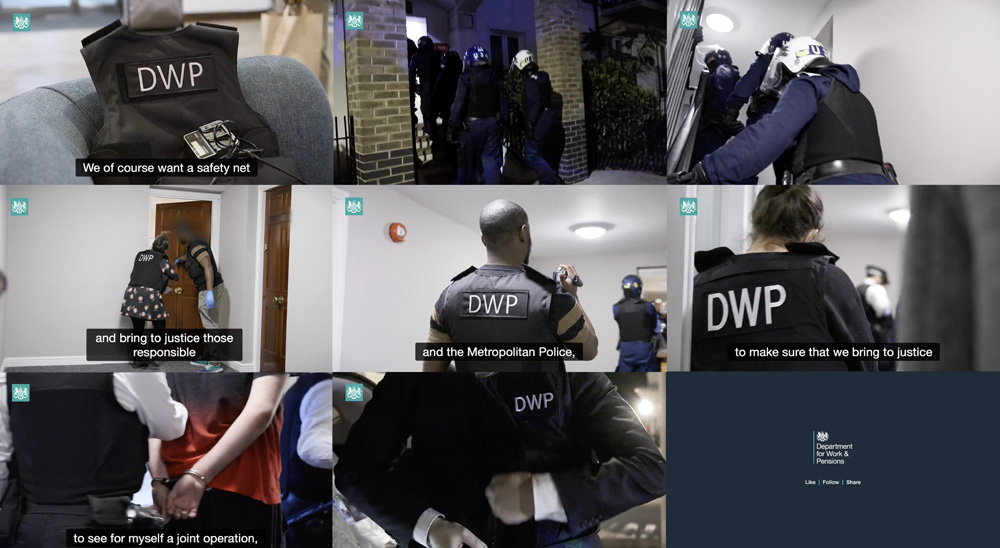
The recent footage of a 6am DWP & police raid and increased whipped up hatred towards claimants has deeply distressed many people:

The following testimony is collated from a wide range of individuals who responded to our callout, they offer a snapshot of the impact on health of being a claimant. Of what it is like living under the parallel shadow penal state of the DWP-

  • “I cannot talk about it here. I even have the thought they might see through my alias and work out who I am and punish me”.
  • “I know that I only deserve to live if I’m employed, that’s the message”.
  • “The two most vilified groups of people in the UK for political purposes are refugees and claimants. Those groups are despised. We are subhuman”.
  • “If the Bill is passed, job centre staff will be deciding who’s fit for work with the threat of sanctions. I’m stockpiling medication, I won’t survive”.
  • “As a too ill for employment disabled person I have survived solely on ever decreasing and hard to get so called social security for most of my adult life, spanning decades of so called welfare reforms, cuts, austerity, and recessions. Family tax credit, Job seekers allowance, Incapacity benefit, income support, disability living allowance, ESA, PIP and soon to be UC. I have a life threatening an ever growing fear of the DWP”.
  • “Disability fraud in social security is 0.2%, the media portrays it as 98%”.
  • “An assessment centre is referred to as The Kremlin”.
  • “The impact of DWP processes and their media has had a direct impact on my mental health to the degree that I would rate it worse than my illness, worse than being sectioned and forcibly medicated, worse than being stiched with no local anaesthetic, worse than surviving a suicide attempt. It has become enmeshed into my depression, paranoia, voices I hear, the feeling of being a target for anyone’s malicious reporting, feeling constantly surveilled, under house arrest.
  • “I sometimes hear my thoughts in the voice of Ian Duncan Smith and my voices blame me for being in this position. They say outside “they’re proper people,not scum like you”.
  • “If I were offered fast painless euthanasia, I would take it, to be free of living in fear”.
  • “I hate post, all envelopes, I feel sick at the sight of them and have vomited at the sight of envelopes I suspect are from the benefit offices. Sunday is the only I can breath – no post – but it means I’m afraid to leave my home to stay with family or friends because I fear receiving a letter or form which needs immediate attention. So I feel a prisoner in my home and afraid of leaving it for longer than 24 hours”.
  • “I know that the DWP have an algorithm that targets people for benefit fraud. That they can covertly use, physically surveillance, data from airlines, supermarkets, online purchases, CCTV, audio recordings and phone conversations, monitor bank accounts and social media searching photos and locations and encouraging neighbours to don claimants in…. all to try and prove people are lying. This all has a profound detrimental effect on my mental health and I’ve done nothing wrong”.
  • “I looked up how much you get for selling a kidney or a lobe of liver thinking of if after the general election and proposed Bill removing the WCA letting job centre staff decide who’s fit for work or not, i know I wont survive it. I was disappointed to learn that organs don’t sell for that much”.
  • “I tried to end my life during a DWP assessment process a few years ago which resulted in me being detained under the MHA.  One of the reasons I haven’t walked away from the iatrogenic harm that MH services cause me is because it would be even more difficult to prove I am ill and get enough benefits to survive on if did”.
  • “I used to be an activist, I did unpaid work which was valued by universities, NHS Trusts, nursing & medical schools. I also did work with fellow SUs and groups. I ceased all voluntary work in fear of that being interpreted as being fit for full-time work which unfortunately I am not.”
  • “I was never able to sustain full-time employment, and even consistent part-time work wouldn’t be viable for because every year for my entire adult life I have typically lost about 3-4 months of the year with my mental health. There are few employers who would tolerate 4 months sick leave every year. With voluntary work, it carries a different weight and stress because I know I can step down if I need to, I can space myself and plan to do it during my best months of the year. The irony is I’m more productive doing voluntary work than I am doing paid work”.
  • “Work as a health outcome and a cure has become the neorecovery norm. It’s scary! I don’t take part in any in person direct protest activism after knowing that some disabled activists were shopped to the DWP. I stay anonymous and private on social media and anon at online and in person Mad events because of the fear of DWP spying on me”.
  • “The neoliberal Government and media strategy is to portray benefit claimants as fraudsters, cheats and scroungers this makes me feel stigmatised, stereotyped and underserving. The welfare system is deliberately hostile and cruel. The Government is trying to kill off vulnerable disabled people. They cover up the deaths caused by the system”.
  • “Just filling the form out raises the depression levels. All negative questions. Some impossible to estimate how many hours in a day do u?? Then the interview process, being asked why you haven’t managed to kill yourself yet! Which made me feel even lower, a total failure!!”
  • “I was once accused of fraud when I failed to ask DWP for permission for permitted work of a few hours and for 6 weeks. Years later I got a letter telling me to attend the job centre and I had no clue why. A scary place with security guards at the door. I freaked out so bad when there that I ended up in a crisis house. I’ve never done paid involvement work since. They can even track gift vouchers which are seen by them as earnings. Volunteering can also be seen as being fit for paid work”.
  • “They ignore medical notes and evidence. They ignore the doctors, your specialist. They are only interested in failing you”.
  • “DWP was responsible for the death of my brother”.
  • “Best thing about lockdown 1 was knowing the letters had stopped. Felt as if I could live for the 1st time in years as I wasn’t exhausted by 24/7 in fear. That dread resumed as soon as we heard the letters were starting up again”.
  • ” I’m using the PIP to find private therapy because NHS was bad. You see a lot of benefit stigma as well and that’s pretty rubbish. I feel like a failure and a burden all the time and I don’t tell people usually that I’m on any sort of benefit”.
  • “I dread being asked “what do you do?”, the judgement extends to healthcare even. I avoid speaking to anyone in the supermarket, I stay indoors and take the rubbish out at night”.
  • “I know DWP want me dead, deaths are a cost saving”.
  • “I’m autistic and was in receipt of PIP. Because of how my autism presents I feel I have to be reassessed every time the tiniest thing changes, even if it’s just a fluctuation  rather than a change.  This means I’ve subjected myself to multiple reassessments  as there’s no way of just telling them about the small fluctuation without a full reassessment. The whole process has made me sick with anxiety, not knowing how long it will take, worrying about whether I’ll have to see someone face to face that doesn’t understand my condition.  In my last reassessment they took information over the phone from an unqualified member of staff that wasn’t listed as a contact on my form that didn’t give the correct full amount of information.  Calling the DWP causes me lots of stress and anxiety as I often need the toilet whilst on the phone and get stuck waiting for over an hour.  When there is no position in the queue information it can lead to a lot of uncertainty.  Even though I’ve been 100% honest in my claim i feel worried when I see cars outside that people are watching me.”
  • “The recent DWP advert stressed me out so much I ended up cancelling my claim as I couldn’t go through another reassessment. If the DWP had an online system where you could report  minor changes without the need for a full reassessment it would help to reduce the stress the whole process causes”
  • “I’ve attempted suicide, been paranoid and psychotic and detained under the MHA. I think that there is more threat to my life from the benefits system than anything else. Yet, I’ve read all my clinical notes and I don’t see the fact that the DWP has caused many mental health crises recorded anywhere”
  • “I’m due a PIP review for severe mental health issues. Last time I had a review, I didn’t sleep. I was anxious. Just filling out the form is distressing. This time, I have no supporting evidence for anything because my CMHT have barely seen me and not listened and not helped me. I’ve misplaced my crisis team summary from last time I was under them and I’m too scared to call anyone to ask for any further evidence because I’m fobbed off all the time. The PIP review has me even more anxious this time because I’m lacking the evidence.”
  • “A recent video by DWP was shared on Twitter which featured the DWP minister in a stab vest saying “ We will track you down. We will find you. We have a very particular set of skills” and showed suspects in handcuffs, doors being smashed down and wailing sirens. Watching this video sent me into what the mental health crisis team called a “psychotic episode” and led to a police welfare check and other scary things”.
  • ” I’m using the PIP to find private therapy because NHS was bad. You see a lot of benefit stigma as well and that’s pretty rubbish. I feel like a failure and a burden all the time and I don’t tell people usually that I’m on any sort of benefit”
  • “I’m constantly paranoid my benefits will be stopped. I get very specfic delusions when real bad it becomes part of my paranoia that I’m being watched”.
  • “I think it’s the division that has been sowed by the media, the manipulation of data to present a point of view that stigmatises people”
  • “They don’t like it if you’re on alternative medication and penalise you if you’re not what they consider a high enough dose. It’s like they want you numbed and overdosed. They don’t allow for fluctuations of the conditions”.
  • “Last summer had interview for 4 hrs work which would have been a big challenge but a +ve step for me & I was likely to get the job but I pulled out due to fear of impact on benefits & being reassessed as fit for work just because of doing 4 hrs/week”.
  • “I live in constant fear of assessment & struggle to do new things worrying how they will twist it so they don’t have to give me the benefits I need to live”.
  • “I just exist, waiting for the gestapo to push me to suicide, no hope nothing”.
  • “The process is humiliating and 3.5 hr phone assessment was horrendous, nearly killed me and got to go through it all again in a few months, not even been two years yet”.
  • “If you have a pain condition you’re caught in a particularly Kafkaesque trap because doctors don’t want to prescribe opioids any more but if you’re not on them the DWP don’t believe you have chronic pain”.
  • “The benefits system, especially disability benefits system, is a special kind of hell on earth designed to make us feel subhuman, which is what most people think we are”.
  • “I literally can’t have a romantic partner because I’ll never be allowed to move in with them without losing all my benefits. My condition (ME/CFS with hEDS) is incurable so I will be alone for the rest of my life because of DWP policy”.
  • “Friends & family talk all time about ppl they know who are “fiddling” their disability benefits because “ you can see they aren’t really ill”, they always follow up with “not you, we don’t mean you” & I have to decide again whether to have another rant about invisible illnesses”.
  • “Am not on benefits anymore but I can still feel that fear. The recent video from the DWP brought it all back. The feeling of being watched, never knowing who or when. Being told by a support worker that I was worrying over nothing. Feeling like a fraud and doubting myself all the time. It was exhausting”.

Journal of Social Policy: In-work Universal Credit: Claimant Experiences of Conditionality Mismatches and Counterproductive Benefit Sanctions Published online by Cambridge University Press: 01 December 2020

I’ve been made to feel like a pariah for so long now it has entered my DNA

Despite being on benefits all my life, I still feel hounded by the department. There have been times in my life and I’ve been frightened to leave the house in case somebody anybody reports me for being able to breathe and walk brackets (not that the walking part is a problem anymore )

In 2014, I was I was chosen to carry the Commonwealth torch as part of the games  in Glasgow.  I was nominated for my services to the community in a voluntary capacity. After much paranoia and anxious I decided not to  participate as I was terrified that somebody might to decide to interview me, film  me and upload my details and then I will be reported to the DWP for those very same services to the community.

 I’ve done various bits of voluntary work since I moved to Scotland in 2010. I’ve never told to the DWP. Due to the fear of them thinking this means I’m fit for a 37hr week. Instead I’ve taken the risk of flying under the radar and constantly worrying something I was going to get found out prosecuted for fraud and jailed .  

My peer support worker expenses used to get paid every three months by cheque. It wasn’t a huge amount of money but I had to put it through my bank account and  worried constantly  the DWP would access my account and find me out. I could probably have told them that I was volunteering still remained in receipt of benefits but I wasn’t prepared to take that risk. I also used to lecture in a paid capacity from time to time but couldn’t risk this  and most universities don’t have an alternate way of paying somebody on benefits…

Paranoia of  the dreaded brown envelopes is always there  but especially heightened when you are waiting for a decision on  a new claim or review  . Recently I have a pip review which took 10 months from start to final decision. Every day I dreaded the post only Sunday was a respite They also started to play stupid bastardised and sometimes use white envelopes so nothing was safe! . . You can never rest  because they keep moving the goal posts so any sense of stability is lost..

I was offered , a paid role as a support worker but it was part time and I was terrified about dealing with the DWP. How pomfret would it take for them to sort out a new claim with the daily envelope waiting again.. What if I became unwell again and had to stop working? Would I be believed? What if they dithered over my clam and didn’t pay my rent? Would I become homeless again? I couldn’t cope with that.Best not to rock the already precarious boat!

I often feel wrong in accessing leisure activities as  There is always that feeling I can’t really be that sick if I can go the cinema. Sick people have to be sick all of the time or not at all. that’s how the bastards make you feel. Maybe I’d be spotted having a good time.

The mental health system is set up to make you feel less than, a burden, at it! And if you have a PD  label forget being taken seriously. I have a history of chronic addictions which are often seen as self inflicted and the DWP compounds these internalised briefs. Oh and forget being a single mother: I once had all my disability benefits stopped when I returned home after a 5 month hospital stay with my baby daughter. Apparently motherhood means cured. 

When people ask me what I do that seems like an admission of failure to say I’m “just” on benefits. My worth is apparently based  on my capacity as an earner, a financial contributor. Now I’m  wheelchair bound it’s easier because it’s obvious something is wrong but I spent decades worrying that I wasn’t that ill and that everyone knew it! Or that my obvious problems with alcohol and drugs were seen as self inflicted and a drain on the state. I still limit who gets to know that part of me.,

I’ve asked for increases in medication purely for evidence of not being recovered. I have continued to take high doses medication. I’ve  totally lost track of whether I need it or not but it looks good for the DWP. 

Dealing the with the DWP exhausting and brings up all the feelings of basically not being good enough. Less than, a burden, a non entity. I’m finding doing this for RITB extremely triggering and I know there’s no threat. But what if a binner thinks I’m a fake and have just conned everyone for the past 40years? What if I’ve conned myself? I’ve been made to feel like a pariah for so long now it has entered my DNA.

Further Reading: Deaths by Welfare Project

The Invisible Prison – Panopticon Of The DWP

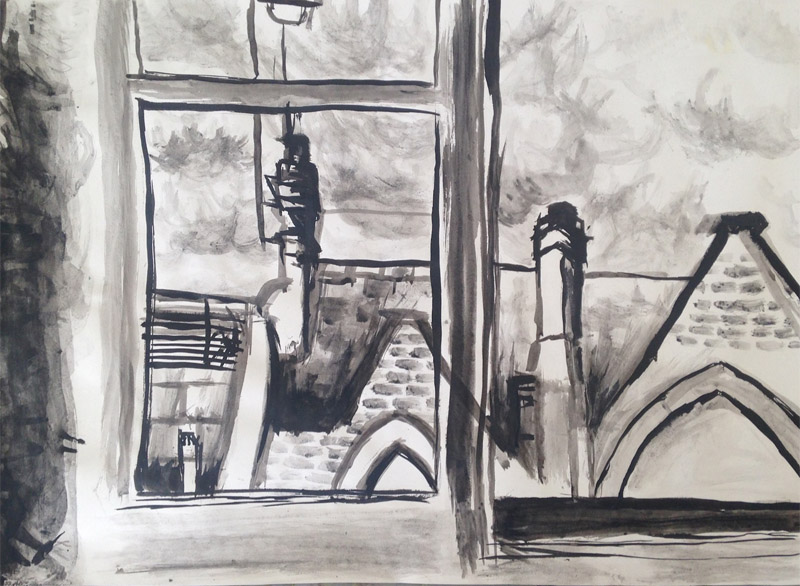
Invisible prison 1 art

This image and words are by Nila Gupta, who is no longer with us. Rest in power Nila.

One of the things I’m feeling a lot at the moment is the massive divide being successfully constructed between:

1. Those of us who are long-term dependent on state disability benefits to live.

2. The rest of society.

This is absolutely deliberate.

People who aren’t dealing with the DWP for disability benefits have no idea how traumatic and violent and all-encompassing it is. It is an ongoing trauma for a lot of us.

Pretty much everyone I know who, like me, relies on disability benefits for rent/food/bills/life money, has had multiple traumatic experiences. And that’s on top of the GIGANTIC amount of work that the assessment process involves: do to it successfully requires a lot of specialist knowledge, writing skills, capacity for loads of admin, having to contact people, arrange medical appoints which are a total waste of patient and NHS resources, attend horrific ‘assessments’ , try to find advocacy etc

And being forced to do this all to the tightest timescale possible.

We deal with a level of surveillance and arbitrary punishment that, rightly,
has been judged by multiple independent analyses to be a state driven deliberate breach of the human rights of disabled people who have the fucking gall to be poor and/or unable to work.

Loads of the techniques of psychological pressure were developed first in one of the home office/ foreign office/ DWP, and then exported to the others. Nice, huh?

If you’ve a strong stomach and/or are not directly affected, more on that here.

Nudging conformity and benefit sanctions: a state experiment in behaviour modification

Basically the gist of this is, in which we discover until recently there really was a controversial government department which researched and tested “behaviour modification techniques” for implementation in aggressive state policy:

“Conservative anti-welfare discourse excludes the structural context of unemployment and poverty from public conversation by transforming these social problems into individual pathologies of “welfare dependency” and “worklessness.”

The consequence is an escalating illogic of authoritarian policy measures which have at their core the intensification of punitive conditionality. These state interventions are justified by the construction and mediation of stigma, which is directed at already marginalised social groups that the policies target. The groups, which include sick and disabled people, people who are unemployed, are painted with a Malthusian brush, as a “burden on the state” and a drain on what are politically portrayed and publicly seen as scarce resources in an era of austerity.”

Political processes of scapegoating, stigmatisation and outgrouping have been amplified by a largely complicit UK corporate media. Examples of its work are all over the DWP. PREVENT. The whole Hostile Environment project. There’s plenty more, I’m sure.

Which is why I’m not exaggerating when I name this as state terrorism.

A bunch of disability and civil liberties activists/campaigners/lawyers discovered  the existence of the ‘nudge unit’.  So they made Freedom of Information requests to try and find out what the hell government money is being spent on.

Government solution? To privatise the department and turn it into an ‘institute’ to avoid scrutiny. And to drain more state cash into private pockets.

Anyway, back to us, trying to survive in an increasingly violent and reactionary society with the vast machinery of the  right wing state bearing down on us.

This shit and much more stuff like it = many of us are scared to leave the house, post any pictures of us looking happy on social media, be photographed at events/protests.

We’re cut off from participating in civil society.

Police force admits agreement to share information about protesters with DWP

It’s absolutely deliberate: the more surveillance, the more the DWP poke their nose and disclosure agreements into every area of our lives, the scarier it is to be out in the world even when we aren’t disabled by society.

And – for many of us – there are multiple other oppressions we’re dealing with too. Disability is inextricably entwined with race, class, gender, gender id, immigration status, sexuality and poverty.

Our lives are FUCKING HARD.

The surveillance/sanctions regime is a deliberate tactic to put extra pressure on already vulnerable people. It’s punishment for being vulnerable and in need. It’s also eugenics: it’s about disabled people being regarded as disposable/barely/not human. It’s an idea with deep roots in British society.

And they’re only just getting started. Looking at Bloody Boris’ fucking cabinet terrifies me, eg right now the DWP is trying to get its hooks into NHS files. The proposal is dressed up in fake nicey language but basically it would mean that if you claim disability benefits, you have no privacy or confidentiality during medical appointments. It would be horrific. I know that there’s a lot of pushback against this from loads of NHS groups, thank fuck.

I don’t have much hope, and I feel a lot of the time the clock is ticking on how long I can survive before they break me, or make me homeless again or otherwise fatally fuck me up. That worry never leaves me. Which is another reason for stopping dealing with them for now.

Because I realise now: I’ve become institutionalised. I live inside an invisible cage built by the DWP (and Social Scare, of course. Let’s not forget them. Bastards)

By institutionalised, I mean, for eg – I anticipate and strategise against DWP sanctions automatically whenever I think, open my mouth, and especially if I leave the house. Any time I think about doing anything out of the house that might improve my life, (eg an art class, or an event that a photographer is at) I freak out over whether it will trigger sanctions.

Because although it’s not likely, it does happen.

It’s a perfect panopticon. They fuck over just enough people to make all of us realistically terrified about it.

And it’s a deliberately and increasingly asymetric system.

Ie: getting the benefits takes huge amounts of work, and can take years. But the state can take them away in an instant.

There’s also the alienation: I deal with this monster that infests every area of my life. People who don’t deal with it mostly have absolutely no idea how hard our lives are. How we don’t go a week on social media without hearing about yet another death caused by the system we’re reliant on.

A system that is our right.

And it should be the right of anyone living here, btw. And isn’t anymore – that’s a whole other pile of DWP fuckery that’s been happening over the past decade or so.

Fuck borders and fuck nativist politics always.

But my one hope is that I see so many grassroots people/groups/organisations/communities doing mutual aid, advocacy, support, skill sharing etc. A lot of it is very informal and grassroots and it’s amazing. So you get people on random fb forums putting hours into helpful /detailed/informed responses to questions. You get people sharing often traumatic details of the assessment process because they care about someone else going through the same thing. It’s fucking amazing. But we shouldn’t fucking be going through this shit in the first place.

More specific stuff re the ”invisible cage’/panopticon:

CW: moar DWP ranting. Also, tho, theory.
Which isn’t actually fucking theory for me. It’s my daily life.

The DWP is absolutely a panopticon. I’m living in a fucking panopticon. Except it’s invisible. And specifically designed to marginalise already vulnerable people.

So most people don’t even know it exists. And often don’t believe you when you tell them. And it fucks you up so sometimes* you forget that you’re living in a panopticon and just blame/hate yourself.

I’m living in a panopticon in twenty fucking nineteen in a rich White Western country that likes to think of itself as:

1. Liberal (it isn’t. There are important  traditions of liberalism in this country. Traditions of radical internationalist anti colonial/anti racist socialism, communism, anarchism. Powerful histories of working class people of all races doing practical radical political work. And loads more. Britain’s dominant character as a ‘nation’ in general, in practice ends up  defaulting to English norms’ . Which prize conformism, hierarchy, subtle powerful coded signals.
Its all about us ‘knowing our place’.

Riz MC nails it in ‘Englistan’:
“God save the queen
Nah she ain’t mates with me
But she keeps my paper green
Plus we are neighbours see
On this little island
Where we’re all surviving
Politeness mixed with violence
This is England”

Track: Riz MC Englistan on Bandcamp
Lyrics: https://genius.com/Riz-mc-englistan-lyrics

2. Modern. Modernity isn’t inherently good – in English, it’s a category inseparable from white supremacy and capitalism and patriarchy and and and.

But my main issue is that the idea that the UK is modern is fucking laughable. UK = basically feudal neoliberal empire-hangover capitalism. Doesn’t that sound just GREAT?

If you think I’m exaggerating – bear in mind that our new Prime Minister is related to the royal family. In twenty fucking nineteen.

Thinking about the DWP as a panopticon also usefully reminds me that there’s a reason that a fucking White English public school-and-oxbridge man came up with with the panopticon. These same people still largely run the country OVER TWO HUNDRED YEARS LATER.

“Jeremy Bentham, an English philosopher and social theorist in the mid-1700s, invented a social control mechanism that would become a comprehensive symbol for modern authority and discipline in the western world: a prison system called the Panopticon.

The basic principle for the design, which Bentham first completed in 1785, was to monitor the maximum number of prisoners with the fewest possible guards and other security costs. The layout (which is depicted below) consists of a central tower for the guards, surrounded by a ring-shaped building of prison cells.

The building with the prisoners is only one cell thick, and every cell has one open side facing the central tower. This open side has bars over it, but is otherwise entirely exposed to the tower. The guards can thus see the entirety of any cell at any time, and the prisoners are always vulnerable and visible. Conversely, the tower is far enough from the cells and has sufficiently small windows that the prisoners cannot see the guards inside of it.

The sociological effect is that the prisoners are aware of the presence of authority at all times, even though they never know exactly when they are being observed. The authority changes from being a limited physical entity to being an internalized omniscience- the prisoners discipline themselves simply because someone might be watching, eliminating the need for more physical power to accomplish the same task. Just a few guards are able to maintain a very large number of prisoners this way. Arguably, there wouldn’t even need to be any guards in the tower at all.”

“Michel Foucault, a French intellectual and critic, expanded the idea of the panopticon into a symbol of social control that extends into everyday life for all citizens, not just those in the prison system (Foucault 1970). He argues that social citizens always internalize authority, which is one source of power for prevailing norms and institutions. A driver, for example, might stop at a red light even when there are no other cars or police present. Even though there are not necessarily any repercussions, the police are an internalized authority- people tend to obey laws because those rules become self-imposed.”

* ie almost all the time.

A final thought:

The tories are trying to kill me.
And a LOT of other people.
And they’ve already killed so many.

Black people. Muslims. People of Colour.
Migrants, particularly guess what, black people, muslims, people of colour.
Disabled People. Mad people.
Trans* people
Queers
The ‘wrong kind’ of women.
Working class people

*

Think about what it’s like for those of us who tick most or all of these boxes.

Try to conceive of the firestorm that we’re living in.

quotes are from here Internalized Authority and the Prison of the Mind: Bentham and Foucault’s Panopticon

Recovery In The Bin (RITB) is covered by a Creative Commons Attribution-NonCommercial-NoDerivatives 4.0 International(CC BY-NC-ND 4.0)
License 88x31.png

I Won by Sam Ambreen

{CN for suicide, self harm, mental health}

13 months after my personal independence payments were cut, I won my 2nd tribunal. 13 months of crowdfunding my rent. 13 months of reducing my food intake, buying the cheaper brand, going without, and feeling humiliated but on Friday, a panel ruled in my favour. There was no objection from the DWP representative who, I could have sworn, was even crying at one point. I felt bad for scowling at her after that!

I self harmed 4 times during that period, when I absolutely could not comply with the measures I’ve worked at to protect myself. I dissociated more frequently. I got as far as buying the instruments I would need to end it. Drew up a plan. Resisted writing the suicide note because that would make it final, and only because the people around me pulled through when I shared my invasive thoughts (a thing I was only able to do because I’d been taught, by my first therapist). They reminded me I’d managed to survive this long because people wanted to help me. They made me think about the people who look to me for strength and how my demise would impact on them. I didn’t really care in that split second but when the feverish urges passed I felt a bit sheepish I’ll admit. People do take strength from my courage.

When the DWP cut me off and sent me their decision, they said they were not disputing the fact that I had these disabilities just whether or not I qualified for personal independence payments. 13 months on and I’ve just been told I do. So was it really necessary to put me through this? What is its purpose otherwise? Survival of the fittest? It’s not strictly true anymore though is it? I’m nowhere near the fittest but I have recourse; to advocates, to friends who work in the public sector and health professionals who actually listen. Perhaps this mum didn’t?

Even with all the support I have, I came the closest I ever have to ending it. I didn’t enjoy asking for help, again and again, I was isolated and lonely as a result. I might be an anarcho-communist but I still have the hardwiring of a society that celebrates charity as a virtue but not if you’re on the receiving end. The shame still lingers. I didn’t want to die, I felt I had no other choice.

Recently I read about a young woman called Holly Cowlam who took her own life when she was diagnosed with depression. Holly had been studying psychology and so had some understanding of mental health. I get the sense, because she knew her chances in life would be greatly affected, as they are in a society that demonises mental health, she felt she had no other option. I know what that’s like; the shame and hopelessness. I refused to acknowledge my own mental health for 20 years, telling myself I was stronger than those others who had succumbed. In the end, you can’t really prevent it. I am the sum total of all the violence and treachery inflicted on me but with the right support, and freedom, and protection, I know I can get better.

holly-cowlam

What I do not need, and could have really done without, was being treated like I’m making it up. As a repeat victim of sexual and domestic violence, gaslighting is a straight up trigger for my PTSD. Being treated like I am insignificant and somehow asking for more than what is my right, having paid into a system for many years and on an emergency tax code more often than not (I did a lot of temp work because I was sick even then only I wouldn’t admit it) eventually wore me down in a way my mental and physical conditions do not, because I believe I can overcome them (to an extent). I needed time and space to heal not to be hindered by a cruel and abusive process.

Advocates for humanity must ramp up the pressure on this government and demand justice for all those who’ve needlessly died in our country. The architects of social cleansing must be tried for their crimes against our humanity.

You can judge a country by the way it treats its animals/poor/prisoners/women/disabled folk.

Republished (23/02/19) by kind permission, Sam Ambreen blogs at Left At The Lights

If you need help dealing with the DWP see our Advice Links page.

Note: PIP application processes generally require disclosure of diagnoses, medication, and supporting evidence, making it significantly discriminatory and arduous for many people. Professionals are often uninformed about how best to help people, this is a good guide.

Recovery In The Bin (RITB) is covered by a Creative Commons Attribution-NonCommercial-NoDerivatives 4.0 International (CC BY-NC-ND 4.0) License 88x31.png

Who Would Jesus Sanction?

Screenshot 2018-10-04 23.24.22

Recovery in the Bin has no religious affiliation but we feel an article by Bernadette Meaden (@BernaMeaden) is well worth bringing to people’s attention.

We came across this writing when it was shared in discussion about a tweet by Rob McDowall, Chair of Welfare Scotland (@robmcd85). Rob had received a shocking message from a person insisting the New Testament supports the DWP leaving people to starve, quoting 2 Thessalonians 3:10 ‘He who does not work neither shall he eat”. This was in response to Steve Topple’s article on a lady supported by Welfare Scotland who the DWP left ‘so starved she got an illness usually seen in concentration camps’.

Needless to say the selected quote does not support the interpretation this person gave it but the encounter highlights that there are always people who will seek to justify neglecting the poor, whether they turn to the Bible or economic myths like the ‘trickle down’ theory.

We hope this superb article by Bernadette Meaden will help provide a riposte to anyone mistakenly seeking to use the New Testament to justify mistreating those of us who are poor and subject to callous social policies-

How IDS measures up to Catholic Social Teaching
By Bernadette Meaden (Originally published by Ekklesia)

As Secretary of State for Work and Pensions, Iain Duncan Smith probably has more influence over the lives of the least fortunate members of society than any other person in the country. His decisions have a life-changing impact on poor, sick, and disabled people: the section of society that has least power and influence.

The DWP has the largest budget of all government departments and is a prime target for spending cuts. As a percentage of GDP, however, welfare spending is now much lower than it was in the 1980’s so the welfare ‘burden’ is not out of control.

As the man responsible for implementing cuts and reforms to welfare, Mr Duncan Smith is obviously dedicated to his job, turning down the post of Justice Secretary in the latest Cabinet reshuffle. Unusually for a member of the Cabinet, he is known for his religious beliefs, and even more unusually, for his Catholicism. This is interesting because through its social teaching, developed over more than a century through various Papal Encyclicals and other documents, the Catholic Church has had much to say on the issues Mr Duncan Smith is wrestling with every day. So it seems reasonable to look at how the Secretary of State’s policies compare with Catholic Social Teaching (CST).

CST really began in 1891 with Rerum Novarum, Pope Leo XIII’s Encyclical on Capital and Labour. It was an attempt by the Church to avert the violent social upheaval it feared would be the result of widespread poverty and the gross exploitation of workers. Although written to avert a revolution, its tone and ideas would be seen as extremely radical in today’s globalised, corporate world. This is how Pope Leo described conditions in his day:

“By degrees it has come to pass that working men have been surrendered, isolated and helpless, to the hardheartedness of employers and the greed of unchecked competition. The mischief has been increased by rapacious usury, which, although more than once condemned by the Church, is nevertheless, under a different guise, but with like injustice, still practiced by covetous and grasping men. To this must be added that the hiring of labour and the conduct of trade are concentrated in the hands of comparatively few; so that a small number of very rich men have been able to lay upon the teeming masses of the labouring poor a yoke little better than that of slavery itself.”

The Church promoted the dignity of labour, but recognised that having a job was not a blessing if it failed to pay what it considered a fair wage, one that allowed a man(sic) to maintain himself and his dependents in decency. Perhaps the modern equivalent would be the Living Wage.

As his own response to today’s problems, Duncan Smith established the Centre for Social Justice (CSJ), which has been influential on Conservative party policy. Many of the CSJ’s leading lights are known for their Christian beliefs and the think tank places a heavy emphasis on work as the route out of poverty. It pays much less attention to the plight of the working poor, and has said little about the fact that more than half of children living in poverty are in working households, and that growing numbers of working families depend on benefits to make ends meet.

Mr Duncan Smith has carried his belief in the primacy of work from the CSJ to the Department of Work and Pensions (DWP). Most of the DWP’s spending goes on state pensions and benefits for working people on low incomes. Out-of-work benefits and benefits for disabled people are a small percentage of the welfare budget, but they have arguably attracted a disproportionate amount of attention. Indeed
the DWP has been criticised for a less than careful use of statistics and language, portraying benefit claimants as workshy scroungers.

Sanctions (having benefits cut or suspended) have been introduced for those who do not fulfill the increasingly onerous conditions placed upon out of work claimants, and even sick and disabled people are now subject to these sanctions.

In 2010/11, 10,300 sanctions were applied to sick and disabled people on Employment Support Allowance.

Christian advocates of this tough approach often quote St Paul in 2 Thessalonians 3:10, “If any man will not work neither let him eat.”, but Catholic Social Teaching specifically refutes this. In Quadragesimo Anno, written in 1931 as the world suffered the effects of the Stock Market crash, Pope Pius XI stated “we must not pass over the unwarranted and unmerited appeal made by some to the Apostle when he said ‘If any man will not work neither let him eat.’ For the Apostle is passing judgment on those who are unwilling to work, although they can and ought to, and he admonishes us that we ought diligently to use our time and energies of body, and mind and not be a burden to others when we can provide for ourselves. But the Apostle in no wise teaches that labour is the sole title to a living or an income.

“To each, therefore, must be given his own share of goods, and the distribution of created goods, which, as every discerning person knows, is labouring today under the gravest evils due to the huge disparity between the few exceedingly rich and the unnumbered propertyless, must be effectively called back to and brought into conformity with the norms of the common good, that is, social justice”.
(Quadragesimo Anno para 57/58)

This principle promoted by the Church, that everybody, simply by virtue of being human, and irrespective of work, has a right to a decent life, would appear to be a completely alien concept to Duncan Smith, the DWP and the CSJ. As sick and disabled people and the unemployed face increasing hardship, and feel increasingly stigmatised and pressured, his department really does seem to be wielding a sledgehammer to crack a rather fragile nut.

Another group of people that have attracted much adverse attention are Housing Benefit claimants, with David Cameron in his Conference speech portraying this as a lifestyle choice by people who won’t work but expect to get their own home at the taxpayers’ expense. This is completely at odds with the fact that over 90 per cent of new Housing Benefit claimants are working, but the DWP never seeks to correct this misconception.

Quadragesimo Anno gave an analysis of the imbalance of economic and political power which could have come straight from the Occupy movement. Speaking of a “despotic economic dictatorship” it says:

“This dictatorship is being most forcibly exercised by those who, since they hold the money and completely control it, control credit also and rule the lending of money. Hence they regulate the flow, so to speak, of the life-blood whereby the entire economic system lives, and have so firmly in their grasp the soul, as it were, of economic life that no one can breathe against their will.

“This concentration of power and might, the characteristic mark, as it were, of contemporary economic life, is the fruit that the unlimited freedom of struggle among competitors has of its own nature produced, and which lets only the strongest survive; and this is often the same as saying, those who fight the most violently, those who give least heed to their conscience.”

To restore social justice under such conditions is a herculean task, but Mr Duncan Smith seems to be confident that he is the person for the job, and Universal Credit, his great project, will be the way to do it. This will be his legacy, and his reputation will rest on it. It is intended to simplify the benefits system and ‘make work pay’.

But under Universal Credit, it is claimed that many more disabled people will be pushed into poverty.

There are some very disturbing features about the treatment of disabled people under Universal Credit. For instance, “A disabled person who uses a manual wheelchair and can self-propel this 50 metres will be treated as non-disabled and will no longer qualify for any extra support under Universal Credit”.

Of course it is important not to write disabled people off as incapable, but to ignore the difficulties and extra expense they face in trying to live with their disability is callous.

Chris Edwards, an economist and senior research associate at the University of East Anglia, has published “The Austerity War and the impoverishment of disabled people”, in which he finds that ‘over four years to 2015 the poorest 20 per cent of the 2.7 million households receiving disability benefits will lose 16 per cent of their cash income plus benefits-in-kind. This percentage loss is four times as big as the loss for the richest 20 per cent of households’.

Concern about this has led to the foundation of The Hardest Hit, a coalition of disabled people, their families and supporters, calling on the government, and particularly Mr. Duncan Smith, to reconsider their plans.

Despite everything the government says, all the figures suggest they really are balancing the budget on the backs of the poor, and Mr Duncan Smith is at the forefront of this approach. He seems to spend much of his considerable energy and intelligence on judging and trying to alter the behaviour of the poor, whilst maintaining, in the face of all the evidence, that the last thing the poor need is more money

Unlike the Church’s condemnation of a ‘despotic economic dictatorship’, one rarely hears anyone from the government questioning the morals or behaviour of the rich.

Perhaps this is the crucial difference between Mr Duncan Smith’s approach, and that of Catholic Social Teaching. The Church recognises that to achieve social justice, one must first establish economic justice, whereas the Secretary of State appears to reject this basic principle.

To be fair, many devout Catholics, perhaps the majority, are largely unaware of the thrust of the Church’s Social Teaching. If this is the case with Mr. Duncan Smith, one can hope that at some point he will take a moment to pause and consider his policies in the light of that teaching.

‘Choice’ and wrong turns in the world of private therapy

therapist tinder

Note: Many people cannot afford private therapy or are not able to successfully claim PIP. We understand this as does the author. If however you are in this position of having an income or a PIP award this offers some very useful experiences and lessons. For advice on Benefits see these resources Here

I am not a user of NHS mental health services but I choose to be a client seeing a private therapist on an open-ended basis. I have no private health insurance cover. I live in a housing association flat on an estate with its share of anti-social behaviour and police attendances. Until this new financial year my income as a single adult was low enough to qualify for Working Tax Credits. I am employed by the NHS and believe in care available to all regardless of wealth. I value my GP surgery immensely and their endless care provided without complaint. I don’t seek transformational change through private therapy but ‘life support.’

Due to the scarcity of long-term therapy on the NHS there are more people with enduring mental health issues finding we need to look to the private sector. I must admit that in 2012 I did receive a year’s psychological therapy from a psychologist in the local Community Mental Health Team (CMHT) before being discharged back to my GP, no doubt to the relief of that service which had ‘held’ me for ten years. I have since been re-referred to the CMHT during crises where the practitioners triaging the referral have been astonished to meet someone who has received individual therapy from their psychological services. I have been discharged immediately after these ‘assessments’, told to use the tools that I was given in that therapy. I am seen as having used up all of my chances with mental health services and can be turned away as a time waster. I have exhausted what psychology input used to be available but is now a rarity.

Unfortunately, some problems still remain even though I had this one year’s therapy six years ago that should have converted me into a person who would never be distressed again. In 2014 I was granted some ‘top up’ sessions before being discharged and told that I wouldn’t be seen by the CMHT in future while I still had the ‘same presentation.’ I wasn’t able to explain to the mental health services then or now that the clumsy and final way in which I had been discharged exacerbated my difficulties, resulting in a sense of failure and tarnished ending.

With over seven years’ experience of seeking and receiving private therapy support I can share what I have learned here in case you also find you are abandoned by the NHS but don’t feel ready to go it alone yet. I appreciate that there will be many readers with counselling qualifications and years of practice who will find my account lacking. This will be subjective writing but that reflects how each unique individual will react differently to therapy and needs to find the right match of therapist. No therapist will be perfect, but where a therapist is open to thinking about walking in your shoes then there is potential.

I am conscious that for so many people private therapy is out of reach financially. The lowest price I ever paid for a therapy session was £40. I currently pay £90 a session but, as I will later explain, this experience has provided the best value. I receive Personal Independence Payment (PIP) which mostly covers the session fee. However, my first PIP claim has ended and I wait with trepidation as to whether I will be awarded PIP again. Though I am receiving weekly specialist psychology support, the DWP tend to only recognise medical evidence provided by an NHS service. I was turned down for PIP the first time I applied even though I provided a letter from a private counsellor who called herself a psychotherapist. The Atos report repeatedly stated that I received no specialist input. When I complained that most questions in the assessment were about what NHS services I accessed and not how my disability affected me, the written Atos response was that the DWP used secondary services as an indicator of severity. In practice, the DWP decision maker favours NHS or Atos evidence over that of a private psychologist even when that practitioner also does NHS work. If I lose PIP then my therapy will be at risk but I would still prioritise this investment over other living expenses.

Therapist Tinder

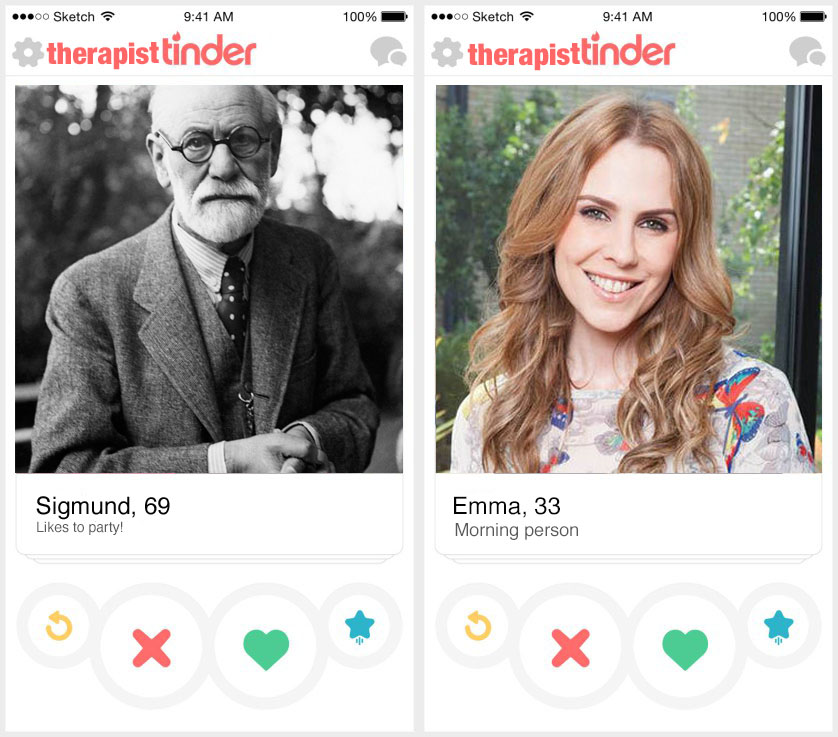
There are several online facilities to find a private therapist especially the BACP website and the Counselling Directory. Counsellors and therapists will pay to be included on these sites and can indicate the areas of counselling they deal with. I feel sceptical about the wide choice on the Counselling Directory where some, apparently newly qualified, counsellors will indicate they deal with all of the 93 categories listed. I doubt that a counsellor would have an interest in areas as diverse as Autism, Abortion, HIV, Personality Disorders, hearing voices and gambling. Since I object to my diagnosis of ‘borderline personality disorder’ I could make sure the therapist didn’t have an interest in this area by excluding that option, but then I may miss a practitioner who was critical of the label too. No therapist is likely to go public with a critical view of current mental health practice and so one profile is much like another. These bland profiles may say how the counsellor wants to help you to live a fuller life and will provide a safe space. There are photos of the practitioners, making the site feel like the therapists’ equivalent of Tinder.

There are some definite warning signs to look out for in profiles. I avoid therapists who are clearly looking to supervise trainees rather than troublesome clients and boast of their skills. A psychotherapist who comes up in my postcode search on the Counselling Directory describes himself as one of the leading psychotherapists in the field with a national and international reputation. He has written books on the erotic transference and countertransference within the therapeutic relationship, suggesting erotic feelings and fantasies can bring about transformation. Where a professional has a research interest or psychoanalytic focus then it is advisable to steer clear since they are likely to see you through their filter. I have negative experiences of therapeutic communities so would discount a therapist prepared to say he had worked in these places which would mean he had facilitated group cannibalism.

The fees of therapists may be another deciding factor. My experience is that psychologists charge a lot more than counsellors and psychotherapists, even outside London. A few years ago I worked close to a psychology practice where fees started at £130 for an associate psychologist. An assessment report by one of their psychologists would cost several hundred pounds. The average session fee for a counsellor or psychotherapist is usually £50-£60 though some offer sliding scale which may take it down to £40. There are charities such as local Mind associations where they offer free or subsidised counselling. Some employers provide an Employee Assistance Scheme though my experience is that these are call centres where any counselling offered amounts to six phone calls with someone who only gives their first name.

Most psychotherapists and counsellors operate a 50 minute hour. I have resented paying £1 for every minute and so £3 may go on a long pause or £10 on a pointless interpretation which I didn’t recognise. Given the high cost it is important that you find a therapist who allows you to direct the time and doesn’t impose a particular model on you that doesn’t make sense. I used to end sessions sooner than 50 minutes as I would worry so much about causing the therapist to overrun, though they kept looking at the clock so this was probably unnecessary. It has felt as though I was toxic and could only be handled carefully within the allowed slot before ceasing to exist once time was up.

With counsellors registered with the BACP you may want to look at whether they have worked to gain accreditation or senior accreditation. A person centred counsellor can be as skilled and able to deal with complicated issues as a psychotherapist. It can feel as though a psychotherapist’s training, with years of costly self-analysis, leads to them becoming less authentic as they are able to objectify and distance clients. There is a professional mystique around psychoanalysis and psychotherapy which now seems outdated. Don’t be afraid to ask the therapist about their qualifications and experiences. If they are defensive about this question then look for the door.

Therapy approaches (whether you like them or not)

I don’t wish to generalise, but my experience of therapists is that their style and demeanour is influenced by their training and treatment modality. The therapist appears to believe entirely in their single modality. I find CBT therapists dogmatic in their promotion of CBT with an insistence on it being evidence based, making sure they give you ‘homework’ and that you do not look to them for support. Last year I made an appointment to see a CBT practising psychologist willing to offer five sessions of CBT before we reviewed progress. The first thing she said to me was: ‘this is a business arrangement’. She made me justify why I wanted therapy again when I had tried other therapies in the past which obviously hadn’t worked. When I voiced my sense of rejection by local services she said that they wouldn’t be able to see me as: “they only have capacity to see those who are in the severe and enduring mental illness group which isn’t you.” I didn’t go back to her as why would I want to pay someone who made me feel as bad as NHS services did at the time of discharging me.

I had tried CBT before privately for around six sessions. The psychologist again acted as though she didn’t really want to see me. She challenged me during the assessment when I asked if she was only at the clinic on Fridays. The relationship ended since I emailed her after I collapsed due to bleeding out from a self-harm injury on the way to A&E. When we met after this trauma, she said that she wasn’t there for support, this was time limited therapy and asked why I had contacted her about the incident. I felt very dismissed and distressed by this response after an episode where I had to be revived by paramedics since I had gone into medical shock. The attitude of CBT therapists is that they want you to cope on your own, which is a great aim but ignores the realities of people’s lives which may involve poverty, loneliness, trauma and loss.

Bad therapy

My worst and most extended spell of therapy was with a psychoanalytic therapist for 18 months. When I ended with NHS psychology services I did ask my CMHT psychologist if he could make any recommendations. He told me not to use Increased Access to Psychological Therapies (IAPT) as they were only trained to a certain level and would not be used to seeing someone who had been through as much as I had been. At first he refused to make any suggestion because he felt this was my wanting him to provide for me after we ended. Eventually he did suggest two names (one being the therapist who writes books on erotic transference already mentioned) who also did sessions for the CMHT. I did opt to see the therapist without the interest in erotic transference knowing that as a self-identifying asexual I wouldn’t appreciate that imposed focus. His website was inoffensive though there were no real selling points or personality there. On reflection I chose him in order to keep some connection with the CMHT and the psychologist who I had liked working with. I remember when we first spoke on the phone and this new psychotherapist said that he did have ‘vacancies’ and gave me an address for his ‘consulting rooms’. He practised at his home though we never called it that. Everything was impersonal, robotic and guarded. He once came to the door on crutches and wouldn’t say what had happened to incapacitate him.

The psychotherapist’s fee was £50 a session which I had to pay in arrears once a month. I was not allowed to pay him any sooner or later than a week after he handed me the slip of paper. The ‘invoice’ said ‘for professional services’ and he signed his initials along with the dates of the sessions. I then would take a cheque to him the following week which he received in silence. I was earning around £16,000 a year and wanted to pay him weekly to help with my budgeting. However, any mention of a change in payment arrangement was refuted and analysed; his theory was that I needed to hold onto the payment for him as this was similar to my unwillingness to contain my emotions. It was another ‘boundary’ in the relationship which I had to keep or face heavy discussion. I was not allowed to email him except about practical meeting arrangements. If I missed a session, no matter how much notice I gave or how ill I was, then I would have to pay for it. This is in line with other therapists I have seen where even giving many months’ notice of cancellation meant I still had to pay at least half ie £25 in order to keep open my ‘slot.’

The relationship with the psychotherapist was rocky though he told me to give it no less than a year. If I emailed him saying I wanted to end he would ask me to come to the next session to discuss it. I wasn’t able to end as it still would have felt like a rejection and treatment failure, mirroring the botched ending with the CMHT. I felt beholden to his clever but empty interpretations, for instance whether eating sandwiches as a child meant that I avoided them now or was my mother not breast feeding me a cause of my eating distress. I felt too passive at times to say the obvious ie ‘what rubbish.’ We kept returning to the relationship and what was happening in the room even when my mind was elsewhere since not all of my feelings were about him. It is hard to feel much about a therapist who is deliberately a blank page. He found everything I said ‘fascinating’ while offering no warmth, humanity or ability to be real in return. Therapy felt like an intellectual exercise and not a therapist acting as a witness or helping me deal with expressed difficulties.

It was clear that the psychotherapist always had to be in control. When I decided to apply for a lay position on a committee of the UKCP he saw this as a direct attack on him. I felt that he would welcome my interest in user involvement but he felt that I was going for a job with his regulatory body to gain power over him. When I asked if I could start his first session of the day ten minutes early in order to catch a bus to work he said he needed a week to think about the ramifications.

After paying the psychotherapist over £3,300 he terminated the therapy due to my self-harm. He had given me an ultimatum, in effect a contract not to self-harm. When I challenged how this would help he said I was ‘playing games’. He only reacted to the self-harm when I had let him know I had been to A&E. It felt as though he was safeguarding his reputation rather than thinking about what happened to me once I was completely unsupported. He told me that if I felt I couldn’t stop self-harming then I should go back to the NHS, which was the same CMHT he worked for. Unsurprisingly the CMHT rejected the referral and expected me to go back to seeing him or another therapist who I should find in an instant.

It can be possible to be trapped in a therapy relationship like this and I imagine it to resemble domestic abuse in some ways. You hope for change in yourself and for the therapist to actually like you. You keep going back only to get the same cold, controlling treatment again. Paying so much to a therapist who stopped seeing me since I was distressed enough to self harm felt abusive.

Still not found what I am looking for

Needless to say, there have been many other therapists I have seen who felt unsatisfactory. I have often had to wait in the rain for my time to knock on the door of the therapist, as arriving even two minutes early was breaking a boundary and forbidden anyway since they had no waiting room. At times I wondered why I was paying £50 to a therapist with a house which must cost close to a million pounds when I was going back to a flat with neighbour problems. I have seen two well meaning counsellors who, while lovely, just seemed to agree with me as their way of validating everything. This agreement then entrenched my sadness and led to a sense of going round in circles. One of the counsellors said things that felt trite or weird, like describing us as ‘the dynamic duo’ as a way of compensating for the fact that no-one else, including the GP, was interested.

I have tried the only NHS therapy available to everyone through IAPT. This experience, while free, felt rushed since the therapist kept saying: “you know we only have six sessions.” Ten minutes of each session was spent filling out a self-assessment questionnaire for my anxiety and depression scores. This exercise was about her outcomes monitoring and had no therapeutic purpose. I gave up after the first session since I knew that my scores were unlikely to improve within such an irritating and imposed format.

A good match

I do now see a psychologist who treats me as a fellow human being. There can be misunderstandings, as in any relationship, but we discuss and repair. She is relaxed about me emailing which is important to me given my anxiety means I sometimes have to communicate in that moment. While she does have vast secondary care experience of working with clients with a label of BPD she views the underlying complex trauma and understands the prevailing discrimination. I prefer the way that she can draw on many different therapeutic approaches rather than deciding we must do DBT, MBT, Stepps etc because that is what is in a NICE guideline for BPD. I don’t see her as part of the PD industry, another expert who will get me to mentalise even though we can never truly know what someone else is thinking about us. I like that I don’t know much about her personally, though I guess we are not far apart in age. She is intelligent but not over intellectual and I can talk to her about the most intimate or embarrassing problem without shame. Most of all I see how she really wants to help and see me free of mental torment, while avoiding any rescue attempt when I do sometimes self-harm. I see her in a clinic where she hires a room so have somewhere to wait if I want to stay out of the rain and cold weather before an appointment. She puts up with me being gloomy at times without demanding I think more positively as she hears the life circumstances that make this challenging. I can take everyday issues to her such as work obligations and family relationships, looking for new perspectives and coping strategies.

I have spent tens of thousands of pounds getting to this point, too much to just put down to bad experience. At best I helped the psychotherapist I saw for 18 months pay for holidays for his secret family when he took the whole of August off. But I also think that all of the misses make me appreciate my current therapeutic relationship more, I feel grateful that there is someone who ‘gets’ me and that I can still benefit from therapy. As my therapist she listens and learns from me, whereas the analytic profession will search for unseen and hidden meanings which would cost me more money but answer nothing. It feels interactive and equal, a gift of therapy and not another missed connection.
I would always want long-term therapy to be available on the NHS. In the new real world though I am using what is available to survive, stay in work, gain insights, practise self-compassion and acceptance of what can’t be changed.
This isn’t an advertisement for private therapy as I know it will continue to come down to affordability for most people. If you want CBT then don’t pay a penny to a private therapist but go to IAPT along with perhaps buying self-help books. Private therapy can though lead to a special relationship but this is far from automatic. So much choice in the private sector and personal vulnerabilities can certainly lead you down wrong paths.

Note: PIP is awarded on functional descriptors about how your condition/difficulty/impairment AFFECTS you. Saying on a form ‘I need PIP to Pay for Therapy’ will get you zero points, you must phrase all answers in the form of how you are affected and with reference to the legal descriptors, see Advice Links